Trending Topics

 Trending
Liquid cooling data centres: From engine oil to immersion fluid, Castrol ON wants in

The global data centre industry is under thermal siege. As AI GPU clusters push rack densities beyond what air cooling can comfortably handle, liquid cooling data centres are moving from engineering experiment to procurement priority.
Castrol, better known for engine oil than AI data centre infrastructure, is now trying to turn 125 years of fluids expertise into credibility in thermal management.
Why liquid cooling data centres need standards
The shift is being driven by physics and economics.
The American Society of Heating, Refrigerating and Air-Conditioning Engineers, ASHRAE, now describes direct liquid cooling as an industry standard for AI and HPC environments, while market analysts expect the data centre liquid cooling market to grow from $4.07 billion in 2026 to $27.65 billion by 2033, a 31.5% CAGR.
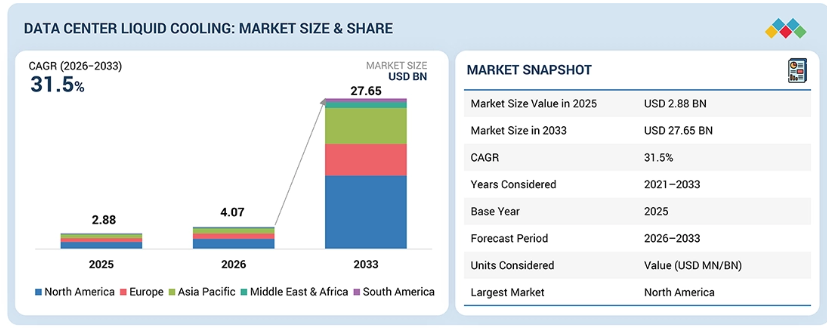
For liquid cooling data centres, that growth reflects a simple reality: higher rack density demands faster heat removal, lower PUE, and less dependence on bulky CRAC/CRAH air systems.
Castrol ON’s latest move is noteworthy because it adds open-ecosystem validation to that technical story. On 5 May 2026, Castrol announced that its PG 25 Direct Liquid Cooling fluid had been recognised under the Open Compute Project Foundation’s OCP Inspired program. Its DC 15 and DC 20 immersion cooling fluids are expected to follow, with all three products set to appear in the OCP Marketplace.

OCP Inspired does not mean the same thing as OCP Accepted, where design files are contributed. It indicates that a product complies with an approved OCP specification or contribution, making it a useful procurement signal for liquid cooling data centres evaluating risk.
The strategic logic is clear.
Castrol’s chemistry background translates naturally into coolants that must resist corrosion, remain stable, and protect expensive servers. PG 25 fits direct-to-chip deployments, including retrofits and high-density racks. DC 15 and DC 20 target single-phase immersion cooling, more likely in greenfield or extreme-density environments.
For operators comparing Castrol ON with Shell, Engineered Fluids, or legacy 3M Novec alternatives, the OCP Marketplace could shorten vendor conversations. Still, liquid cooling data centres face real barriers: retrofit capex, fluid compatibility, supply assurance, and standards maturity.
Castrol ON has earned a validation milestone, not a finish line. The real test is whether a legacy industrial brand can keep pace as liquid cooling data centres become the default blueprint for hyperscale AI.
About The Author

Kihara Kimachia
NEXT UP


