Trending Topics

 Trending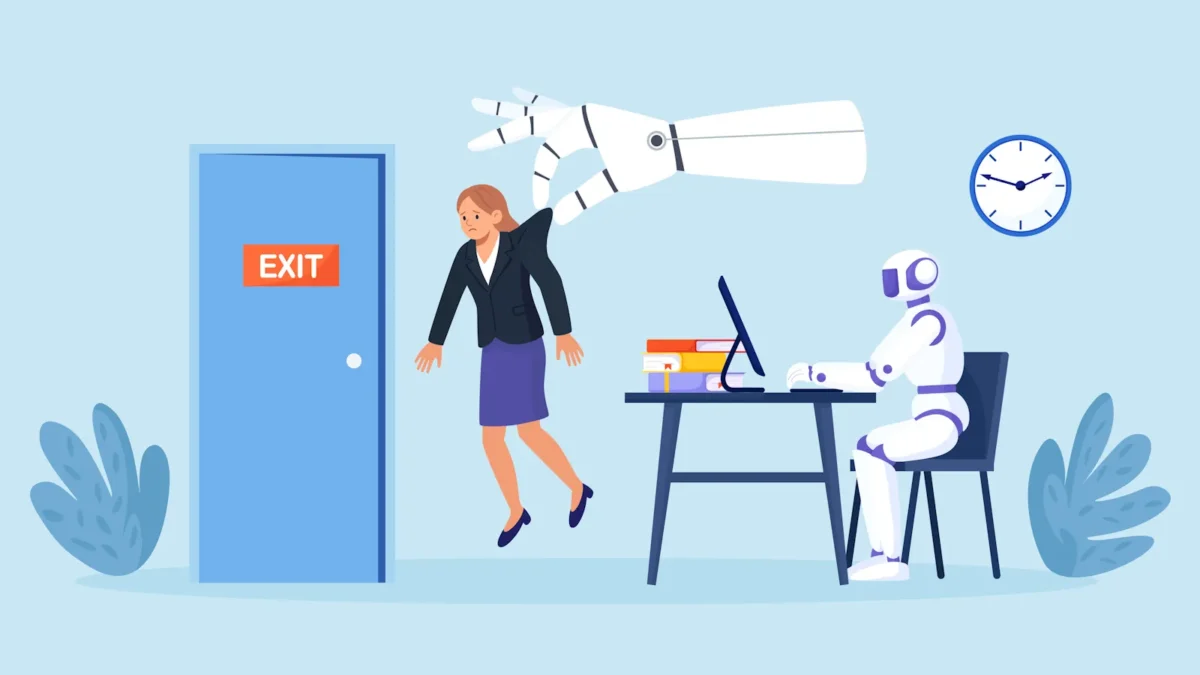
Workers don’t like AI – maybe companies should listen

Half of people would rather avoid AI if they could, and no wonder: many are outright afraid of it, most believe it will lead to widespread unemployment and disruption, and few think it helps in their current work.
That’s according to research by The King’s Institute for Artificial Intelligence and the Policy Institute at King’s College London that examined concerns around AI and work.
And the stats revealed by a survey aren’t a good start for the seemingly inevitable technology: 48% of those polled would like to avoid AI, 41% are afraid of it and just 24% think it will be positive for humanity.
Despite such concerns, Professor Elena Simperl, the director of the King’s Insitute for Artificial Intelligence, said the results shouldn’t be seen as a reason to slow the pace of AI rollout.
“These findings tell us something important: the British public isn’t asking us to slow down on AI, they’re asking us to do it better,” she said. “People want these tools, they want more of them, and they’ve used them enough to know where they fall short.”
AI use at work
Her perception could stem from figures showing 43% of people believe they’ll use AI in the future, which the study suggested was because people “are making pragmatic choices even where their attitudes remain sceptical”.
That’s one interpretation. Another is that people feel they must use AI, either to keep up with workplace skills they’ll need to keep their mortgages paid or because their employers are forcing them to use the technology. After all, Amazon employees are reportedly using AI to automate silly tasks to stay in managers’ good books, while Microsoft is reportedly tracking AI usage after deeming its use “no longer optional.”
This highlights the huge gap between employees’ perceptions and the companies they work for. According to the KCL survey, 47% of workers said AI made no real difference to whether or not they’re better or worse at their job. Employers disagree, with 86% claiming at least modest improvements to productivity.
Here’s another gap. The research notes that 35% of people asked thought that 35% of workers are in jobs that could be performed by AI. As the report points out, the International Monetary Fund pins the figure at 70%. Still, it’s not clear why the IMF’s prediction is being taken as gospel, given no-one actually knows.
Professor Bobby Duffy, Director of The Policy Institute at King’s College London, said in a statement that it’s perhaps “no surprise” people are worried about AI given everything being said by the industry itself, pointing to Anthropic CEO Dario Amodei’s claims that AI could eliminate half of entry-level white collar jobs within five years.
“The public, workers, young people and university students are watching the rapid development of AI with more fear than excitement, with real concern for what it will do to jobs, particularly at entry levels, and, therefore, the prospects for our young people and the economy in general,” he added.
AI replacing work
Despite the lack of tangible benefits in their work, employees are worried about losing their job to AI. 69% of respondents said they’re concerned about the economic impact of AI job losses and 57% feared widespread unemployment. One in five think AI taking jobs could lead to civil unrest.
Just 17% predict it will create as many or more jobs, and 65% of the general public believe that the economic benefits will mainly go to companies and investors.
“Some of the main concerns held by the public, such as fewer job openings, a contraction in entry-level roles, and increased pressure on white-collar work, echo what I find in my own research on AI and the UK labour market,” said Dr Bouke Klein Teeselink, Lecturer in Philosophy, Politics, and Economics, King’s College London.
“But none of these effects is fixed. With the right training, policies, and institutional support, there is a clear path forward to a more hopeful future, with rising productivity, broader opportunity, higher incomes, and faster scientific progress.”
Simperl suggested AI needs to be built a bit better. “Employers see creative thinking as the top benefit AI can offer, ahead of productivity, but the public and the experts both doubt that today’s tools deliver this,” said Simperl.
“That puts a real onus on those of us building and deploying AI to make systems that genuinely support learning, creativity, and critical thinking, and honestly, too few people in the sector are working seriously on this.”
Building AI that works and is actually useful for humans would indeed be a good start.
What people want
So what do we humans actually want from AI? Two-thirds of those polled want AI companies to be closely regulated, even if that slows down the pace of development. About half of respondents want government-funded retraining and a tax on companies to fund it.
“On that, the public’s instinct is ‘move more carefully’, with the majority favouring regulation and protection of jobs over fast adoption, alongside clear government and employer-backed plans for retraining,” said Duffy.
Perhaps that’s an instinct worth respecting. After all, it makes sense: why go fast if you don’t know what’s going to happen and aren’t seeing any real benefits?
More by Nicole Kobie
About The Author

Nicole Kobie
NEXT UP


