Trending Topics

 Trending
Harnessing Weather APIs: Transforming Business Operations with Real-Time Insights

This is a sponsored article brought to you by Tomorrow.io
Weather affects 70% of business operations worldwide. It shapes everything from supply chain logistics to how consumers behave. Businesses today need accurate, live weather data to make smart decisions. Weather APIs connect complex meteorological data with business applications, which helps companies access precise weather information through code.
The market offers many weather APIs today. Options range from free services to premium data providers. These 20-year-old weather API companies provide current conditions, forecasts, and historical weather patterns. This piece shows you everything about implementing weather APIs – from technical setup to business strategies. You’ll discover how to pick, add, and use weather data to improve your operations and measure the results.
Understanding Weather API Architecture
Let’s take a closer look at weather API architecture and how these powerful interfaces make data exchange smooth. Weather APIs are built on RESTful principles. They provide a standardized way to access meteorological data through well-laid-out endpoints.
RESTful API Components and Endpoints
Weather APIs employ a RESTful architecture that processes and combines data from weather stations, satellites, and radars of all types. The API requests need a base URL and specific methods that support both HTTP and HTTPS protocols. This architecture delivers lightning-fast response times and exceptional uptime that are vital for live weather data delivery.
Data Formats and Integration Protocols
Weather APIs support multiple data formats that serve specific purposes:
- Self-describing Formats: GRIB, netCDF, and HDF formats are portable and machine-independent
- Standard Formats: JSON and CSV for easy integration and consumption
- Metadata Integration: Everything about variables, units, and coordinates
Authentication and Security Measures
Security stands at the core of weather API implementation. Several significant security measures protect the system:
- API Key Authentication: Unique keys are the primary authentication method
- Access Control: Rate limiting prevents abuse
- Token Management: AWS secrets manager or Hashicorp Vault stores tokens securely
The authentication process features reliable error handling with specific HTTP status codes for different scenarios. Strong authentication protocols protect digital assets and maintain efficient data access. The system treats each API request with appropriate scepticism, whatever its source, following zero trust principles.
Implementing Weather APIs for Business Intelligence
The foundation of effective data use lies in a strong ETL (Extract, Transform, Load) pipeline when implementing weather APIs for business intelligence. Raw weather data transforms into practical business insights through a well-laid-out implementation based on our experience.
System Integration Best Practises
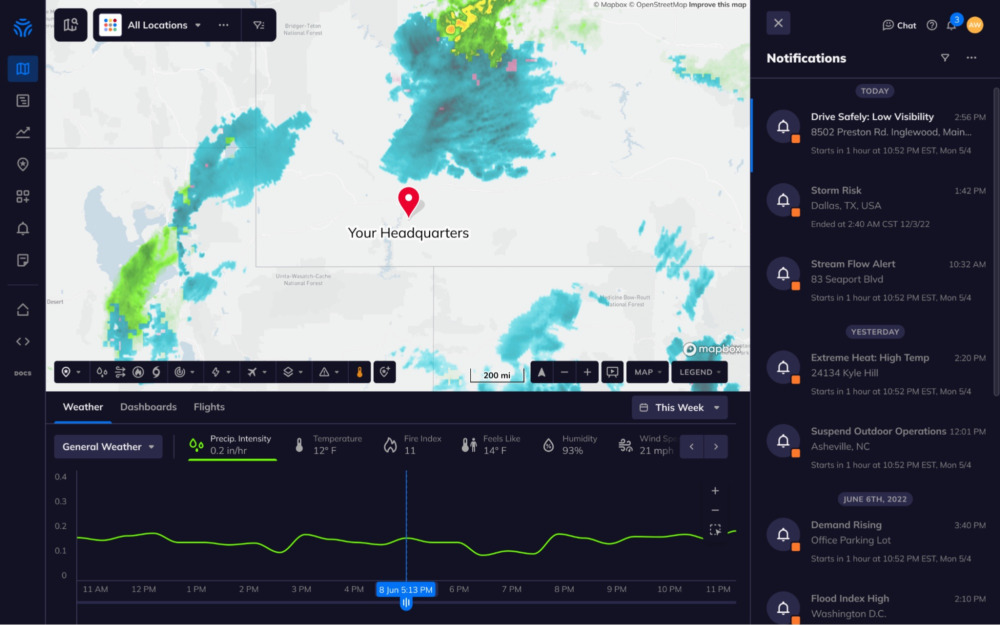
Our weather API integration works through a complete system architecture that uses cloud services for optimal performance. The pipeline uses Amazon MWAA for orchestration and S3 as the data lake to store raw weather data. AWS Glue transforms data while Amazon Redshift handles warehouse storage to boost security.
Key components that make integration successful:
- Methods to retrieve up-to-the-minute updates
- Solutions to store historical data securely
- Automated triggers for continuous processing
- Systems to monitor performance
Data Processing and Analytics Pipeline
Our sophisticated data processing workflow handles weather information in the quickest way. Data extraction from the weather API starts the pipeline, and Pandas normalizes it into tabular format. AWS Glue jobs then process this transformed data by mapping schemas and preparing it for analysis.
Error Handling and Failover Strategies
Strong error handling mechanisms in our implementation will give a reliable system. Several critical components need focus:
- Authentication Error Management: Error handling for authentication problems gives informative feedback to troubleshoot issues.
- Rate Limiting Protection: Built-in rate limiting controls prevent API abuse and maintain consistent service availability.
- Failover Testing: Regular testing ensures system resilience through:
- Critical component redundancy checks
- System health monitoring
- Data integrity verification during transitions
These strategies create a resilient system that maintains data consistency and provides up-to-the-minute weather insights for business intelligence applications.
Optimising Business Operations with Weather Data
Weather APIs are changing how businesses respond to environmental conditions. They create an adaptable operational framework that moves with nature’s rhythms. Weather plays a crucial role in many industries. It affects schedules, costs, and resource planning.
Live Decision Support Systems
Our sophisticated decision support systems process weather data and enable quick operational changes. Experience shows that operations depending on weather can face disruptions from unexpected changes. These changes delay deliveries and lower productivity. Weather APIs help us enable:
- Automated safety alerts for hazardous conditions
- Dynamic schedule adjustments based on weather forecasts
- Proactive customer communication about weather-related changes
- Resource optimisation through weather-aware planning
Automated Workflow Triggers
Our automated response systems react to specific weather conditions. They minimize disruptions and maximize performance. These systems work exceptionally well as Weather Applets have been run over one billion times by users worldwide. The system has automated triggers that:
- Modify operational schedules based on current conditions
- Restrict access during adverse weather
- Adjust resource allocation based on weather patterns
- Initialize safety protocols during extreme conditions
Performance Monitoring and Optimisation
Continuous monitoring and analysis show that weather-aware systems protect operations as weather patterns become unpredictable. Our optimisation strategy uses historical weather data to train machine learning models. These models predict how weather affects operations.
Multiple data points help automated systems make smarter decisions. This reduces risks and increases efficiency. Historical weather data in automation processes creates smarter systems that assess risks better.
Key Performance Indicators:
- Resource utilization efficiency
- Weather-related disruption reduction
- Response time to weather events
- Cost savings through preventive actions
Careful monitoring and optimisation ensure weather-triggered automation works correctly. This creates a resilient operational framework that adapts to changing conditions while maintaining peak performance.
Measuring ROI and Business Impact
The ability to measure how weather API implementation affects business is vital to justify investments and optimize future rollouts. Success measurement needs a detailed approach that combines technical metrics with business results.
Key Performance Indicators
Several critical KPIs help track API effectiveness. Adoption metrics show unique API consumers and usage growth patterns. Time-to-first-call shows how fast developers can start using the API, while applications per API demonstrate its reuse value. Weather APIs prove their worth as more than 70% of businesses need real-time and forecast information to gain operational insights.
Cost-Benefit Analysis Framework
Our cost-benefit analysis looks at both short and long-term returns. We use a well-laid-out approach like AIFE’s platform that achieved a two-year payback period with major cost cuts. Weather API investment analysis needs to look at:
- Direct savings from united services
- Better operational efficiency
- Risk reduction benefits
To name just one example, organizations like ENGIE cut their weather data costs by two-thirds through smart API implementation.
Success Metrics and Benchmarking
Business objectives drive our clear success metrics. Our framework has:
- Revenue Attribution
- Direct revenue generation tracking
- Indirect revenue effect assessment
- Efficiency Metrics
- Better resource use
- Process automation gains
BNP Paribas’s method shows how successful implementations work. Their API inventory analysis found major efficiency gains by optimizing scope and removing duplicates. These metrics help ensure weather API investments deliver real value while showing areas we can improve.
Conclusion
Weather APIs are powerful tools that turn raw meteorological data into useful business insights. This piece explores the technical foundations and real-life applications of weather API implementation that affect modern business operations.
Our complete review highlighted several vital aspects:
- RESTful architecture principles that deliver weather data reliably
- Quickest ways to integrate with business intelligence systems
- Optimized workflows that adapt to weather conditions
- Clear ROI measurement frameworks with proven metrics
Real-life examples showed how businesses cut costs and improved operations by deploying weather APIs strategically. ENGIE showed remarkable results by reducing weather data costs by two-thirds while streamlining their processes.
Weather data shapes business decisions in any discipline. Weather APIs are vital tools for modern enterprises. Companies that welcome these technologies make better-informed decisions, reduce operational risks, and stay ahead of competitors in their markets.
About The Author