Trending Topics

 Trending
Dell Pro 7 14 Laptop shines brightest among comprehensive Dell Pro Laptop 2026 line-up

To tie in with Intel’s announcement of its Core Ultra Series 3 with Intel vPro, Dell announced its full line-up of Dell Pro Laptops for 2026. They were all on show at an event in New York this week, allowing us to get our hands on them.
Here, we share our picks – and our pics – of the laptops and what the product managers on-site had to say. If you want to jump straight to a particular laptop, use our table of contents.
Dell Pro Laptops for 2026: major themes
Let’s set some context before we dig into the details. For 2026, Dell has settled on a far more sensible naming structure than for 2025. In effect “Dell Pro” has replaced “Dell Latitude” as its mainstream laptops for commercial use (as opposed to consumer use), and it has used the familiar 3/5/7 names to indicate good/better/best.
Just to throw in a wide ball, it also offers the Dell Pro Premium range. Which is kind of like a Dell Pro 9, but it’s more about stylish looks than its abilities.
Repairability
Compared to previous models, Dell has prioritised repairability in its Dell Pro Laptops for 2026. The battery can be replaced by end users, and some of the models also feature upgradeable memory – including the newer LPCAMM2 modules.
For the first time, the USB-C modules will also be replaceable. Dell has also gone to great lengths to create a modular motherboard, which should make repairs easier.
All these laptops are still some way off the Lenovo’s latest ThinkPad T14, which scored 10/10 from iFixit, but it’s great to see manufacturers taking repairability more seriously.
Connectivity
The big headline feature is support for mobile broadband (complete with eSIM support) across the whole series, including the low-end Dell Pro 3 Laptops. These are restricted to 4G rather than 5G, however. The range comes with Wi-Fi 6E as a minimum, with Wi-Fi 7 offered as an upgrade.
You also get Thunderbolt 4 ports as standard along with USB-A and HDMI 2.1. If you want a physical Ethernet port, however, you’ll need to stick to the Dell Pro 3 and Dell Pro 5 range.
Security & manageability
Dell promises that these are its “most secure and most manageable PCs”, but that’s what we’d always hope for from the latest tranche. In particular, it points IT teams to the Dell Trusted Workplace to reduce the “attack surface” and the Dell Management Portal to manage Dell PCs over the cloud.
Quick comparison of Dell Pro Laptops for 2026
| Screen sizes | Summary | Starting weight | Available | |
| Dell Pro 3 | 14in, 16in | Relatively basic designed for core productivity tasks. AMD and Intel versions. | Dell Pro 3 14: 1.31kg/2.89lb Dell Pro 3 16: 1.91kg/4.21lb | May 2026 |
| Dell Pro 5 | 14in, 16in | Thin and light with scalable power to meet demands – mainstream. AMD and Intel versions. | Dell Pro 5 14: 1.34kg/2.96lb Dell Pro 5 16: 1.82kg/4.02lb | May 2026 |
| Dell Pro 7 | 13in, 14in | Stylish and light, with consultants and sales pros in mind. 2-in-1 models as well. | Dell Pro 7 13: 1.19kg/2.62lb Dell Pro 7 13 2-in-1: 1.38kg/3.04lb Dell Pro 7 14: 1.27kg/2.8lb Dell Pro 7 14 2-in-1: 1.47kg/3.23lb | May 2026 |
| Dell Pro Premium | 14in only | Slimmest design meant for execs and on-the-go managers | 1.15kg/2.54lb | 31 March 2026 |
Dell Pro 3 Laptop
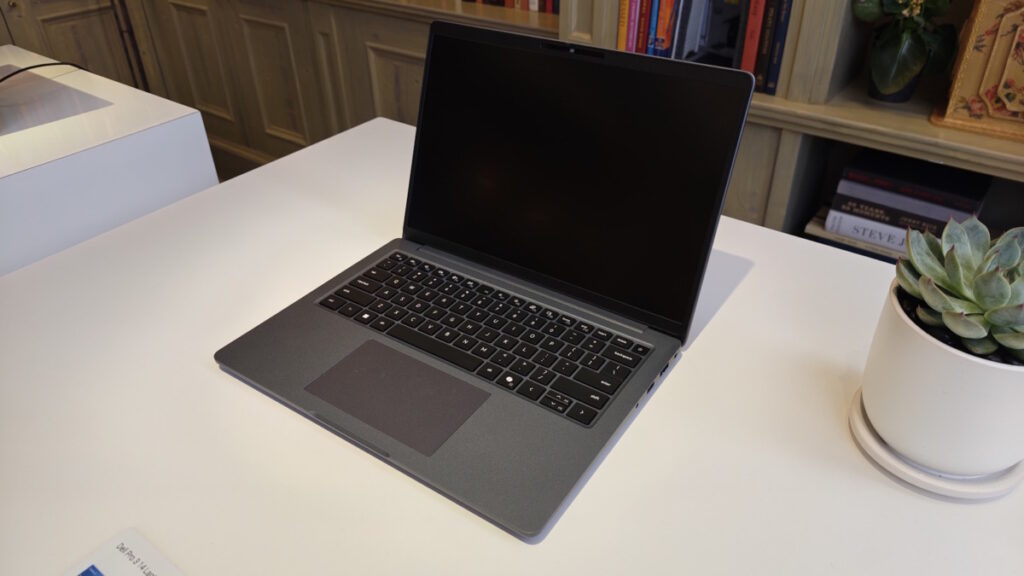
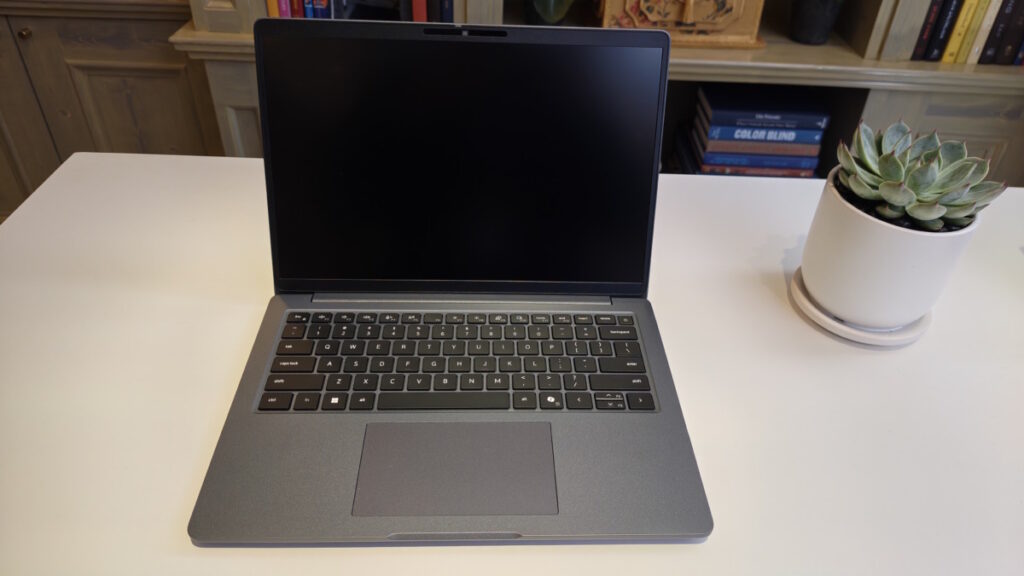
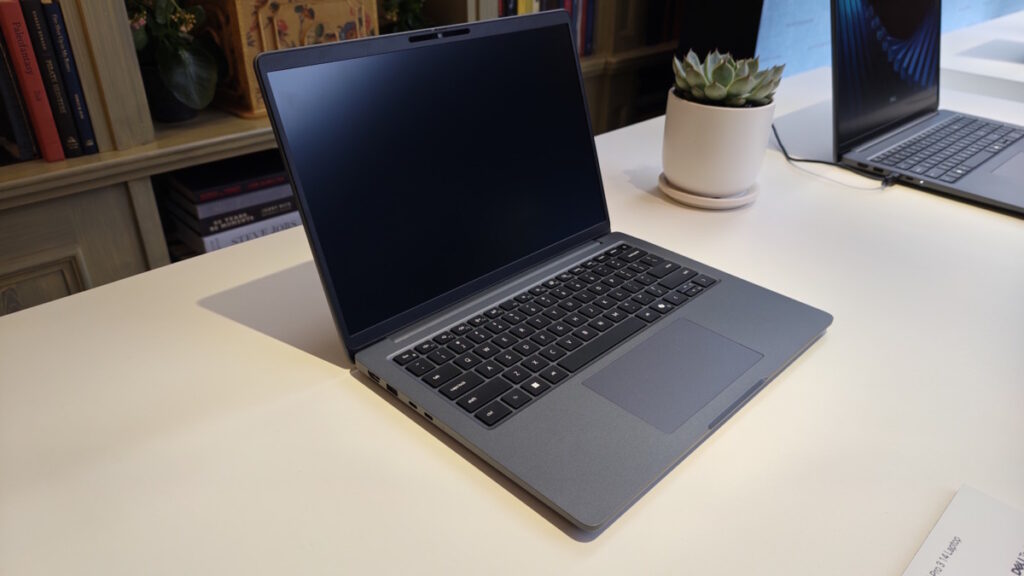
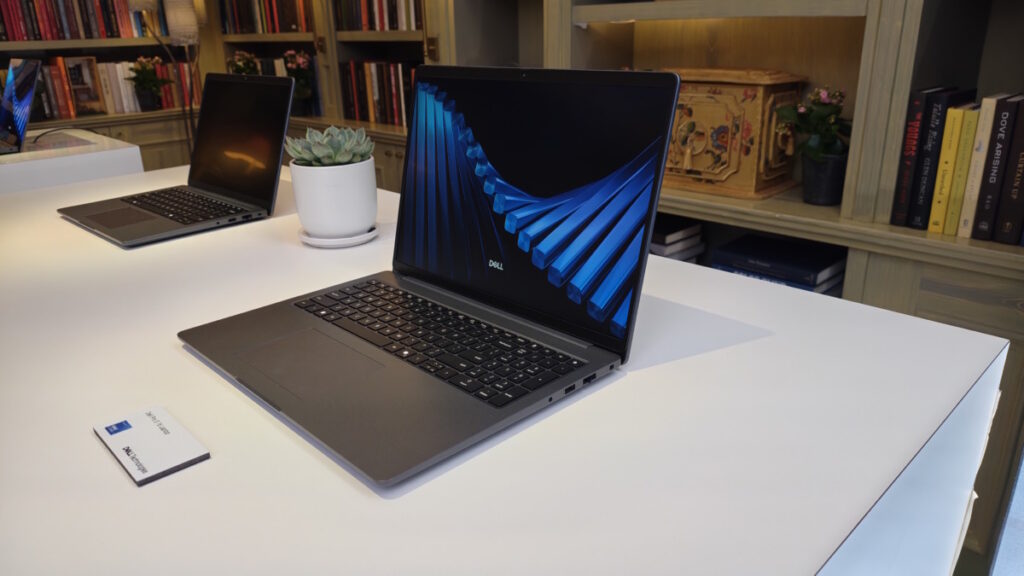

The Dell Pro 3 is aimed at budget-conscious buyers, especially for businesses looking to roll out laptops to a large number of people who don’t need the fastest chips or lightest designs.
“Dell Pro 3 will be the thinnest and lightest entry point into the portfolio we’ve ever had,” said Product Manager Zach Noskey. “What we really focused on with Dell Pro 3 was waterfalling some of those commercial experiences that we typically had for some of the higher tiers down into this part of the portfolio.”
In particular, that means support for mobile broadband, a better webcam and higher-end CPU options. To quote Noskey again, it’s for “departments that don’t want to sacrifice any of the enterprise features, but want great value”.
I pressed him for what areas are dropping quality. “I wouldn’t say drop in quality,” Noskey replied, “but in terms of striking that right balance, this is an ABS plastic chassis… it’s still a nice material that holds up well. As you start to go up the stack, you’ll see we use different materials, like aluminium.”
He added that “you’ll be able to get some higher end panel options on the Dell Pro 5 and 7 as well”, with the Pro 3 limited to 1,920 x 1,200 in both its 14in and 16in incarnations.
The Dell Pro 3 14 Laptop will be available in Intel (model number P314260) and AMD (P314265) incarnations, as will the Dell Pro 3 16 Laptop: Intel model number P316260, AMD number P316265.
Dell Pro 5 Laptop
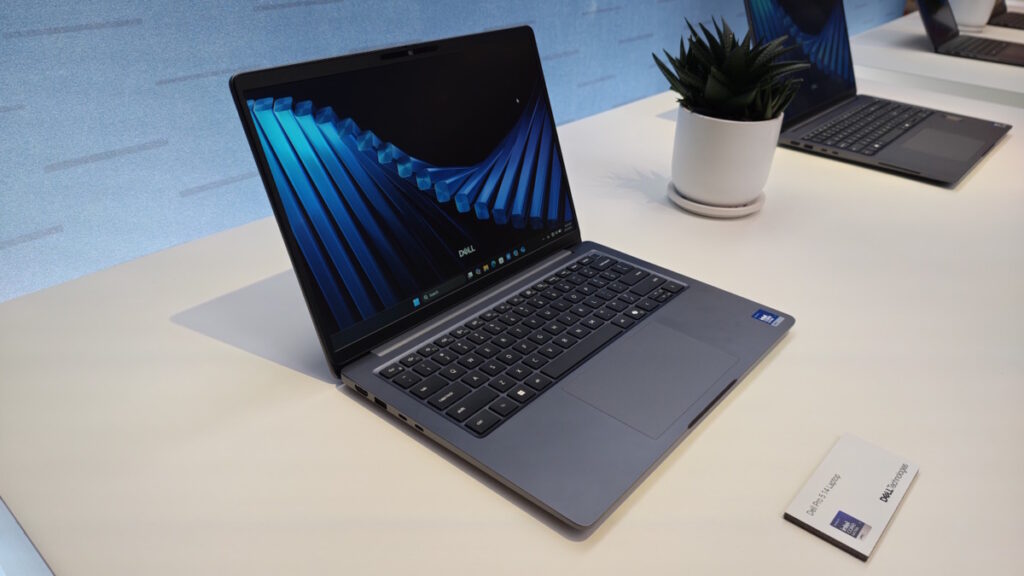


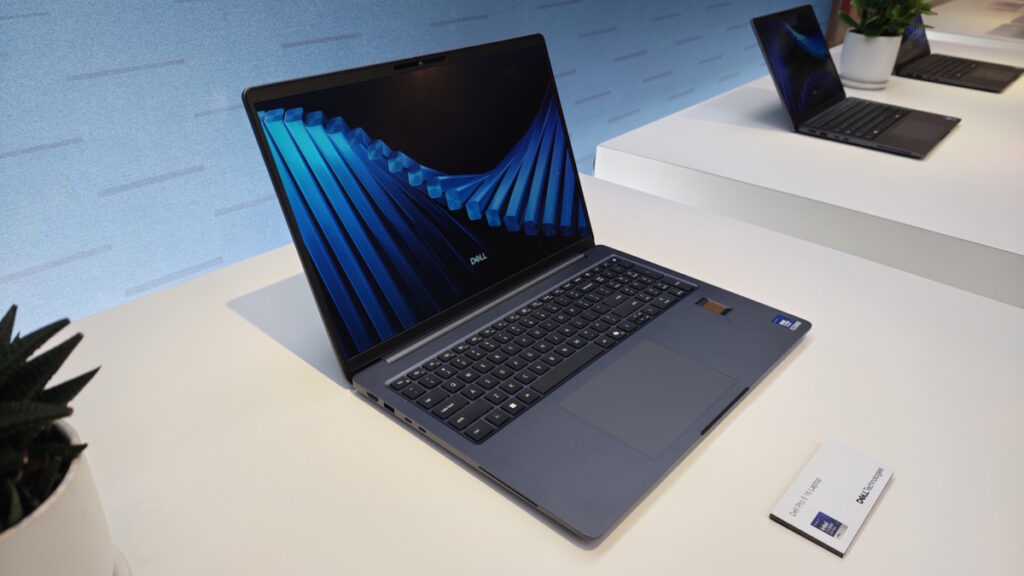
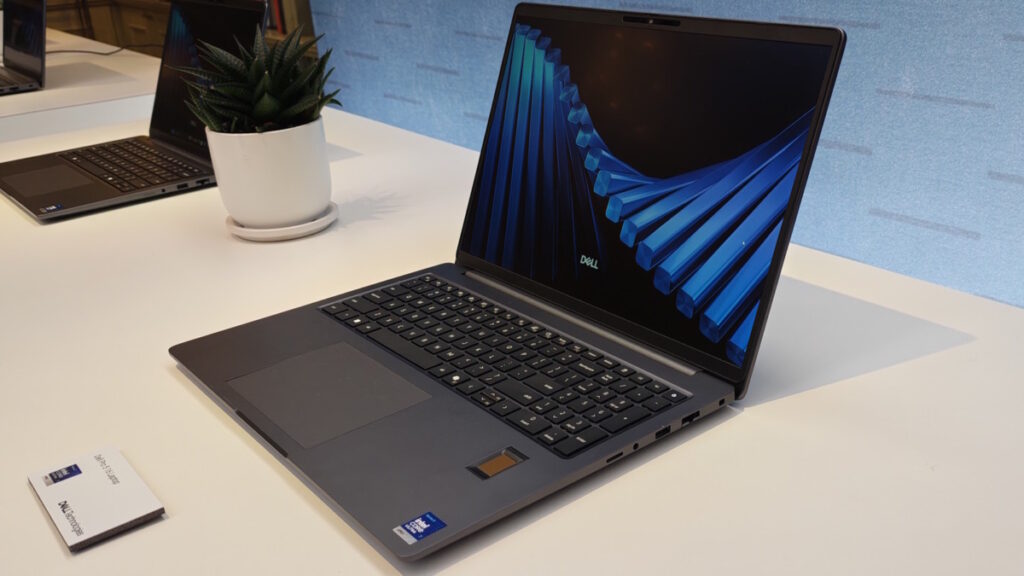
“Dell Pro 5 continues to be what I like to think of as the workhorse of the portfolio,” said Noskey. “This is where you’ll be able to get the most configurability and optionality in the portfolio.”
The Dell Pro 5 is also thinner and lighter than last year’s Dell Pro Plus (its equivalent in 2025) thanks to “an entirely aluminium chassis”. Noskey also talked about the “idea of a visual thinness. With the design, we’ve been able to taper this front end so when you’re looking at a device as you’re using it, it looks a lot thinner… for the end user. “
It also comes with a much wider choice of panels than the Dell Pro 3 Laptops. The Dell Pro 3 14 range starts with a 1,920 x 1,200 IPS panel but you can choose a 2,560 x 1,600 version with greater colour coverage – and even a 1,920 x 1,200 OLED screen. There’s a touchscreen IPS panel too.
When choosing, be careful to check the colour coverage. Some only spread to 62.5% of the sRGB gamut, so colours won’t look great. Look for 100% sRGB at least, and note that the OLED version covers 90% of the far more vibrant DCI-P3 space.
There’s no OLED option for the Dell Pro 5 16 Laptop, but in terms of colour coverage our advice still applies. Also note that the 16in version includes a number pad whereas the Dell Pro 5 14 does not.
“From a processor perspective, we’ll have both Intel Core Ultra 3 as well as Intel Core 3 processors here, and then the full next-gen AMD Ryzen Pro 4 series of CPUs as well,” said Noskey. “So a tonne of CPU options, a tonne of memory options as well. Not only will we have SODIMM options here, but.. our new LPCAMM2 options as well.
“This is really that sweet spot in the portfolio for a lot of IT departments that they can configure and find the right set of features for their end users, and scale up and down as they need to.”
Dell Pro 7 Laptop: the star?
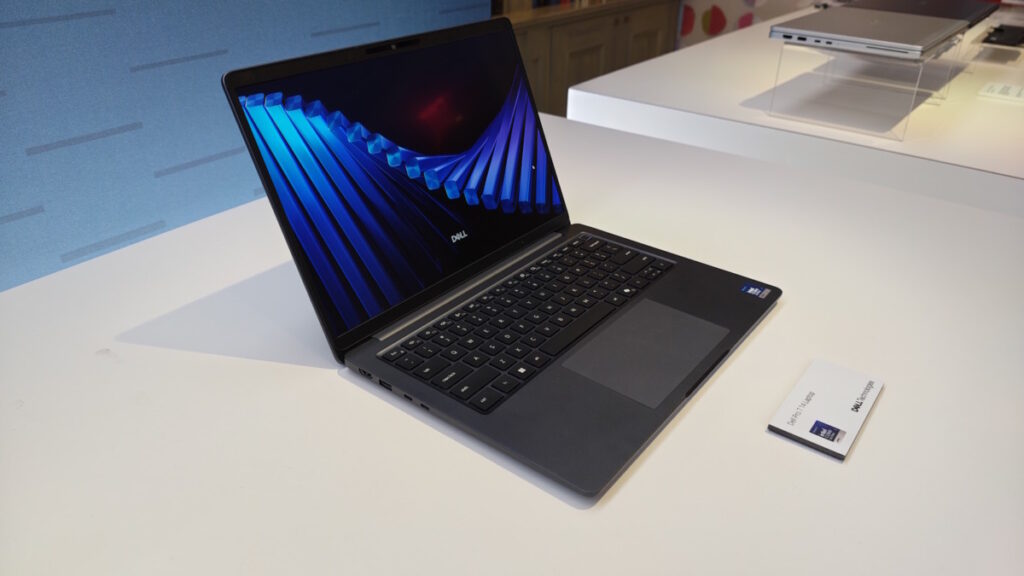

I asked two of the Dell product experts at the event which of the laptops they’d choose as their own, and independently two said the Dell Pro 7 14. You can see Zach Noskey’s hot take above, and he spoke more about the machine during our briefing.
“I’m really excited about the Pro 7,” he said. “The group of users that we’re really focused on here is that knowledge worker who maybe isn’t always on the road, but they do quite a bit of travel for their their job. Maybe they’re in an office, but they’re back to back in meetings all day, kind of moving around.
“It’s someone who still requires decent performance in the device, but they also really care about mobility,” said Noskey. “So with the Dell Pro 7, what we’ve focused on here is getting this a lot thinner than [last year’s] Dell Pro Plus. The Pro 7 will start at 16.35 millimetres, so an 18% reduction from the Dell Pro Plus just last year, so a lot thinner, but it’s also not sacrificing any of the performance or battery life.”
There’s no 16in option here, with Dell instead curiously choosing to provide 13.3in and 14in versions. The former is stuck at 1,920 x 1,200 resolutions, which should still look sharp across that diagonal, with a choice of colour coverage. Choose the Dell Pro 7 14 and you can pick between OLED and IPS, and upgrade from the basic 1,920 x 1,200 to a 2,560 x 1,600 resolutions.
One final thing to note: the Dell Pro 7 (13 and 14) is the only one in the Dell Pro Laptop 2026 range to have a 2-in-1 convertible option.
The Dell Pro 7 will ship with AMD and Intel processors, based on the Ryzen Pro 400 series and the Intel Core Ultra 3 chips (but not the plain Intel Core chips, which are offered in the Dell Pro 3 and Pro 5 Laptops).
Personally, I agree with the Dell product experts that the Dell Pro 7 14 is the standout pick. And I would choose it over the Dell Pro Premium simply due to the chiclet keyboard…
Dell Pro 14 Premium

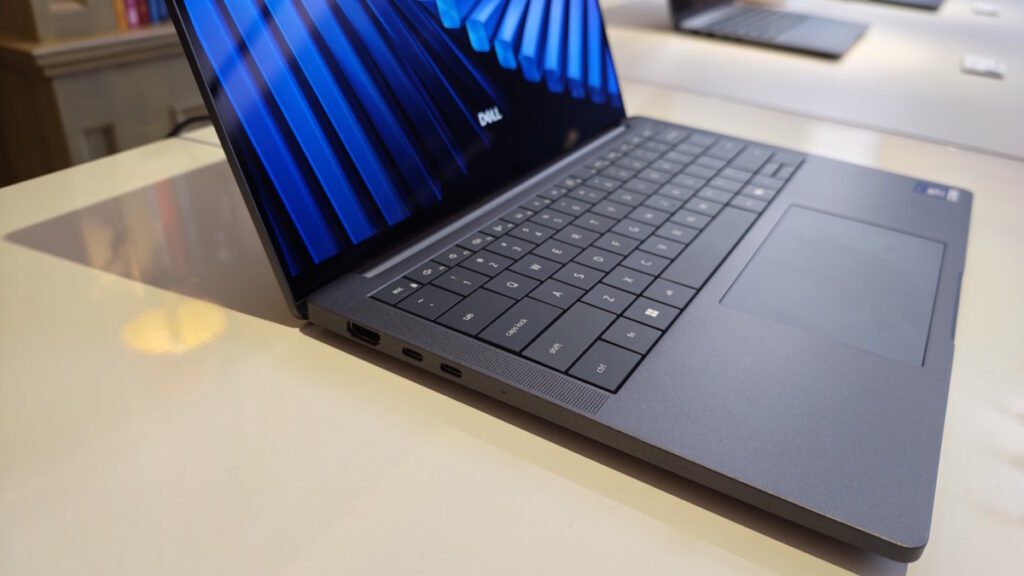

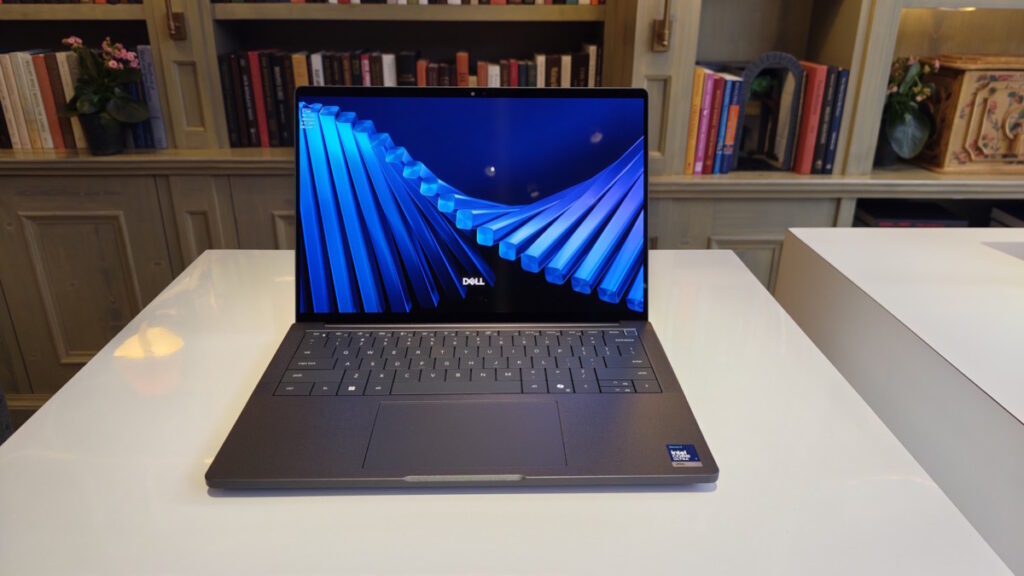
I won’t spend much time on the Dell Pro 14 Premium as there isn’t much that’s new here compared to last year’s version, but it’s your best choice if style and a low weight are your priorities.
“This is really that space in our portfolio that’s meant for your executives, your sales, road warriors, people that are on the go. This is the lightest Dell Pro device in the portfolio, just over 2.3 pounds,” said Noskey. “It’s an all magnesium construction and also has the smallest footprint in the portfolio.”
So what’s new for 2026? Aside from featuring Intel’s Core Ultra 3 series chips, it’s also a fraction thinner than last year’s design. “We worked with some of our panel vendors to thin out the panels that we put into this product. We were able to get it about 7% thinner, gen on gen,” Noskey explained.
Unlike the rest of the Dell Pro Laptop range for 2026, it’s also available almost immediately, going on sale from 31 March. All the rest will go on sale in May.
And due to the current volatility over RAM and SSD costs, Dell isn’t committing to a starting price for any of these laptops yet.
Related articles
About The Author

Tim Danton
NEXT UP