Trending Topics

 Trending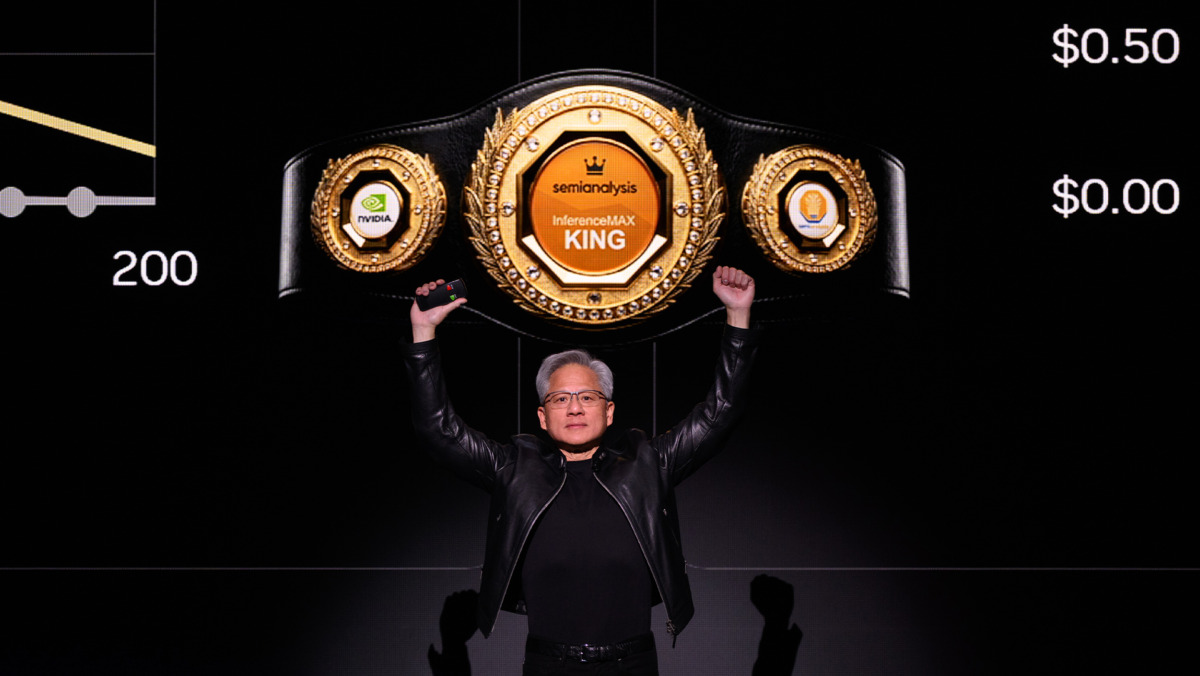
4 things we learned from Nvidia GTC 2026

Today marks the final day of Nvidia’s huge GTC 2026 event, taking place in San Jose, California. Nvidia describes it as the “premier global AI conference”, which is tough to argue with. It also emphasises Nvidia’s stranglehold on the AI industry.
There were a dazzling number of announcements at the event, including those from partners. Here’s a mini sampler:
- Dell Technologies announced that it would be “first to ship” Nvidia GB300 Desktop for autonomous AI agents with Nvidia NemoClaw and Nvidia OpenShell
- Lenovo unveiled six ThinkPad workstations “optimised for on-device AI development”, including a debut of a rather special silicon-anode battery proof of concept
- HPE also announced new “AI servers, turnkey systems, services, and software” powered by Nvidia Blackwell and Rubin acceleration
And those are just the tip of the iceberg. For this article, we’re going to concentrate on four direct takeaways from what Nvidia CEO and Founder Jensen Huang had to say. You can view the full two-hour keynote below or breeze through Nvidia’s selected highlights here.
Digital employees are coming for your job
Chatbots? So yesterday. One of Huang’s big hooks at GTC 2026 was the idea that “every single company in the world now needs an OpenClaw strategy”. That is, if you don’t embed AI agents into your company’s infrastructure then you will be at a huge competitive disadvantage.
Put into simple terms, it’s the move from employees asking an agent to help write an email to a prospective client to letting it do the research, write the email, schedule the meeting and update your CRM.
“Claude Code and OpenClaw have sparked the agent inflection point – extending AI beyond generation and reasoning into action,” said Huang. “Employees will be supercharged by teams of frontier, specialised and custom-built agents they deploy and manage. The enterprise software industry will evolve into specialized agentic platforms, and the IT industry is on the brink of its next great expansion.”
Bearing in mind that OpenClaw only emerged in January, it’s impressive to see Huang and Nvidia embed it so quickly into their strategy. But it also shows the sheer pace of change here.
We’re now fully on a tick-tick-tick development cycle
During MWC I interviewed the CTO of Synapsys, which helps CPU and GPU makers turn their concepts into silicon. He told me that the pace of change was ramping up as Nvidia demanding new silicon every year. Previously, that might have been every two or three years.
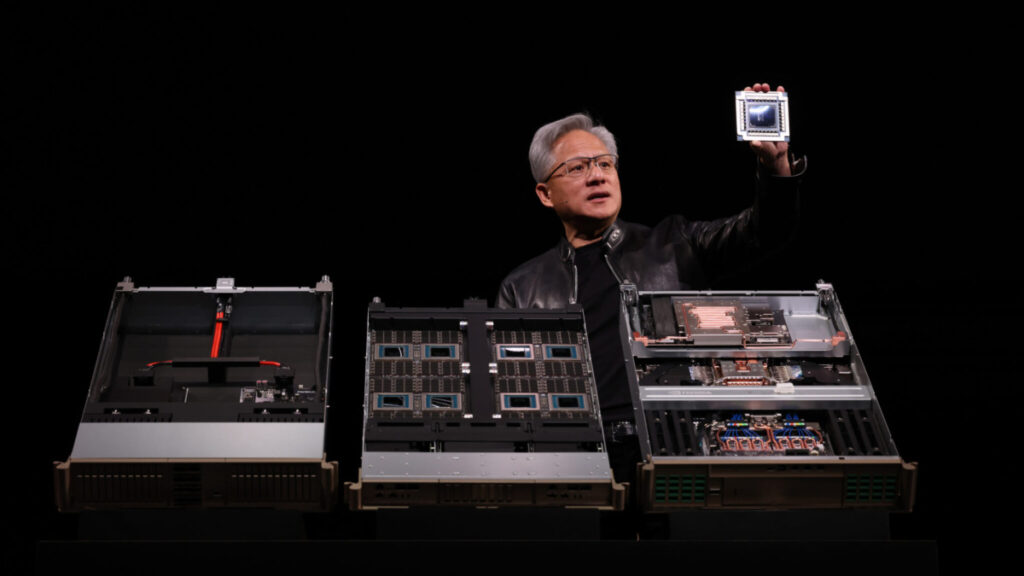
We saw this come into effect at GTC 2026, when Nvidia announced that the Vera stack of products – announced at CES 2026 – was now in “full production”.
CEO Jenson Huang was in typical hyperbolic flow. ““Vera Rubin is a generational leap – seven breakthrough chips, five racks, one giant supercomputer – built to power every phase of AI,” he said. “The agentic AI inflection point has arrived with Vera Rubin kicking off the greatest infrastructure buildout in history.”
This rapid development does have its downsides, however. In his blog, Editor-in-Chief of Constellation Insights Larry Dignan wrote: “If I built an AI factory a year ago, I’m already having buyer’s remorse. The architecture, complement of seven chips on the platform, AI inference improvements and advances add up to a better AI factory. Yes, we were told repeatedly that older Nvidia infrastructure performs well, but there’s some serious depreciation with AI advancing this quickly.”
Just to hammer this point home, Huang announced that its next major architecture, the Feynman Platform. Coming in 2028, this will include a new Feynaman GPU, Rosa CPU and LP40 language processing unit.
AI data centres in orbit could soon be a reality
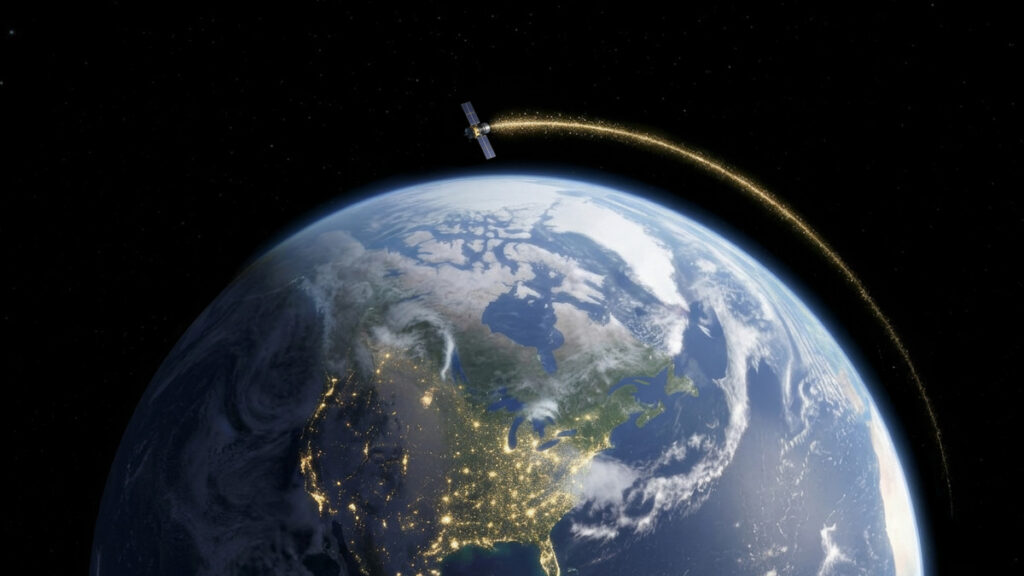
“Space computing, the final frontier, has arrived,” said Huang. “AI processing across space and ground systems enables real-time sensing, decision-making and autonomy, transforming orbital data centers into instruments of discovery and spacecraft into self-navigating systems.
“With our partners, we’re extending Nvidia beyond our planet – boldly taking intelligence where it’s never gone before.”
Those partners include Aetherflux, Sophia Space, Planet, Kepler Communications and Starcloud, all of whom were quoted on the official press release.
That release is hazy on details, but it boils down to this: Nvidia’s partners are actively working on projects using its technology. If you’ll excuse the pun, watch this space.
Nvidia hasn’t forgotten about gamers: announces DLSS 5
With so much talk of AI data centres in space, many breathed a sigh of relief when Nvidia announced the autumn arrival of DLSS 5.
“25 years after Nvidia invented the programmable shader, we are reinventing computer graphics once again,” boasted Huang. “DLSS 5 is the GPT moment for graphics – blending handcrafted rendering with generative AI to deliver a dramatic leap in visual realism while preserving the control artists need for creative expression.”
But that sigh of relief was quickly followed by sighs of despair. Gamers and games developers alike fear that DLSS 5 may simply result in yet more “AI slop”. Huang was not pleased at the response, telling Tom’s Hardware: “It’s not post-processing, it’s not post-processing at the frame level, it’s generative control at the geometry level.”
He argued: “This is very different than generative AI; it’s content-control generative AI. That’s why we call it neural rendering.”
About The Author

Tim Danton
NEXT UP