Trending Topics

 Trending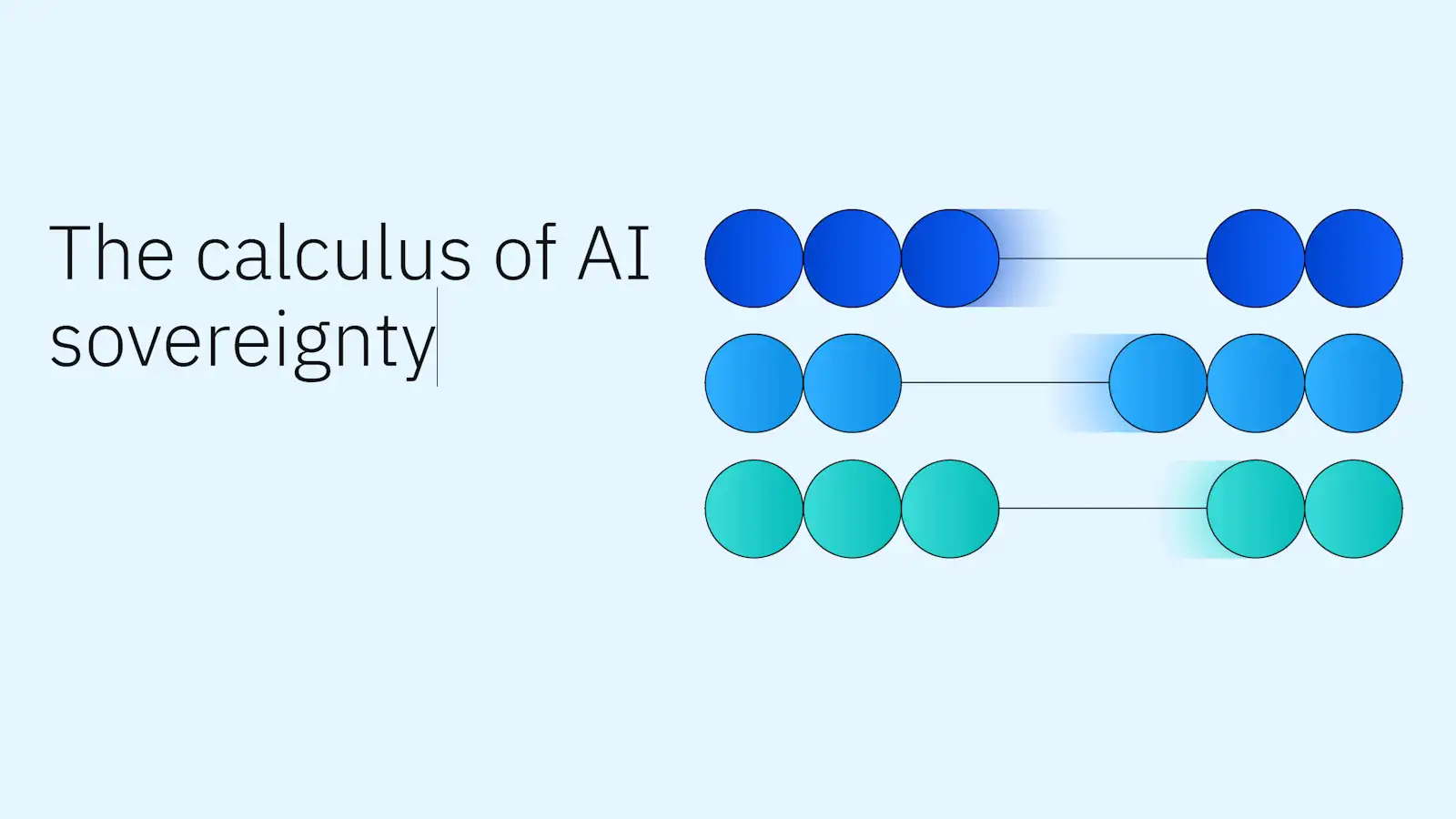
Organisations struggle with AI sovereignty, IBM finds

A majority of organisations do not fully understand their dependencies across AI vendors, models and infrastructure, according to a new IBM study.
The Calculus of AI Sovereignty study from the IBM Institute for Business Value, based on a survey of 1,000 senior executives globally, also found that many organisations are heavily reliant on AI systems they may struggle to control or replace: 71% of respondents admitted switching their primary AI vendor or model would be difficult.
Additionally, 68% said meeting data residency and sovereignty requirements across multiple jurisdictions was challenging.
The lack of visibility comes as organisations continue to experience AI-related disruptions. Surveyed executives reported an average of six AI-related disruptions over the past two years, largely driven by vendor services, while 81% said a seven-day outage affecting a key vendor would cause severe or critical disruption to their operations.
Reasons behind lack of AI sovereignty
“AI has introduced new forms of dependency that evolve faster than traditional governance, procurement, or technology cycles were designed to handle,” wrote IBM EMEA and APAC Senior VP and Chair Ana Paula Assis in the study foreword.
“That is why AI sovereignty has become one of the most defining leadership issues of this moment. The stakes are no longer technical; they are economic. Any loss of control can translate directly into margin pressure, compliance exposure, or outright business disruption.”
The study also found organisations with advanced AI control capabilities experienced less downtime and protected 55% more operating profit from AI-related disruptions than their peers. Yet, only 7% of organisations surveyed reported operating at this level.
Despite the risk, nearly three-quarters of respondents described their AI environments as intentionally multi-vendor. Not that this was necessarily a strategic move. IBM found that the reason for this diversity, in 69% of cases, was due to independent business unit decisions and geographic requirements.
Still, money talks. 72% of surveyed executives said they would accept a 20% cost increase to maintain AI vendors if it improved strategic flexibility.
About The Author