Trending Topics

 Trending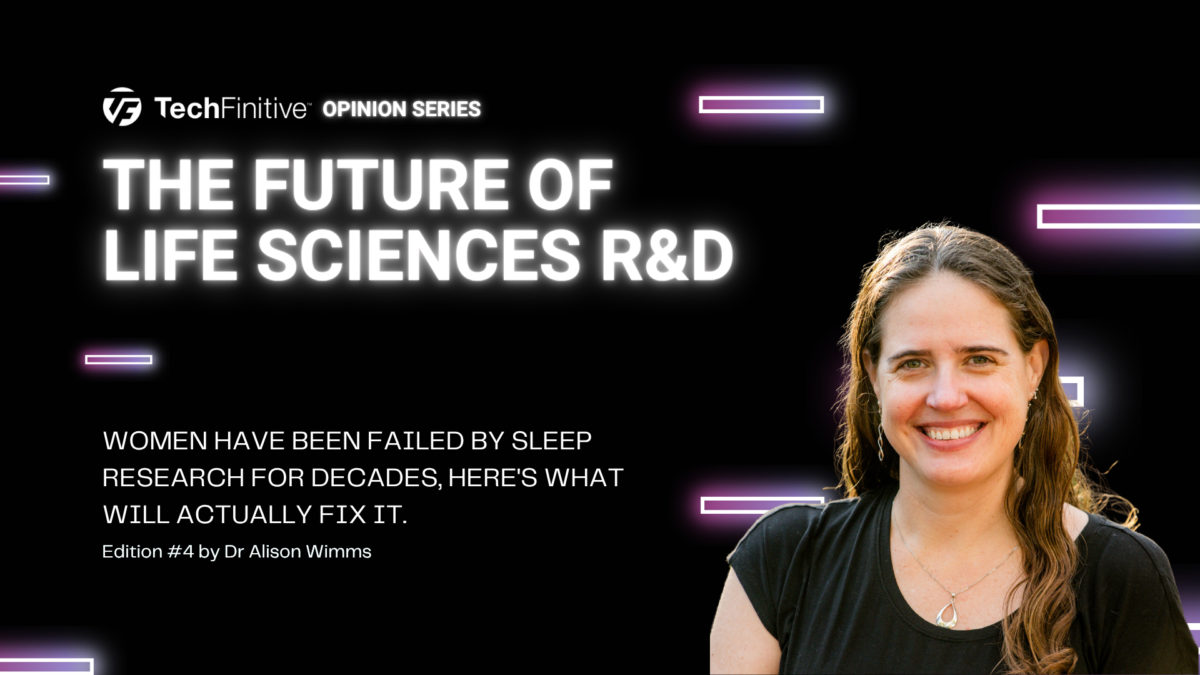
Women have been failed by sleep research for decades, here’s what will actually fix it.

As part of our new “The future of life sciences R&D” series, exploring how emerging technologies – from AI and digital trials to synthetic biology and advanced data platforms – are reshaping the future of drug discovery, clinical research, and scientific innovation, we invited Dr Alison Wimms, Director of Medical Affairs, Resmed, to share her views.
Here, Dr Wimms, examines how decades of sleep research have been shaped by assumptions about the “typical” patient, often leaving women underdiagnosed and underrepresented. Drawing on developments in digital monitoring, real-world data, and digital clinical trials, Wimms argues that technology offers a pathway to more inclusive research and a better understanding of how conditions such as sleep apnoea affect diverse patient populations.
When people think of sleep apnoea, they often picture a middle-aged, overweight man who snores loudly.
This stereotype has shaped the majority of what we know about sleep apnoea, a condition that causes breathing to stop and start several times during sleep. It has influenced the research, the screening tools, and ultimately, who gets diagnosed and treated versus who gets dismissed.
Sleep apnoea affects over a billion people worldwide1, with many patients not fitting that mould at all. In fact, 1 in 5 women suffer from the disease2.
Yet women are rarely part of the equation when it comes to the research that helps define and detect the condition, resulting in gaps in research and diagnosis. A model designed around the so called ‘standard patient’
The reason this is such a misstep is because often sleep apnoea shows up differently in women compared to men. Where the typical symptoms in men are loud snoring and pauses in breathing, women are more likely to suffer from fatigue, insomnia, morning headaches, low mood and anxiety3. They are symptoms often also pinned to other conditions, such as mental health, menopause, or the demands of work and family life.
This assumed view of what sleep apnoea looks like means the full diagnostic process is geared towards men, not women. Many widely used screening tools are built to catch the male version of the disease rather than the female one. For example, disease severity is conventionally graded on the number of breathing events per hour, a measure that can minimise the issue in women even when their sleep and day-to-day lives are significantly disrupted. And to top it off, referral bias means a woman describing exhaustion is statistically less likely to be sent for a sleep study than a man describing snoring4.
The result is a system that works better for men, even though it’s widely assumed to work equally well for everyone.
The clinic cannot tell the whole story
Historically, the best way to diagnose sleep apnoea has been an overnight study in a sleep clinic. A great tool, but not entirely reflective of the person’s usual sleep environment or routine.
An overnight study also only includes the people who make it to the clinic. Studies show there’s a clear gap between intention to improve sleep health, versus action, as 64% of Australians say they would be likely to seek professional help for a sleep problem, but only 22% actually have5.
If research only sees the patients who reach specialist clinics, it can only be based on a selected minority of patients. No amount of analysis can correct for the people who were never in the data to begin with.
Why digital changes what research can see
This is where digital clinical trials become an opportunity. In a digital clinical trial, participants are studied in their own homes, across many nights, using devices that passively collect data as they sleep.
To shape these trials, across the sleep health industry, connected devices are also now generating vast amounts of real-world observational data collected continuously from patients. A MinuteDx clinical study shows exactly how this data is already guiding research by analysing the potential of existing smartphone capabilities to detect obstructive sleep apnoea (OSA). As recently presented at the 2026 American Thoracic Society meeting and at SLEEP 2026, early results support its promise as a home-based, low-cost diagnostic solution that removes access barriers and extends reach to people who might otherwise go undiagnosed.
While the data is not gathered under research conditions, it is revealing. It can show us where the patterns are, which populations are underrepresented, and crucially, where the gaps in our understanding lie. In sleep health, that data is already telling us the problem of sleep apnoea underdiagnosis in women is bigger than the clinical record suggests. Drawing on observational data collected from female OSA patients, including their unique symptoms and poor sleep outcomes, Resmed are in the process of developing a screening questionnaire specifically targeted to females6.
So, digital clinical trials can take what the observational data reveals and test it properly, with structure, defined goals and scientific rigour. The real-world data can tell us where to look and the questions to ask, and the digital clinical trial is how we answer them to produce enough to inform clinical practice.
But the case for digital monitoring and trials goes deeper than convenience. Continuous home monitoring captures the night-to-night variability that a single lab study cannot, which is exactly the kind of signal that has been hiding female disease. Passive data collection also removes the referral and self-selection bias that determines who enters a study in the first place. And at the scale, AI can surface sex-specific patterns across very large populations. Together, it doesn’t just improve the existing model, it’s a whole new model entirely.
Inclusion must be designed in, not hoped for
The opportunity of digital research is significant but not guaranteed. For it to be successful, it must be designed differently from the outset.
In the case of sleep apnoea, that means ensuring the cohort of people being studied is inclusive rather than focusing on convenience, challenging whether the parameters of historical studies serve women and screening tools that align with how women present.
Inclusivity in research must be embedded in design decisions from the beginning, rather than bolted on at the end as a tick box exercise.
This is bigger than sleep
Importantly, this issue is not unique to sleep research. It runs deep through a myriad of medical research and trialling systems such as cardiovascular, pain and drug dosing, to name a few.
The ideas I’ve presented in the case of sleep apnoea can be repurposed and specialised to ensure representation and inclusivity is felt universally across the medical field.
Digital monitoring and digital clinical trials can not only be more efficient, but they are also a way for research to be designed around the full range of human experience, rather than around one narrow version of the patient, disguised as the ‘average’. The technology to see the people we have been missing now exists and it’s imperative we use it that way.
References
1. Benjafield AV et al. “Estimation of the global prevalence and burden of obstructive sleep apnoea: A literature-based analysis”. Vol 7:8; 687-98. Lancet Respir Med 2
2. Boers E et al. Projecting the 30-year burden of obstructive sleep apnoea in the USA: a prospective modelling study. Lancet Respir Med. 2025 Dec;13(12):1078-1086. doi: 10.1016/S2213-2600(25)00243-7.
3. Wimms A, Woehrle H, Ketheeswaran S, Ramanan D, Armitstead J. Obstructive Sleep Apnea in Women: Specific Issues and Interventions. Biomed Res Int. 2016;2016:1764837. doi: 10.1155/2016/1764837. Epub 2016 Sep 6. PMID: 27699167; PMCID: PMC5028797.
4. Eva Lindberg, Bryndis Benediktsdottir, Karl A. Franklin, Mathias Holm, Ane Johannessen, Rain Jögi, Thorarinn Gislason, Francisco Gomez Real, Vivi Schlünssen, Christer Janson, Women with symptoms of sleep-disordered breathing are less likely to be diagnosed and treated for sleep apnea than men, Sleep Medicine, Volume 35, 2017, Pages 17-22, ISSN 1389-9457, https://doi.org/10.1016/j.sleep.2017.02.032.
5. Resmed’s 2026 Global Sleep Survey
6. Wimms et al. C30-11: Development of an Obstructive Sleep Apnea (OSA) Screening Questionnaire for Women. AJRCCM Volume 212, Supplement 1 (2026)
About The Author