Trending Topics

 Trending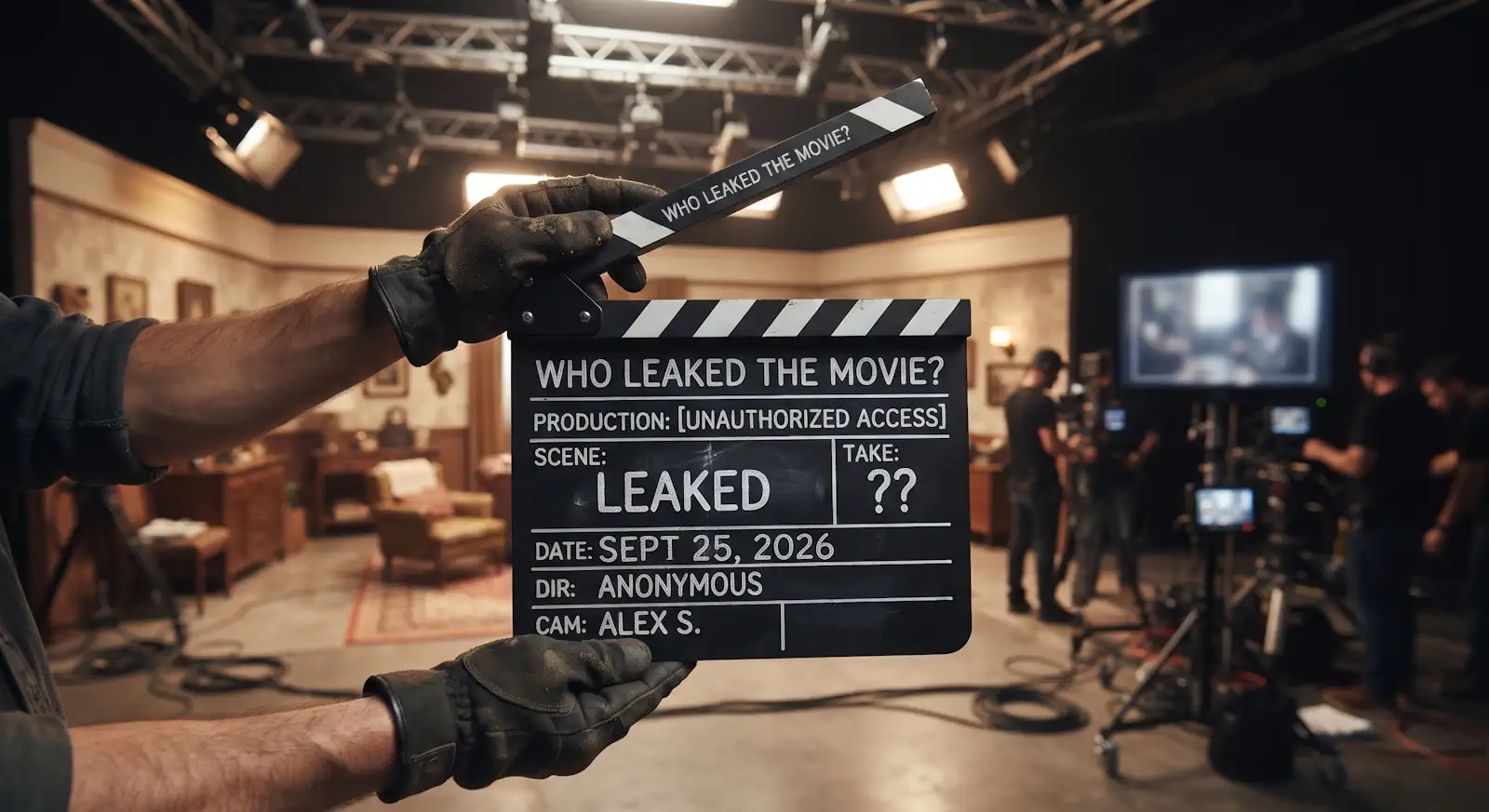
We’re asking the wrong question about forensic watermarking

This article is part of our Opinions section, where we invite industry professionals to share their views on the most pressing technology questions of our time.
Too many organisations still think of forensic watermarking as an enforcement tool. That’s a mistake.
Enforcement is only one outcome. The larger opportunity is using watermarking data to understand where operational risk is building across an increasingly complex content ecosystem. If forensic watermarking is only helping identify yesterday’s leak, organisations are leaving much of its strategic value untapped.
For years, the industry has focused on a single question: Who leaked this? That question still matters. Attribution remains fundamental to protecting premium content and supporting enforcement. But today’s media landscape demands a broader perspective. As AI reshapes both piracy and content protection, and as distribution networks become increasingly fragmented, forensic watermarking is evolving into something much more valuable than an investigative tool. It is becoming a source of operational intelligence.
The challenge is no longer protecting a chain. It’s protecting an ecosystem.
A decade ago, the distribution path for premium content was relatively straightforward and protected by corporate IT measures. Today, a single title may pass through internet and public cloud editing environments, subtitling and dubbing vendors, quality assurance teams, regional distribution partners, streaming platforms and numerous third-party workflow providers before reaching audiences.
Every one of those handoffs represents another access point and another opportunity for something to go wrong.
The industry is increasingly recognising that content security is no longer just about responding to individual incidents. The Motion Picture Association’s 2026 Trusted Partner Network STAR Report concluded that inconsistent execution of security controls across the entertainment supply chain closely mirrors the weaknesses observed in real-world security incidents. In other words, the same operational gaps identified during security assessments are repeatedly contributing to actual compromises across the industry.
That is an important shift in thinking. The challenge is not simply identifying where one leak originated. It is understanding where risk repeatedly emerges across an increasingly interconnected ecosystem.
AI is changing both sides of the equation
AI is making piracy operations more efficient. Automated discovery tools identify leaks faster than manual searches ever could. Fraud rings are using AI to scale credential abuse and account creation. Generative AI is improving the quality of illicit content and lowering barriers for bad actors.
Fortunately, the same technology is strengthening the defensive side.
AI can analyse thousands of attribution events simultaneously, identifying recurring workflows, partner relationships and operational trends that investigators reviewing incidents one by one would never detect. The competitive advantage no longer comes from adopting AI alone. It comes from having the right data for AI to analyse.
That is where forensic watermarking takes on a much broader role.
Watermarking’s real value isn’t attribution. It’s intelligence.
Every recovered watermark generates valuable operational data: a workflow, a partner, a region, a content type and a timestamp. Individually, those data points answer a straightforward question about a single incident. Collectively, they become something much more powerful.
The entertainment industry has experienced numerous high-profile pre-release leaks over the years, from unfinished television episodes to feature films and video games appearing online before launch. In every case, the immediate priority is identifying where that particular copy originated. But when attribution data is viewed across multiple incidents, a different picture can emerge. Organisations may discover that seemingly unrelated leaks consistently pass through the same stage of the production supply chain, whether a localisation vendor, post-production workflow or distribution process. Instead of solving isolated incidents, they begin identifying recurring operational risks.
That changes the questions organisations ask.
Instead of asking Who leaked this title?, they begin asking:
- Which partners experience recurring incidents rather than isolated events?
- Which workflows consistently introduce greater risk?
- Which vendor relationships deserve additional oversight?
- Which distribution paths repeatedly produce unauthorised copies?
- Which content categories are most exposed?
- What trends are emerging across incidents over time?
None of these questions can be answered by a single attribution event. They require treating watermarking output as an intelligence dataset rather than simply forensic evidence.
The next frontier is smarter decisions.
The best organisations can usually say after an incident today, We know where yesterday’s leak came from.
The more valuable insight is: we understand which parts of our distribution ecosystem consistently create the greatest risk.
Live sports provide one of the clearest examples.
A major sporting event may be distributed simultaneously through dozens of broadcasters, streaming platforms and regional rights holders around the world. Traditional forensic watermarking can identify the origin of an individual illicit stream after it appears online. But when attribution data is aggregated across an entire season or tournament, it can reveal that particular distribution paths, partner models or operational workflows consistently account for a disproportionate number of incidents.
The value shifts from investigating individual leaks to understanding where risk repeatedly emerges.
This is not about predicting the next leak with certainty. What is becoming achievable is combining historical attribution data with operational metrics and AI-driven pattern analysis to create meaningful risk intelligence. Security teams can identify workflows carrying elevated risk, prioritise investigations more effectively and focus resources where they are likely to have the greatest impact.
It is the difference between responding to a fire alarm and understanding which buildings are most likely to catch fire in the first place.
Why this matters now
This evolution is being driven by broader industry changes.
Streaming partnerships continue to multiply. Production workflows increasingly rely on cloud collaboration. Global day-and-date releases compress production schedules while expanding the number of vendors handling valuable content. At the same time, piracy has become increasingly organised, commercialised, and technologically sophisticated.
Every one of these trends expands the attack surface.
None of them is solved simply by getting faster at identifying where a leak came from after the damage has already been done.
From enforcement to strategic intelligence
Forensic watermarking will always play an essential role in enforcement. Attribution remains fundamental to protecting valuable content.
But organisations that continue treating watermarking solely as an investigative capability are overlooking one of its greatest strengths. Every attribution event creates data. Over time, that data becomes intelligence that can reveal recurring vulnerabilities, strengthen operational decision-making, and help reduce future risk across an entire content ecosystem.
The organisations that gain the greatest advantage will not be those that simply recover more watermarks. They will be the ones that use every recovered watermark to better understand their operations, improve their security posture and make smarter decisions before the next incident occurs.
For years, the industry has asked forensic watermarking, “Who leaked this?” The organisations that gain the greatest advantage over the next decade will start asking a different question: “What is every leak trying to teach us?”
More from our Opinions section
About The Author

Peter Oggel
NEXT UP