Trending Topics

 Trending
Zero trust for SMBs only works when complexity disappears

Small and mid-sized businesses face a myriad of security threats running the gamut from ransomware and phishing to identity attacks and data breaches. And all this often happens without the specialist teams available to larger organisations. The same human resource managing access permissions may also be tasked with fixing laptops and keeping the accounts system running.
For zero trust to work here, simplicity is the imperative.
Zscaler and Carahsoft recognise that gap.
Their expanded partnership aims to bring the Zero Trust Exchange to US SMBs and mid-market organisations through standardised bundles, predictable pricing and partner support. As we recently reported, the proposition is enterprise security that smaller teams can buy, deploy and operate.
The test is whether that simplicity holds up in deployment.
Zero trust needs ongoing attention
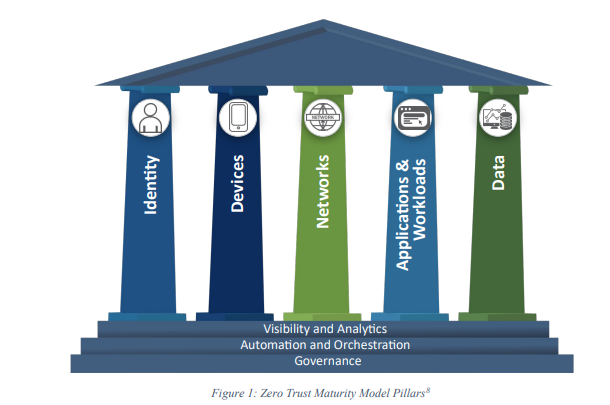
Zero trust involves continually checking identity, device health, and access permissions before a user reaches an application or dataset. CISA frames the approach around identity, devices, networks, applications and workloads, and data, supported by visibility, automation and governance. CISA’s Zero Trust Maturity Model makes clear that this is an operating model, not a single technology purchase.
For an enterprise, that breadth can mean dedicated teams for identity, endpoint management, and security operations.
For an SMB, it can mean one overstretched IT manager.
That gap matters.
A smaller business cannot afford a security architecture that needs constant specialist attention. If policy updates take days, alerts require manual investigation, or staff find secure access too difficult, users will work around the controls. Security becomes a blocker rather than a safeguard.
The channel must reduce the workload
Pre-packaged services and MSP support can reduce procurement and deployment friction. But simplifying the sale is not the same as simplifying security.
A credible zero trust for SMBs offer should help customers answer practical questions: who needs access, to what systems, from which devices, and under what conditions? It should also make routine tasks painless: onboarding staff, removing leavers’ access, identifying unmanaged devices and investigating suspicious logins.
That is where managed providers can create real value.
The best service is not a portal with more dashboards. It is a defined security outcome, backed by clear ownership and regular evidence that controls are working.
Zero-trust best practices begin with business risk, then map the users, applications, and assets that matter most. SMBs should take the same approach, starting with multi-factor authentication, least-privilege access and protection for critical SaaS applications.
The security market has long sold sophistication.
Smaller firms need usability.
Zero trust will become an SMB proposition only when it feels less like deploying a security command centre and more like running a well-managed access system.
About The Author