Trending Topics

 Trending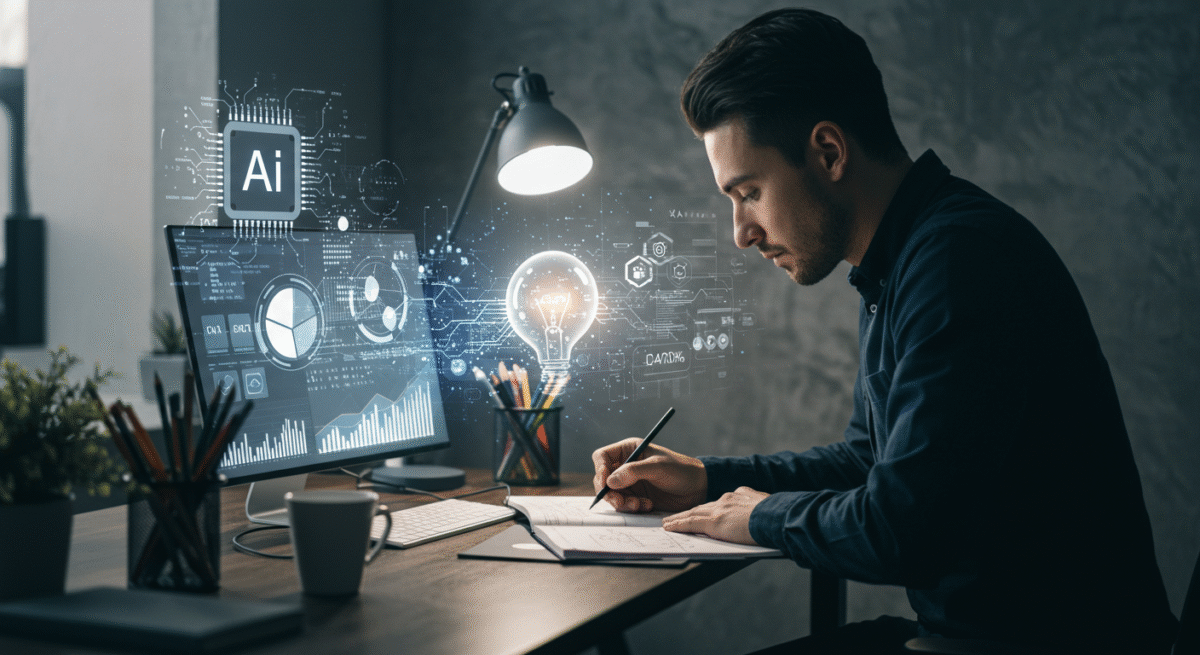
How much AI can we use in a creative space?

This article is part of our Opinions section, where we invite industry professionals to share their views on the most pressing technology questions of our time.
Generative AI is taking over much of what people create. It is significantly shaping the creative landscape since many companies can now generate their own assets in just minutes. What does this mean for business, and what does it mean for consumers? Is there such a thing as too much AI?
AI and creativity
Generative AI can do amazing things. With a simple prompt, and with a few tweaks, you can create in seconds the kind of content which used to take seasoned professionals hours. Images, video, blog posts, landing pages; you name it, and AI can put it together.
The first output is usually pretty raw, though. Text will feel stiff, images will have problems, and video will glitch. However, humans can come in and fix things up, make it better and more acceptable. You can fine-tune the instructions you give it, though that can be a little hit and miss, as generative AI can be fickle.
Why humans are still essential in the creative loop
The result is that, as powerful as AI tools are, getting the most out of them means spending time with them and really getting to know how they work. Ironically, the people best suited for this kind of work are creatives. They know what works and what’s good.
A lot goes on between setting out a creative task, like a blog post or some kind of visual, and the end product. However, this process is out of sight for most executives, and thus it becomes abstract. Thus, creatives can easily be seen as replaceable, even as they’re carefully guiding an LLM through the same process – not unlike training an intern, say.
The only way to make AI truly work, in any field, is to have humans work with it, at least for the time being. In my experience, when this is done right, the results are nothing short of amazing, and you can get great creative work at speed.
AI and quality
Sadly, though, not everybody sees it this way, and many people, not just creatives, are losing their jobs as their positions are cut in favour of AI. It’s cheaper for one, and it’s made even easier to make cuts due to the fact that something creative can’t easily be measured. Fire a few artists, and your KPIs will benefit immediately, while the downside won’t manifest for a while yet.
It’s not just about the quality of what AI puts out, either: it’s highly questionable whether humans even want AI in their creative products. Right now, people don’t seem to mind generated content too much – having something really good may even set you apart in a positive way.
However, I have a suspicion that this will change as we all become used to AI-created content. Once this happens, anything created by an old-fashioned human, or at least guided by one, will be worth its weight in gold and the companies that hung on to their creatives will reap the benefits.
Productivity and creativity
One big point that many commentators miss when talking about using AI in generative tasks to “create” is that, in this context, AI is foremost used as a productivity tool. They can’t do much, but they’re good at repeating stuff. This is the opposite of creativity, and as such, when you rely on generative AI to create things, it won’t be very good at it.
Yoking creative output to an AI makes it into a numbers game, which undermines the very nature of creativity. It comes from a world of numbers and pressure, where more is better and where content needs to be put out fast. The result is often poor, with text and images that look fake from a country mile away.
Making AI work for creativity
The only way to reap the benefits from AI – the ability to make things fast – is to involve humans closely in the process, and make generative AI a support tool for creatives. If done right, you can not just make things in greater numbers than before; it will be even better than it was, as creatives can do what they do best: create.
To do it right, though, you need a true expert, somebody who has the skills and craft to engineer proper prompts and edit anything put out by the AI. This last part is important, too, as to succeed, content needs to be unique. As AI is a tool for mass production, only a human can fix it, so it doesn’t disappear into a sea of similar content.
How can this work in practice
Naturally, making this work can be tricky, but I suggest a course that could keep productivity high without compromising on quality. For example, you could develop a tool that helps create names and trademarks. You could just ask ChatGPT for these, but you’d get something catchy and severely lacking in depth. You’d have to build a system around the tool, as well.
You’d start with a well-crafted brief, rich in context and constraints, written by an experienced professional. That would be passed through the tool, and the output then would be worked on manually by your team before it’s declared done.
This is handy in and of itself, but you could then integrate it with several data sources, including a trademark database and domain availability checks. On top of that, you could add tools such as phonetic transcription for multiple languages and general linguistic validation.
This could be the perfect blend of AI-driven production and human judgment. You’d create good, well-branded names relatively quickly, you’d know with some certainty that they won’t conflict with existing trademarks, and you could, if needed, translate them.
At the same time, humans have been involved, so you’d know that everything feels “real” and has the kind of depth only a living, breathing person can bring to something. If you ask us, it’s this blended, hybrid approach that would make a real impact on the creative space.
Why human judgment defines true creativity
Creativity does not equal content generation. AI today excels at producing content, but creativity has never been just about output. Even in the human process, we struggle to define creativity precisely. What makes something truly original or valuable isn’t the generation itself; it’s the judgment behind it. And that judgment remains uniquely human. That’s why it’s unrealistic to expect AI to handle an entire creative process end-to-end. Machines can generate, but only people can recognise where real value lies.
More from our Opinions section:
About The Author

Andrej Hájek
NEXT UP


