Trending Topics

 Trending
Digital Exceptionalism: the unsustainable truth behind tech’s carbon footprint

Table Of Contents−
- The problem with carbon dioxide
- Global warming in the pipeline
- Our House Is On Fire
- What is Digital Exceptionalism?
- What is rebound?
- Carbon accounting in the digital industry
- Do we need to rethink digital carbon calculations?
- Is Drax a greenwashing scandal?
- Why are Microsoft, Amazon and Google going nuclear?
- Nuclear stewardship
- Next gen nuclear: SMRs
- How much remaining carbon budget do we have left?
- The groaning Earth
- Imminent system collapse is unlikely
- Are our carbon sinks overflowing?
- Who are ‘we’?
- Does the South have faith in the North?
- Can Microsoft, Amazon and Google decarbonise their business?
- On a scale of 1 to 10, how screwed are we?
- Can technology save civilisation?
- Can we turn off Microsoft, Amazon and Google?
- Where are the environmental leaders?
- Hope
Earlier this month, TechFinitive covered Lenovo’s announcements on how it intends to bring AI into the world. And Lenovo isn’t alone. It probably hasn’t escaped your notice that technology leaders can’t utter five sentences without mentioning AI.
Less mentioned: how, in addition to existing cloud infrastructure, AI is burning through sufficient energy that Microsoft, Amazon and Google are having to invest in nuclear power to ensure that ‘business as usual’ continues.
Whilst the global tech brands have been finding ways to continue making profits which would make a golden dragon blush with shame, most have only paid lip service to their environmental obligations.
Carbon accounting and Net Zero obfuscation tactics cannot hide rising CO2 levels. Tragically, that’s not the worst news.
There are increasing signs that the planet’s mechanisms to deal with CO2 are stalling. Many climate scientists believe that heading off a 1.5°C temperature increase is now impossible and that 2°C is also increasingly unlikely.
In short, the planet’s arse is on fire and ‘we’ can’t be bothered to put it out.
The message from the experts pulls no punches. Net Zero is done. Business as usual is done.
‘We’ need to make uncomfortable changes to our lives and lifestyles and that includes technology.
If you’re a human who’d prefer to avoid extinction, then read on.
The problem with carbon dioxide
Don’t mistakenly believe that people have only fascinated themselves with CO2 since the 2016 Paris Agreement. In 1979, a report for the United Nations by Jule Charney concluded that a doubling of CO2 in the atmosphere was likely to cause global warming between 1.5 and 4.5°C.

If we focus purely on the CO2 content of our atmosphere, the scientific consensus is that around 350ppm (parts per million) is ideal to sustain life on the planet.
According to Clever Carbon, the atmospheric content of CO2 in our atmosphere in 1979 was 336ppm. Today it’s over 420ppm and rising.
Global warming in the pipeline
In 2023, the research paper, “Global Warming in the Pipeline” appeared in Oxford Open Climate Change. Written by scientists from institutions around the world, it examines the concept of climate sensitivity, which is the degree to which Earth’s temperature will rise in response to increased carbon dioxide levels. By analysing paleoclimate data and global climate models, they state that the earth has a much higher climate sensitivity than either the 1979 Charney report or the Intergovernmental Panel on Climate Change (IPCC) suggest.
The authors state the earth’s climate sensitivity has been exacerbated by years of inaction. By whom? Well, I’ll let the authors explain. The report says:
The danger caused by climate’s delayed response and the need for anticipatory action to alter the course of fossil fuel development was apparent to scientists and the fossil fuel industry 40 years ago. Yet industry chose to long deny the need to change energy course, and now, while governments and financial interests connive, most industry adopts a ‘greenwash’ approach that threatens to lock in perilous consequences for humanity.
Our House Is On Fire
Not all CO2 emissions can be blamed on the tech industry, but it’s impossible to deny the significant, and growing, environmental impact of the sector.
In 2022, a hard-hitting report called Our House Is On Fire (a titular nod to Greta Thunberg) said:
Computing is ‘repeatedly finding ways to use more chips in parallel,’ without a care for environmental costs, and the foot-prints of cryptocurrencies soar past that of ever-larger nations. This exposes the lie behind ‘micro-consumerist bollocks,’ and illustrates clearly why computing cannot be allowed to shirk its responsibility.
The report is correct. Back in 2022, various strands of the tech industry were profiteering whilst fuelling pseudo-gambling frameworks such as crypto coins and NFTs. Today, it’s happening with AI, but the impact will be worse.
Despite the efforts of TikTok tech bros shilling get-rich-quick schemes from inside their side-hustle Lamborghinis, cryptocurrency and NFTs were niche fintechs.
AI is different. It’s being pushed hard by mainstream brands whose carbon emissions have begun to rise.
What is Digital Exceptionalism?
Bran Knowles, Professor of Sociotechnical Systems at The University of Lancaster, is one author of Our House Is On Fire. She explained to TechFinitive the concept of digital exceptionalism.
“Digital technologies are the way that our economies are going to continue to survive and grow. We, as a society, continually reinvent capitalism to come up with new forms of making money and AI is the way that we’re going to continue to profit”.
Professor Knowles is also aware of common pushbacks against attempts to constrain digital progress. “It’s anathema to say, ‘hang on, you can’t have all that’ or ‘you can’t do all that’ or ‘we need to do a little bit less of that’ because people say ‘but what about the economy?’”
The reality is that tech leaders don’t want to hear protests which block progress and profit.
“It means that any discussions about constraint, saying you’re not going to be allowed to do this many things, ‘we’re going to turn off blockchain’ or ‘you can’t have your nuclear powered data centre’ are off the table when it comes to digital technologies. That’s digital exceptionalism.
“We face a natural constraint which is our ability to live on a habitable planet but digital exceptionalism says it’s fine because digital technologies are making money”.
What is rebound?
When any new tech product is launched, there’s two points from the ‘product launch playbook’ which need to be uttered at some point. The first covers how more powerful the new product now is compared to the embarrassing old version. The second is eco-credentials about power efficiency, energy use or some other green metric.
So, if all of our new technology is so much more power efficient than the old stuff, why do we need more energy? Professor Knowles explains the concept of rebound. “It means that when you make something more efficient, you make it cheaper and easier to do more of that thing. Which makes it more appealing, economically, to do so.”
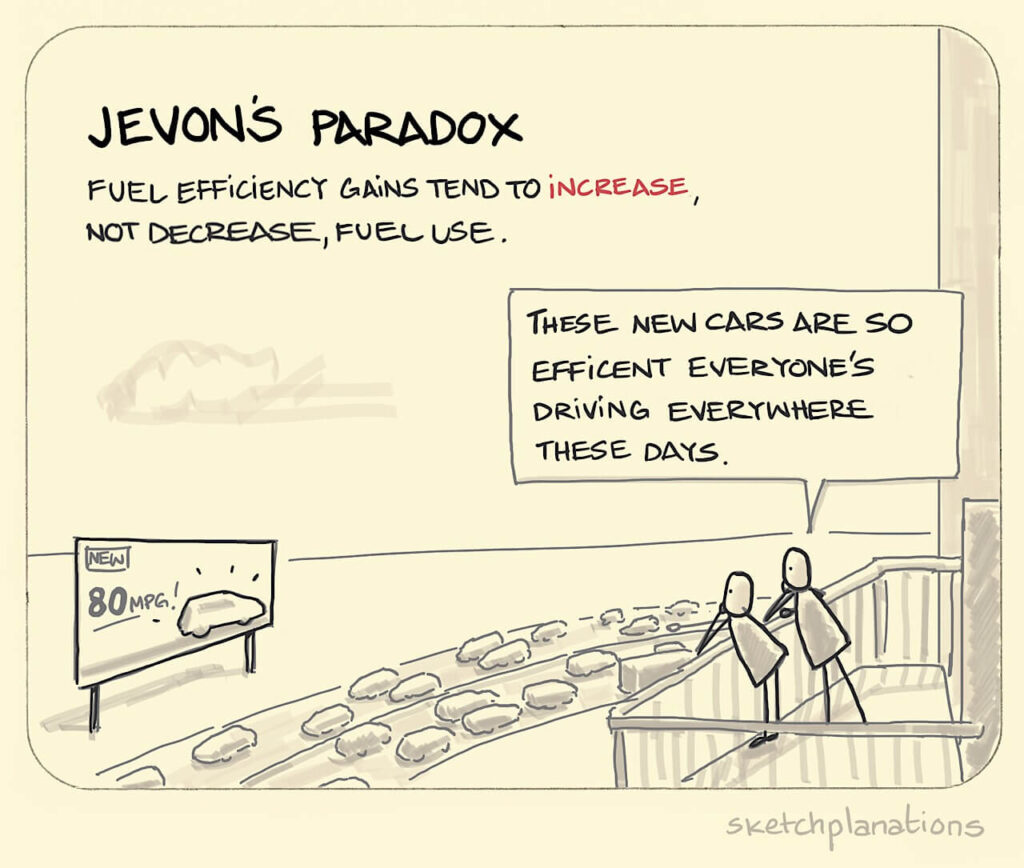
Rebound is based on Jevons Paradox. William Stanley Jevons was an economist that noted that the increased efficiencies in coal use had led to increased consumption. This led to the astute observation that, contrary to common intuition, technological progress could not be relied upon to reduce fuel consumption.
Just as a historical aside, Jevons wrote his book in 1865. One sadly realises that 160 years later, tech-execs still beguile by showcasing CPUs running at 50% lower energy, while we remain utterly oblivious to the fact that energy use isn’t tumbling because we’re using more product.
Carbon accounting in the digital industry
Each year, major tech companies publish Environmental and Social Government (ESG) reports. These lavish documents highlight the environmental progress of the company, giving line detail on the carbon footprint of the firm.
Professor Knowles is also the co-writer of Carbon Accounting in the Digital Industry. She believes the carbon accounting system is ill-equipped to deal with the complexities of digital companies.
“When we start asking questions about what do digital technologies add to the global carbon footprint, you have a really difficult boundary problem. What counts as digital technologies? There’s infighting within communities who measure these things, saying Bitcoin’s not a digital technology, it’s a financial entity.
“There’s also rebound issues. If I did this, even if it was to reduce the carbon footprint of something, what are the impacts in terms of behaviour or impacts in terms of infrastructure? The carbon impacts of those changes are incredibly hard to predict, calculate and put a number to. So they get discounted from any measures and account for a lot of the underestimates over the years.
“Another issue has to do with supply chains and how far down the chain do you go? There’s lots of chains on both ends, the production and then end of life, so for pragmatic reasons we often truncate them. However, truncation accumulates, and it matters to the overall footprint”.
Unknown metrics are also present with conventional data inputs such as energy use. “We don’t always get a readout of how much energy is being used by these systems. We might at the data centre level but not at the individual PC level. So things are based upon a lot of assumptions and there are slight inaccuracies in those assumptions.”
Do we need to rethink digital carbon calculations?
To underline how complicated digital carbon calculations have become, Professor Knowles pointed me towards some new research: Rethinking digitalization and climate don’t predict, mitigate. “Their claim is that carbon footprints for digital technologies are essentially unknowable. They fall into a category that’s not ‘we could know if we had more information’ but ‘it’s unknowable because it’s a moving target.’”
Clearly carbon accounting for tech footprints increases to near impossible levels because of unknowables. Even when there is sufficient data to make calculations, the final results can be bewildering.
Is Drax a greenwashing scandal?
By way of an example of how ludicrous Carbon Accounting can be, look no further than a power station in the north of England called Drax claiming:
Drax Power Staton is now the largest single site generator of renewable power in the UK

Drax’s claim is highly contentious as it burns 7 million tonnes of wood pellets a year to generate power. According to one of many reports by The Guardian, 80% of these pellets are shipped in from the US and Canada.
Any 9-year-old child knows shipping wood across the world for incineration is not good for the environment and The Guardian reporters state Drax to be the largest single source of carbon emissions in the UK. However, the UK Government classifies burning wood, or biomass, as clean energy (as trees can be replanted), so Drax has been given over £7 billion in tax-funded subsidies since it began biomass conversion in 2012.

As a footnote to this lunacy, in mid 2024 the UK Energy regulator, OFGEM, fined Drax for inadequate reporting of its tree sourcing. Drax agreed to pay a £25 million settlement.
Let’s park the glaring questions about inadequate fines, shareholder bonuses and an energy regulator that believes burning down forests is okay. Drax is a tragically authentic example of Professors Knowles’ point that calculating meaningful carbon emissions is phenomenally complicated.
Which brings us back to Microsoft, Amazon and Google’s nuclear ambitions.
Why are Microsoft, Amazon and Google going nuclear?
In terms of CO2 emissions, nuclear power is one the cleanest there is, almost zero. Therefore it’s a smart move for Microsoft, Amazon and Google to look towards this carbon friendly, fossil free energy source so they can continue to make vast profits decarbonise their industry and maintain businesses as usual.
As our need to create carbon-free energy is so urgent, nuclear power is viewed as the best solution to our crisis.
According to the US Department of Energy, nuclear power generates nearly 775 billion kilowatt-hours of electricity each year and produces nearly half of the nation’s emissions-free electricity. They also point out that nuclear annually prevents the same amount of CO2 hitting the atmosphere as taking 100 million cars off the road.
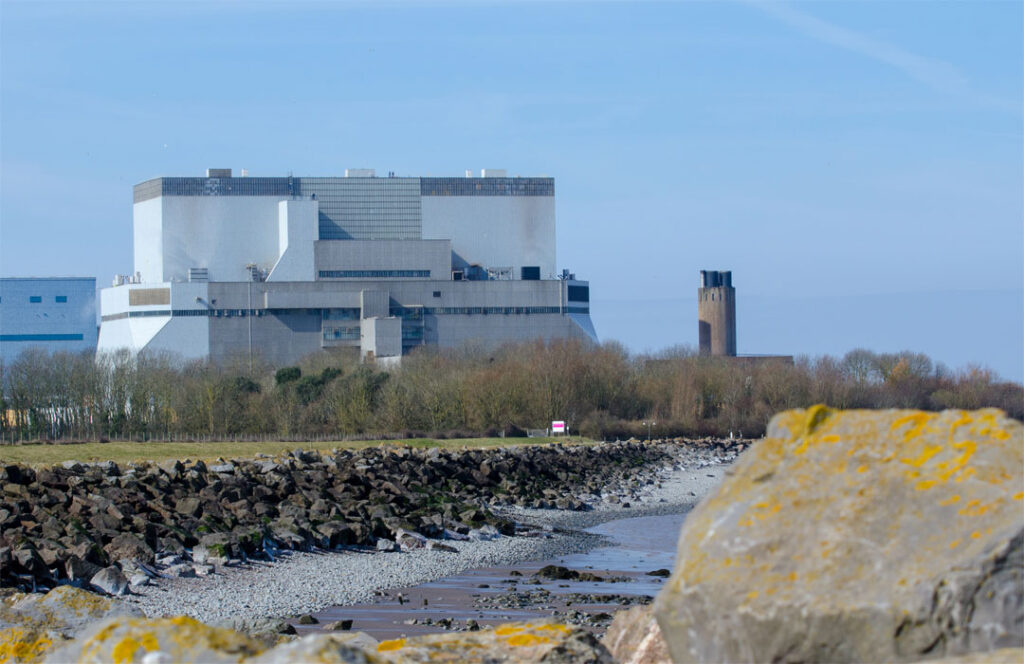
May I just point out that taking 100 million cars off the road by investing in public transport infrastructure is cheaper and benefits communities and the environment to a far greater degree?
Even the DoE recognise there are some small public concerns with nuclear power stating:
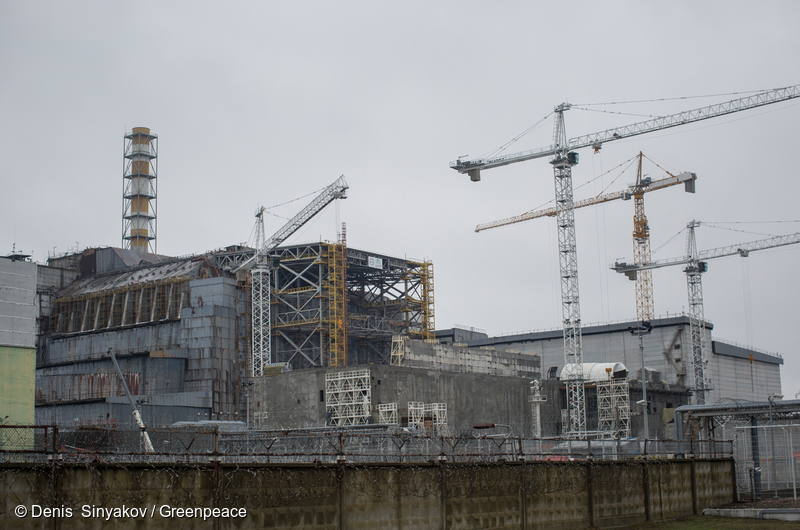
This perception is often based on three global nuclear accidents.
Perception, of course, is relevant to perspective. There are plenty of stats which say that the death toll of Chernobyl and Fukushima wasn’t that high, but plenty more which talk about the widespread and long-lasting effects of nuclear disasters. What nuclear lacks in carbon, it more than makes up for in controversy and complexity.
Nuclear stewardship
Additionally, nuclear power stations produce radioactive waste which, as far as scientists can predict, remains dangerous for millennia. This waste requires careful long-term storage and management and eventual disposal in Geological Disposal Facilities (GDFs).
The UK has been searching for suitable GDF sites since 1976, and still hasn’t agreed on one.
The nuclear challenge concerns humanity’s ability to safely contain hazardous material to prevent environmental contamination and health risks for future generations. For this reason, research raises serious concerns that the costs of long-term nuclear waste storage may mean that nuclear isn’t as viable as other clean energy sources such as wind, solar or hydro.
The DoE is working hard to reassure the public:
National labs are working with industry to develop new reactors and fuels that will increase the overall performance of these technologies and reduce the amount of nuclear waste that is produced.
Next gen nuclear: SMRs
The DoE is referring to Small Modular Reactors (SMRs). These are smaller nuclear reactors, usually with around a third of the power output of a full-scale facility. The (financial) cost savings come from their modularity should see reductions in production overheads and increased efficiency of build time.
It’s still too early to tell how effective SMRs will be. In both the USA and UK, SMR programmes remain in the tender and planning stages, with SMRs not expected to emerge until 2030 at the very earliest. I also need to throw into the mix that academic concerns have already been raised that although SMRs could be cheaper and less powerful than existing nuclear facilities, they could produce more radioactive waste.
If TripAdvisor listed nuclear power, I would expect reviewers to give it very mixed ratings.
Aside from the horrific impact on life when nuclear power stations occasionally explode and the absolute certainty that we must babysit the waste for ten thousand years at eye-watering costs, our reliance on technology which experts have yet to agree upon hampers our urgency for a clean carbon-free fuel source.
Bizarrely, it’s that last point which is the most important because in terms of CO2, time is not on our side.
How much remaining carbon budget do we have left?
The remaining carbon budget (RCB) is a critical concept in climate change mitigation. RCB refers to the amount of carbon dioxide we can still emit into the atmosphere while limiting global warming to a specific temperature target, such as 1.5°C or 2°C above pre-industrial levels.
Around two years ago, many scientists contributed to the Assessing the size and uncertainty of remaining carbon budgets report. They estimated that from January 2023, the RCB for a 50% chance of keeping warming to 1.5 °C is around six years of current CO2 emissions. The RCB for a 50% chance of 2°C is around 14 years.
We’re now almost two years on from that report, so these figures come down to four years and 12 years. I won’t bother to tweak it further to account for the extra CO2 in the atmosphere.
Whilst you’re taking those numbers in, I’m going to throw something else at you.
The groaning Earth
You may not have heard of the Atlantic Meridional Overturning Circulation (AMOC). In simplistic terms, it is a conveyer belt which shifts warm waters from the tropical parts of the Atlantic towards the colder parts in the North Atlantic. AMOC is a vital to our climate but scientists from the Niels Bohr Institute at the University of Copenhagen have published a warning. Their paper, Warning of a forthcoming collapse of the Atlantic meridional overturning circulation, is pretty self explanatory.
AMOC plays a significant role in regulating global systems, particularly in Europe, where it contributes to the mild climate. It influences weather patterns, temperature, precipitation by distributing energy heat and energy around the world. AMOC is vital for sea-borne nutrients, vital for marine life.
The report voices concern that AMOC has weakened by 30% in the last decade and models predict that as greenhouse gasses (GHG) increase, it will weaken further.
Imminent system collapse is unlikely
There are stark warnings that a further weakening or collapse of AMOC could lead to cooling in Western Europe and North America with significant changes to precipitation patterns. Sea levels will rise, especially along the East Coast of the USA, which will have major impacts on terrestrial and marine life.
In the interest of balance, the IPCC has said that the likelihood of AMOC collapsing is unlikely and, for me, I’ve always found that one of the less reassuring adjectives.
However, there are voices that are critical of the IPCC’s reliance on scientific experts and technical aspects has ignored the social implications of climate change, potentially contributing to inaction.
Parking climactic matters to one side. AMOC is vital to how ‘we’ live our lives because it gives us a workable, habitable climate that, until very recently, was pretty stable aside from a few blips.
If AMOC collapses, human life will not continue in the manner which it has for many thousands of years.
There is also the genuine possibility that human life cannot continue at all because AMOC isn’t the only vital earth-system showing signs of fatigue.
Are our carbon sinks overflowing?
A cross disciplinary research team has published observations on the CO2 growth rate at the Mauna Loa Observatory in Hawaii. They noted the CO2 increase for 2023 was around 3.37ppm which was 86% higher than the previous year. Puzzlingly this figure is much higher than the equivalent global fossil fuel increase (around 0.6ppm), so why such a difference?
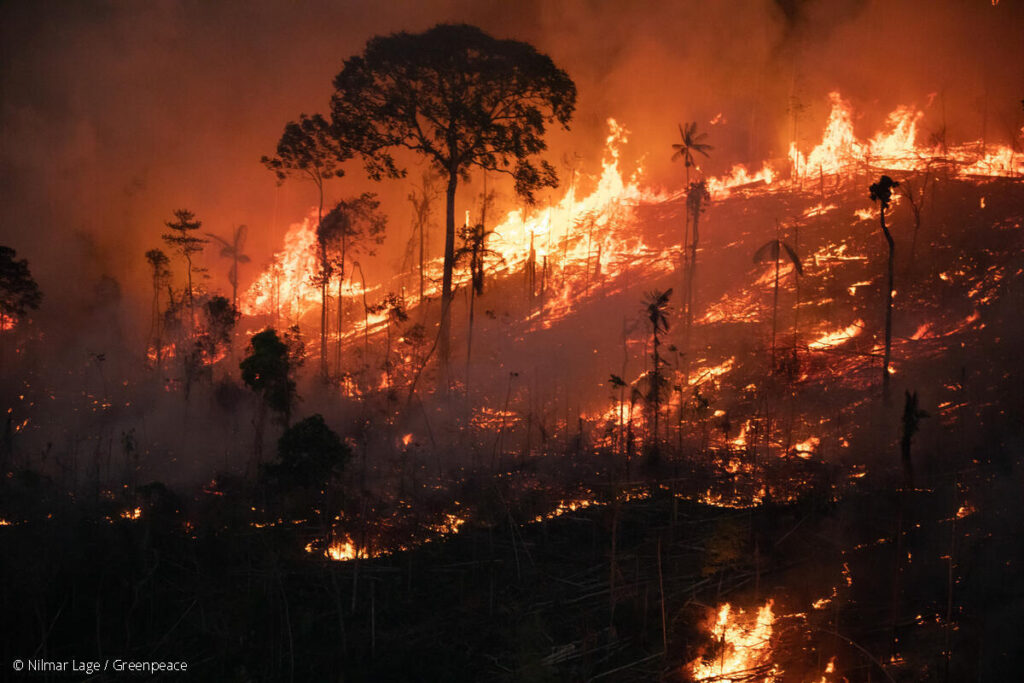
Their belief is that there has been a ‘unprecedented weakening of land and ocean sinks’, but the questions of where and why remain are, as yet, unanswered. The researchers also note that land regions exposed to extreme heat in 2023 contributed to a carbon loss of 1.73 GtC yr-1. Their explanation:
Record warming in 2023 had a strong negative impact on the capacity of terrestrial ecosystems to mitigate climate change.
Should we be worried?
An investigation by The Guardian spoke to leading environment scientists who claimed that carbon sink collapse has not been factored into climate models.
Yeah, ‘we’ should be worried.
Who are ‘we’?
You may have spotted that throughout this story I keep referring to ‘we’. Depending on where you live in the world, along with differentiators like your sex, colour or your wealth status, will reflect on if the ‘we’ relates to you.
Before I go further, I need to acknowledge that most ‘we’ look exactly like me. Pale, male and stale. The effects of climate change are already impacting on the lives of communities that most of the ‘we’ never think about.
The decision makers in the ‘we’ are the wealthy and the powerful. Politicians, presidents, CEOs, policy makers, business leaders. Too many have fought hard against progressive environmental agendas which impact on the poorer areas of the world. Areas which are not burning through energy to power luxury lifestyles and cutting-edge technologies.

In the research paper Equity Assessment of Global Mitigation Pathways, the writers argue that the IPCC’s Sixth Assessment Report (AR6) disregards the historical responsibility of developed countries in terms of carbon emissions:
The WGIII AR6 contribution notes that 57% of the historical cumulative CO2 emissions from fossil fuel use and industry, from 1850 to 2019, have been from developed countries (not including Eastern Europe), despite their accounting for, currently, only approximately 16% of the global population.
Repeated ‘agreed’ strategies for decarbonisation usually dictate that heavily (or historically) industrialised ‘developed’ nations in the Global North would make greater reductions than ‘developing’ nations in the Global South. The privileged theory is that the Global North should do more decarbonising as we’ve caused most of the problem. This way, industrial nations in the Global South can have opportunities to ‘develop’.

Does the South have faith in the North?
One author of this report, Tejal Kanitkar is Professor of Energy, Environment and Climate Change at the National Institute of Advanced Studies in Bengaluru, India.
In her powerful lecture, Exploring Equitable and Climate Compatible Futures, she makes this sobering statement about the Global North’s ability to reduce CO2:
If they have to stay within their fair share, they have to get rid of all their fossil fuels in this decade. It’s not going to happen, even if they have political will to do so. The impacts of doing it so fast are going to be high on their own societies and on their own poor. It’s all right to ask for it as a political strategy, but realistically speaking, it is not going to be possible for them.
Professor Kanitkar makes uncomfortable but completely believable predictions.
Can Microsoft, Amazon and Google decarbonise their business?
Yes, but will they?
The multi-award winning designer and sustainable clothing expert Patrick Grant was once asked by the chairperson of H&M how they could be more sustainable. Grant replied:
“Closing down would be the best course.”
Do I have any straightforward solutions here? Of course not, but all of us need to be more vocal in calling out big-tech and their inadequate sustainability solutions. That’s when they’re not doing it themselves, of course. In October, former Google CEO Eric Schmidt said:
We should go all in on building AI data centres because we are never going to meet our climate goals.
In views that are my own and nothing to do with TechFinitive, I would like to say to Mr Schmidt that you’re a moron. Despite ESGs packed with sustainability credentials and hardware iterations dripping with power efficiencies, it is not enough. It’s never been enough. CO2 continues to rise, carbon accounting of digital is virtually impossible and there are serious questions about the planet’s natural systems breaking down.
On a scale of 1 to 10, how screwed are we?
8. Perhaps 8 and a half, but if we continue to do nothing, we’ve four years before this score becomes a 10.
We need radical action yesterday. ‘We’ promised to do it in 2016 and have done nothing but produce more CO2 ever since.
There is a thread which runs through the myriad of reports which I’ve mentioned throughout this story and it is simply this: business as usual is done.
Can technology save civilisation?
We’re going to need technology to get us out of this mess.
The planet will continue to heat even if we switch off every carbonising emitter now. Scientists have already warned that overshoot, where we blow the carbon budget and over-heat the planet, may be a situation which we cannot avoid or recover from.
The consensus is that we need some form of Carbon Dioxide Removal to suck CO2 from the atmosphere and store it somewhere. Currently, we do not have this technology at scale. TechFinitive has already reported on Microsoft’s investment in a Direct Air Capture system, but this is yet to come online. It is also worth noting that it’s owned by an oil company that wants to use the carbon to extract oil.
Can you see the problem there?
Carbon storage may also require the same long-term stewardship which the nuclear industry uses. Once someone works out how to get plenty of it into various holes in the ground, we must not disturb them.
Can we turn off Microsoft, Amazon and Google?
Good luck with that one. Try running for President on a platform of banning online shopping and see how the electorate turns. If you take away the ability to bulk import cheap plastic crap made by exploited children on the other side of the world, then for some reason, people don’t think you’re a fit and decent person to lead.
What we can do is to make better choices. Shift yourself or influence your company to support platforms powered by genuine non-CO2 polluters. Ask awkward questions of your suppliers about their energy use. Here’s a good one: without offsets, how much CO2 did you emit over the last decade?
I will just add, none of this advice is anywhere near radical enough for what needs to happen. This is bottom-up advice, but we can’t wait for the top-down legislative hammer.
We must all make changes. Many people are used to materiality. Marketers have suckered them with ‘you’re worth it’ concepts to shift products no one really needed. The uncomfortable truth is that this way of life is going to stop.
On a planetary level, we’re racing towards the point where vast swathes of humanity will be unable to survive. Humans have lived on this rock in space for around 10,000 years and for 98% of that time, our climate was reasonably stable.
In a galactically insignificant amount of time, ‘we’ have managed to f*ck it up.
I don’t wish to guilt anyone but try to remember that as you worry about which next-gen mobile to buy, parts of this world still have no running water or sanitation.
Our decision to do nothing will kill millions of people. Are ‘we’ comfortable with that choice?
Where are the environmental leaders?

The most inspirational voices of global climate change in recent years haven’t come from tech-leaders or presidents, but a schoolgirl from Sweden and a pensioner from London. Where are all the others?
Tim Cook is one of the most famous people on the planet. He influences billions. People go wild when he waddles to the stage clutching a new phone, but would the same crowd give a fig if he threw the phone in the bin and did 45 minutes on reducing Apple’s CO2 emissions? I don’t know the answer, but we need him to try.
We can’t wait for someone to tell us what to do. We need to change ourselves and then ask questions to bosses, CEOs, leaders and call out tech bosses whose contribution to the world is draining the planet, then going to space in a penis shaped rocket. If they want people to remember them for anything other than propagating the carbon hell we inhabit (and they do) they must fuel their operations with green, renewable energy that doesn’t need an armed guard for 10,000 years.

Pull the plug on fossil fuel power. Ditch the accountancy shuffle of credits, offsetting and PPAs.
And if you can’t do that, then turn off the data centres off until you can.
The stinging words attributed to Kurt Vonnegut have never seemed so apt.
We’ll go down in history as the first society that wouldn’t save itself because it wasn’t cost effective.
Hope
Is there any hope? Yes is the over-simplistic answer to the bleakest of questions.
In a recent TechFinitive interview, Professor Mark Miodownik explained his belief in humans to survive and find solutions to seemingly unsolvable problems:
I think that it is an impressive achievement by humans that we didn’t give up and go, who cares?
Make changes. Keep hopeful.
Thank you for reading.
About The Author

Lee Grant
NEXT UP


