Trending Topics

 Trending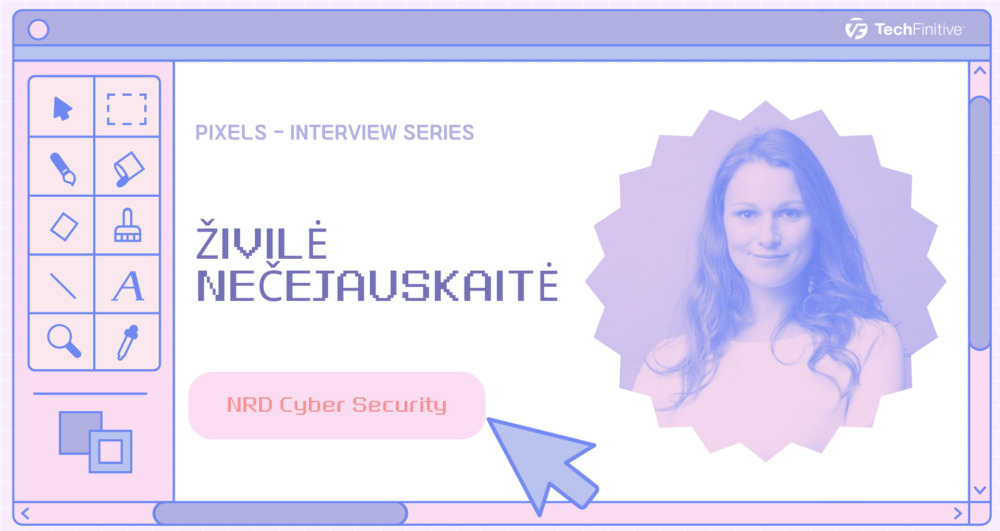
Živilė Nečejauskaitė, Director of Marketing and Communication at NRD Cyber Security: “Generating quality design items has become easier and quicker”

Živilė Nečejauskaitė may be the Director of Marketing and Communication at NRD Cyber Security, but one thing rapidly became clear from our interview: her interests go far beyond that area. She loves to play with the latest technology, including the latest generative AI tools.
“Unfortunately (or fortunately) we can’t use generative AI tools for content creation as the result is very mediocre,” Živilė told us. But that doesn’t stop her experimenting, even when they create images with “double arms [and] unrealistic body positions”. She adds: “Don’t get me wrong – I do think those tools have a lot of potential and I have seen great examples, but [don’t expect] them to bring the desired effect from one prompt.”
When she isn’t creating many-armed images, Živilė is busy putting 13 years of experience as a communication specialist to good use, with the past few years focusing on cybersecurity. She specialises in impact, change and crisis comms, and it’s quite possible you’ve seen her moderate and host cybersecurity panels and events in Lithuania and abroad. She also co-hosted the Cyber Defence East Africa conference.
All of which means that there Živilė is well worth listening to, and is kind enough to share some excellent insights here. Including, naturally, the use of the latest technology tools to enhance her work – from DeepL Write to Canva to GPT-4o. And maybe a drop of Teams too.
When thinking of your creative process, at what point does technology come in? What role does it play in different stages, from concept to final design?
We operate in the B2B cybersecurity sector where we try to create engaging and valuable content. We often initiate publications in media and create articles and posts for our web and social media. Unfortunately (or fortunately) we can’t use generative AI tools for content creation as the result is very mediocre – most valuable content in cybersecurity is circulating in various international cybersecurity communities via specialised closed-group sharing platforms.
However, we do use re-writing tools, such as DeepL Write to fine-tune the language in the created content. As visual illustrations for any written content become more and more important (in Lithuania alone, around 60% of news portal traffic comes from social media channels, hence the visual is key for opening the article), we have been using online tools for visual creation and editing.
An important aspect of using technology in the creative process is that it not only enables speed but enables a much wider group of people with no prior experience with visual editing tools to make changes and create images. As a result, for me, a marketing and communications professional, the hands are often freed from minor editorial tasks and activities which used to come to me as I was a single point of contact with our designer/editor. That has enabled me to allocate more time for ideating and strategic planning rather than just being a middleman for minor edits.
How has technology changed the way you collaborate at work? And in your view, has it improved or worsened navigating creative differences with clients or team members?
After remote work became really prominent in 2020, we started using tools and platforms for shared creation and editing of documents (Teams, SharePoint, etc). We have also started using online tools, such as Canva and Nounproject, which enable creating visuals jointly as well as re-using an item created by somebody from the team and editing it.
Related reading: Linel Louw, Creative Partner at Unknown Design Agency: “I’ve witnessed a complete shift in how we approach web design”
What trends in graphic design are you most excited about right now, and where do you see the industry heading?
I believe generating quality design items has become easier and quicker with tools such as Canva. For us Canva in particular has been a groundbreaking tool – instead of using internal or external design resources with tools, such as Lightroom or Photoshop, which require specific know-how, we can now produce many items ourselves. Or consider small corrections in file formats such as PDF. Five years ago, these would have been lengthy and involved many steps and now one person can do it really quickly and easily.
Another thing is that online designing and editing tools enable collaboratively editing items. We even ask the design agency to create templates in such a way, so that we can easily amend details on them. In future years I can see the online design and edit tools adding additional AI features which enable to make further amends. We have started using design platforms that focus purely on AI, but I am not very happy with the results we get.
Generative AI art has taken the graphic design space by storm – what are your views on the use of tools like Stable Diffusion, Leonardo, Midjourney and others?
Generative AI art is a great way to create pictures from scratch with just a prompt or two.
However, the tools we have tried (Midjourney and GPT-4o) produce images which still have logical mistakes – double arms, unrealistic body positions, spelling mistakes on text included in the image, etc. I also have found that in case I create an image which I really like but want to change only a small detail, it is easier to use online editing tools and make the changes myself rather than try to do it with the generative AI art tool which generated it originally.
Also, a major issue I have with images generated in such a way is that they do look very similar unless they have been created by a person who has either a design background or has dedicated a lot of time. Don’t get me wrong – I do think those tools have a lot of potential and I have seen great examples, but [don’t expect] them to bring the desired effect from one prompt.
Related reading: Marcus Cooper, Business Director at Making Science: “Technology has transformed marketing and sales into two sides of the same coin”
Over the course of your career, what is one technological shift you’ve witnessed in graphic design that really stuck with you?
I believe online tools for creating and editing design items have been an incredibly big shift as they are much more user-friendly and easy to start using. Also, most have a free version, which is limiting, but still enables the creation of engaging visual content.
What advice would you give to aspiring graphic designers looking to break into the industry today?
Explore how your work could be done on online platforms which could be shared with clients for them to use as templates or make minor editing changes. You will still get requests from clients, but they will be more on the creative side. Learn how to use generative AI art tools – I believe they will bring more opportunities and enable new competencies for creative minds, rather than limit them or push them out of the market.
How do you stay updated on the latest design technologies and software advancements, and how do you decide when to integrate new tools into your workflow?
I guess a lot of information comes from marketing conferences. I have a trick where I do not necessarily participate as they are pricey and I have already heard half of the speeches, but if one talk draws my attention then I investigate the tool/concept independently. Other communication comes from social media by creative agency representatives and podcasts. For the latter, I tend to listen to US or UK marketing podcasts, as these markets offer plenty specific to B2B and technology marketing areas (eg Marketing Week).
About The Author

Tim Danton
NEXT UP


