Trending Topics

 Trending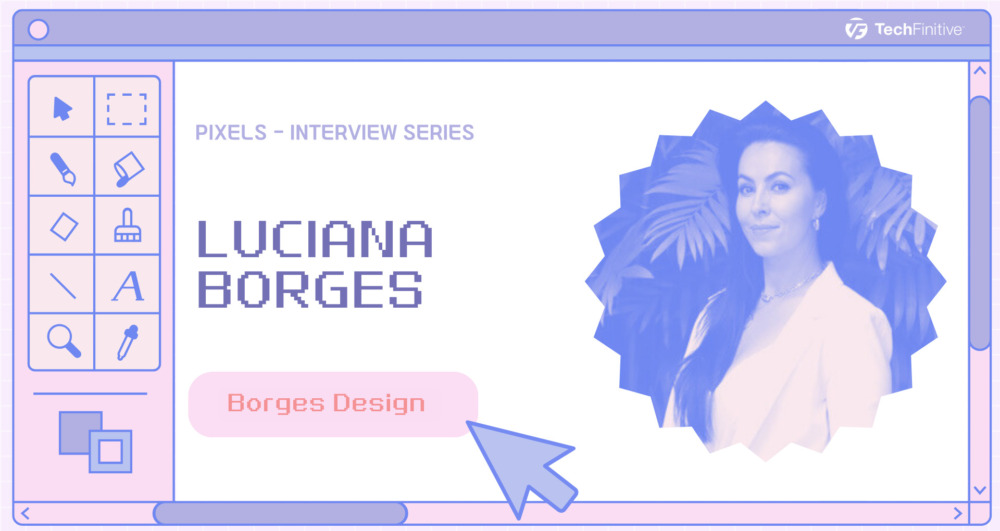
Luciana Borges, Founder of Borges Design: “When it comes to navigating creative differences, technology has generally improved the process”

For better or worse, our parents’ professions and interests often influence their children’s working lives. As does our upbringing as a whole. And this is certainly true for Luciana Borges, the Founder of Borges Design, a design studio based in Auckland, New Zealand.
Raised in Brazil, Luciana told us that her passion for design was nurtured by her environment, where traditional European architecture met contemporary innovation. Then came the influence of a mother who was an “interior architect” and a father who was an engineer. Combine all these factors, and you can see why creative flair and technical understanding are foundations of Luciana’s work. Work, she says, that “marry aesthetic sophistication with practical design solutions, ensuring every project is both visually striking and deeply functional”.
What also came through our interview was the phrase “ally”. Luciana has always seen technology as a friendly force in her work, allowing her to focus on creative thinking. And that’s again true, she says, of AI.
“One of the most beautiful aspects of AI in design is its capacity to work alongside designers rather than replace them,” she told us. “It can take care of repetitive tasks, streamline workflows and offer new creative possibilities. This will enable designers to spend more time exploring innovative ideas and pushing creative boundaries. In the next few years, I believe designers will evolve into more strategic and visionary roles, using AI to enhance their ideas and bring them to life more efficiently.
“Rather than seeing AI as a threat, I see it as a powerful tool that will expand the possibilities of design and amplify the human touch in creative work. It is a fascinating time for the industry, and I am excited to see how AI can elevate the role of graphic designers in the future.”
Keep reading to discover exactly how technology fits into Luciana’s creative process.
When thinking of your creative process, at what point does technology come in? What role does it play in different stages, from concept to final design?
Technology plays a pivotal role throughout my creative process, supporting me at every stage, from conceptualisation to the final design. The process begins with a vision: I imagine how the space should feel and function. At this point, technology comes into play as I use digital tools to bring my ideas to life. Software such as 3D modelling programs enables me to visualise the layout and scale of the space, allowing me to experiment with different designs and configurations in a virtual environment. This is particularly useful when working with complex or unusual spaces where traditional methods might limit exploration.
Once the initial concept is established, technology continues to be instrumental in material selection. I can quickly simulate how different materials will look and feel in the proposed space, giving me a clearer understanding of how they will interact with the design. This helps in making informed decisions, especially when trying to match the aesthetic vision with practical concerns like durability and functionality.
The ability to present a 3D model or virtual walkthrough to clients is one of the most significant advantages technology offers. It allows them to fully comprehend the design concept, understand the rationale behind it, and make adjustments before construction begins. This digital representation not only facilitates communication but also helps clients feel more confident about the design. From conceptualisation to construction, technology remains an essential tool that enhances creativity, precision and collaboration.
How has technology changed the way you collaborate at work? And in your view, has it improved or worsened navigating creative differences with clients or team members?
I think of technology as an ally in my work, significantly enhancing the way we collaborate. It has transformed communication, enabling faster and more efficient exchanges of ideas. Through tools like instant messaging, video calls and project management platforms, team members and clients can stay in constant contact regardless of location. This not only speeds up decision-making but also facilitates real-time feedback, allowing us to address issues as they arise and make adjustments more quickly.
Another major benefit of technology is its ability to organise and store data. With cloud storage and digital documentation tools, we can easily keep track of plans, revisions and notes. This makes information accessible at any time, reducing the risk of losing important details and ensuring that everyone is on the same page. It also makes it easier to revisit past designs or ideas, which can be valuable when refining concepts or learning from previous projects.
When it comes to navigating creative differences, technology has generally improved the process. The ability to share visual representations, such as 3D models or digital mood boards, helps to bridge the gap between abstract ideas and concrete designs. It allows clients and team members to see a tangible version of what’s being proposed, which can make it easier to align on goals and resolve disagreements.
That said, there are moments when technology cannot replace the personal touch of face-to-face interaction, particularly when emotions or complex creative visions are involved. Overall, though, technology has streamlined collaboration and improved the way we handle creative differences, making the process more efficient and transparent.
Generative AI art has taken the graphic design space by storm – what are your views on the use of tools like Stable Diffusion, Leonardo, Midjourney and others?
Generative AI tools like Stable Diffusion, Leonardo and Midjourney have significantly impacted the graphic design space for sure, offering a new, innovative way to create art. In my view, these tools can be powerful allies for designers, particularly when exploring new creative ideas or working under tight deadlines. They allow for the rapid generation of visuals based on specific prompts, making it easier to visualise concepts quickly without requiring the same level of manual effort traditionally associated with graphic design.
While I haven’t yet explored the use of these tools in my own work, I’m actively educating myself on their capabilities and potential. I’m excited about the possibilities they offer, especially in terms of expanding creative boundaries and generating unique design iterations. As I learn more, I see these tools as powerful enablers of creativity that could complement and enhance my design process in the future.
Overall, while I haven’t yet incorporated these tools into my own designs, I look forward to exploring them more and seeing how they might complement my creative process.
What advice would you give to aspiring graphic designers looking to break into the industry today?
My advice to aspiring graphic designers looking to break into the industry today would be to stay connected, keep working hard, educate yourself, and never give up. The design world is constantly evolving, and it’s important to stay up-to-date with the latest trends, tools, and technologies. Networking is key, so surround yourself with other creative professionals, whether through social media, design communities, or local events. Collaboration and sharing ideas with others can open doors and inspire growth.
Equally important is the need to continue developing your skills. The design field is highly competitive, and the best way to stand out is by constantly refining your craft. Take courses, attend workshops, and seek feedback on your work. With the rise of new design tools, including AI-based platforms, it’s essential to stay adaptable and open to learning new methods that can elevate your designs.
Lastly, persistence is crucial. The journey into the design industry can be challenging, with setbacks and obstacles along the way. But if you remain dedicated, continuously improve, and stay passionate about your craft, success will follow. Never give up on your vision and keep pushing yourself to reach new creative heights.
How do you stay updated on the latest design technologies and software advancements, and how do you decide when to integrate new tools into your workflow?
To stay updated on the latest design technologies and software advancements, I make sure to stay connected with my software suppliers and regularly follow updates from them. Additionally, social media has been an invaluable source of information. Platforms like LinkedIn, Twitter, and Instagram, along with design-focused communities, offer insights into new tools, trends, and industry discussions. Instagram, in particular, is a great platform for discovering new design tools and seeing how other professionals are using them in their work, which can be both inspiring and educational.
When it comes to integrating new tools into my workflow, I adopt a practical approach. I don’t rush to adopt every new tool that comes along but rather evaluate them based on our specific needs. If a tool has the potential to streamline our workflow, improve visualization, or simplify the way we share information, we’re open to exploring it further. The decision to integrate new tools is essentially based on whether they provide a solution to a problem we face or enhance the overall efficiency of our work. If the tool aligns with the needs of our company and improves our creative processes, we take the time to learn and adapt to it.
Other interviews in this series
- Hailey Benton, Director at The Creatives: “15 years ago digital tools felt powerful – now they are on a whole other level”
- Gerda Lombaard, Graphic Designer at Genesis Analytics: “Art is a product of the human condition and no machine will be able to replace it”
- Halina Santiago, Chief Creative Officer & Co-Founder of Prompt: “Please, can we just stop being software snobs?”
About The Author

Tim Danton
NEXT UP