Trending Topics

 Trending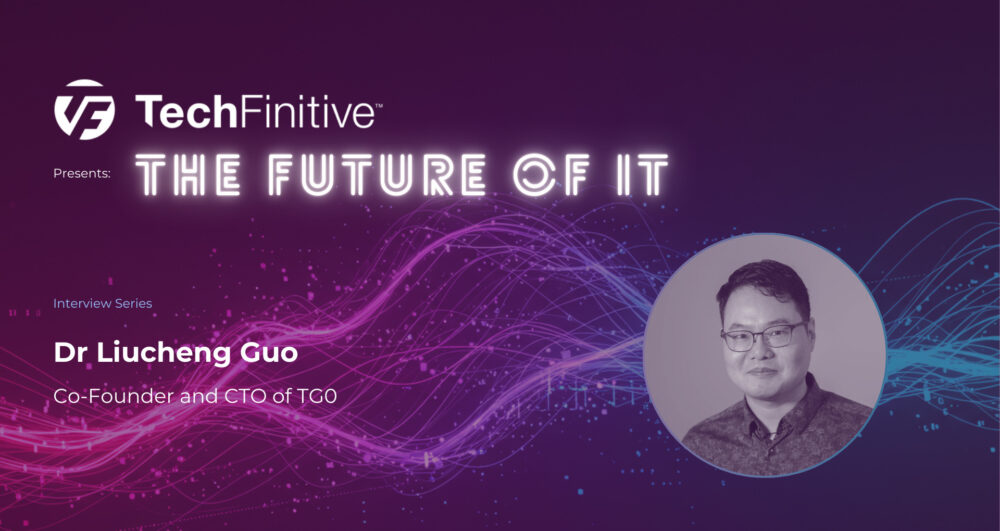
Dr Liucheng Guo, Co-Founder and CTO of TG0: “Cloud computing will not only become greener but also smarter”

When thinking about the future of AI, it’s hard to shake the environmental concerns that accompany it. Here, Dr Liucheng Guo, is ahead of the curve. He isn’t just thinking about where AI is going; he’s thinking about how to get there sustainably. As Co-Founder and CTO of TG0, he leads the charge toward more sustainable technology with a company that puts green thinking at its core.
With a PhD in AI from Imperial College London, Dr Guo is a true believer when it comes to its “transformative impact across industries”. But he sees “AI becoming smaller, smarter and more accessible,” and thus more sustainable in every way.
“As AI systems continue to consume more computational resources,” he says, “the global drive toward net-zero goals will accelerate the need for lightweight, efficient AI that operates on low-power devices.”
But this will only happen if we educate people in the best ways to use AI. As a Visiting Senior Research Fellow at King’s College London, Dr Guo has seen first-hand how the next generation of IT professionals is being shaped: he believes sustainability needs to be part of that education. As he puts it, “sustainability and green computing should be central to curriculum design”.
It also needs to be embedded in the way we use AI in businesses, which is one of the reasons Dr Guo co-founded TG0. To quote the website, the company helps “reimagine the world of physical products”, and in ways that simplify manufacturing, minimise e-waste and cut energy use. It’s worked with universities to secure funding from bodies such as Innovate UK and the European Innovation Council, while also serving high-profile clients like Zwift, Novares and Airbus.
Sustainability is a long game, but the world of AI is moving fast. So to start, we asked Dr Guo what changes he expects to see in the short term.
What do you think will be the most significant changes in the IT industry over the next 5-10 years?
I believe the IT industry will experience a significant shift toward low-resource AI to address the growing demand for energy efficiency and sustainability. As AI systems continue to consume more computational resources, the global drive toward net-zero goals will accelerate the need for lightweight, efficient AI that operates on low-power devices. This shift will prioritise not only functionality but also environmental responsibility.
When I co-founded TG0 as the CTO, low-resource AI was a key focus from the very beginning. This vision led to the creation of embedded AI-powered smart sensing technologies that work seamlessly with resource-constrained devices. These innovations enable powerful real-time functionality without relying on energy-intensive systems or large-scale infrastructure.
Over the next decade, I envision AI becoming smaller, smarter and more accessible, with a transformative impact across industries. For example, in healthcare, low-resource AI will enable wearable devices for real-time monitoring. In IoT, it will drive sustainable, autonomous systems. By addressing resource constraints while enhancing efficiency, low-resource AI will redefine the IT industry, supporting global sustainability goals and making technology more inclusive and impactful.
How do you think cloud computing will evolve over the next decade?
Cloud computing will evolve to work more closely with local computing technologies like edge computing, creating a hybrid model that balances centralised and decentralised data processing. As demand for real-time, low-latency applications grows, cloud computing will integrate with edge solutions to process time-sensitive data locally while using cloud infrastructure for storage, large-scale analytics and coordination. This combination will improve efficiency, scalability and responsiveness.
Another major shift will be toward low-resource cloud computing. With the global push for sustainability and energy efficiency, cloud providers will need to adopt greener practices. This will involve optimising data centres to reduce energy consumption and transitioning to lightweight, resource-efficient architectures. The industry may also see innovations in serverless computing and energy-aware algorithms that align with net-zero goals.
At TG0, we already focus on low-resource AI that operates effectively in decentralised environments. I see the future of cloud computing aligning with this philosophy, prioritising solutions that reduce the energy burden while still offering robust capabilities.
Over the next decade, cloud computing will not only become greener but also smarter, adapting to complement edge computing and IoT. This hybrid approach will ensure a more efficient IT infrastructure that supports a wider range of applications while being environmentally sustainable.
What role do you foresee for edge computing and IoT in shaping IT infrastructure?
Edge computing will play an important role in shaping the future of IT infrastructure, especially as part of low-resource IoT solutions. By processing data locally, near the source, edge computing reduces the need for constant communication with centralised cloud systems. This not only improves responsiveness and reliability but also makes systems more energy-efficient, which is crucial as the world moves toward sustainability goals.
For example, IoT devices powered by edge computing can perform real-time tasks without relying on large amounts of data transfer. In healthcare, wearable devices can monitor a patient’s vitals locally and make immediate decisions, reducing the need for cloud processing. In smart cities, edge computing can enable IoT systems to manage traffic or energy consumption more efficiently, even in areas with limited connectivity.
At TG0, we integrate embedded AI and edge computing into our solutions to ensure they work on low-power devices. This approach makes IoT systems more practical and scalable, especially in resource-constrained environments.
Edge computing and IoT together will transform IT infrastructure into a decentralised model that is faster, more efficient and sustainable. This combination will drive the next generation of IT systems across industries like healthcare, automotive and energy management.
In what ways do you think IT will transform industries like healthcare, education, or finance?
As I predict, IT will transform industries like healthcare, education and finance by making them more sustainable, accessible and affordable through the use of low-cost AI and innovative technologies.
In healthcare, IT will enable real-time monitoring and personalised treatment through affordable smart materials like those developed at TG0. These technologies can provide accessible solutions for patients, such as wearable devices that allow for continuous health tracking and early intervention, reducing overall healthcare costs while improving outcomes.
In education, IT will drive innovation and personalisation. Adaptive learning platforms powered by AI can cater to the unique needs of each student, making education more engaging and effective. Tools like AR and VR will create immersive learning experiences, bridging the gap between theory and practice while making education accessible to remote and underserved areas.
In finance, IT will promote sustainability and greener solutions. With the integration of blockchain and low-resource AI, financial systems can optimise transactions and reduce energy consumption. IT will also enhance financial inclusion, providing affordable and secure digital banking solutions to populations previously excluded from traditional financial services.
How should educational institutions adapt their IT curricula to prepare students for the future?
As a visiting senior fellow and an Industrial Advisor Board member at King’s College London, I have had the opportunity to collaborate with IT educators and observe the evolving needs of students. One of the most significant gaps I’ve noticed is the lack of practical experience. While theoretical knowledge is essential, curricula must prioritise hands-on learning through projects, internships and partnerships with industry. These experiences prepare students to meet real-world challenges and adapt to the rapidly changing IT landscape.
In addition, sustainability and green computing should be central to curriculum design. As I have observed in my own work, the IT industry is moving toward low-resource AI, energy-efficient technologies and environmentally sustainable solutions. It is critical for students to learn how to design and manage systems that align with global sustainability goals. This includes gaining practical skills in developing greener technologies, optimising resource usage and tackling challenges such as electronic waste and high energy consumption.
Furthermore, curricula should include interdisciplinary topics like data ethics, cybersecurity and sustainability. Students must learn to balance technological innovation with environmental and ethical considerations. By doing so, educational institutions can prepare students not only to succeed in the IT industry but also to lead in creating meaningful, sustainable and ethical innovations for the future.
Can you share a project or innovation you’re currently working on that you believe has the potential to influence the future of IT?
At TG0, I am leading a software-hardware development team for a low-resource AI solution that could significantly impact the future of IT by focusing on sustainability and accessibility. Our approach integrates AI-powered sensing and computing directly into materials, enabling smart systems that operate efficiently on minimal resources.
Unlike traditional AI systems, which rely on energy-intensive infrastructure, our solution uses embedded AI technology to deliver real-time functionality on resource-constrained devices. For example, in healthcare, our technology powers wearable devices that monitor patients in real time without the need for high-power systems. In automotive applications, it supports contactless controls that enhance safety while reducing energy usage.
This innovation not only lowers energy consumption but also reduces electronic waste, making it more environmentally sustainable. Additionally, it allows IT solutions to reach areas with limited access to high-power infrastructure, expanding their accessibility.
By combining efficiency, scalability and sustainability, TG0’s low-resource AI aligns with the future direction of IT, which increasingly prioritises lightweight, eco-friendly and inclusive technologies. I believe this work has the potential to transform industries such as healthcare, automotive and IoT, paving the way for a smarter and greener future.
Who or what has inspired your vision of IT’s future?
My vision for IT’s future has been shaped by the global push for sustainability, the urgent need to combat climate change and the desire to make technology more accessible to all. The current trajectory of traditional AI systems, which require significant resources and energy, inspired me to explore innovative solutions that can deliver the same high performance while being far more efficient and environmentally friendly.
This motivation led me to co-found TG0, where we focus on developing low-resource AI technologies that embed sensing and computing directly into materials. These systems are designed to work on resource-constrained devices, reducing energy consumption and electronic waste while maintaining top-tier performance. For example, our solutions enable real-time health monitoring in wearable devices and contactless control systems in the automotive sector, both of which operate without the need for power-hungry external systems.
I have also been inspired by pioneers who emphasise simplicity and resourcefulness in technology development. Their work has shown that impactful innovation can come from finding creative solutions to global challenges. I firmly believe that IT can play a transformative role in addressing climate change by prioritising sustainability, efficiency and accessibility, and TG0 is committed to leading that charge.
About The Author

Rowan Campbell
NEXT UP


