Trending Topics

 Trending
Intel-backed AI helps protect endangered bears

A conservation project that uses open-source AI to protect an endangered species of brown bear is seeing promising results.
The Abruzzo, Lazio and Molise National Park, situated in the Apennine mountains in the south of Italy, plays home to what remains of the Marsican brown bear population. The subspecies of brown bear is almost extinct, with only 50 individuals thought to be left in the wild.
Intel, the charity Salviamo l’Orso (Italian for “let’s save the bear”), the University of Aquila and the national park itself have turned to AI to help protect the bears from further decline.
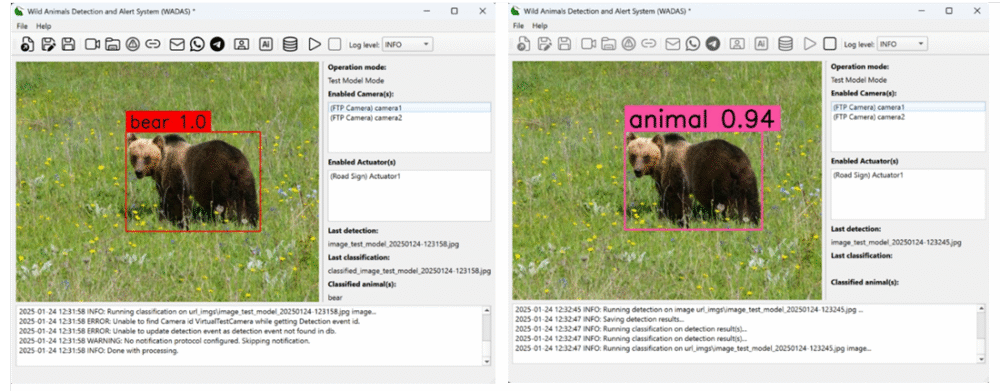
The organisations have collaborated on an AI-based app called WADAS (Wild Animal Detection and Alert System) that can be used to monitor the bears’ movements in the park.
How Intel’s bear-saving AI works
WADAS runs on devices without the need for any cloud infrastructure or dedicated GPUs. It has been processing image and video feeds gathered from 4K Reolink Go Ranger PT (G450) cameras set up around the park, which record during both the day and night.
The AI scans the feeds for objects that look like mammals. When mammals are detected, the images are further interrogated to determine their species.
WADAS is built on Intel’s open-source AI toolkit OpenVINO, and uses its Core Ultra 200V processors. The chip’s NPU detects relevant objects in the feed, while the GPU highlights which particular mammal type – a bear or deer, for example – has shown up in the feed.
WADAS’ inference times are under 50ms on Intel CPUs and NPUs, according to Intel.
The park has published the results of a pilot of the system running since the start of the year: WADAS is able to accurately classify the animals seen in the park 97.4% of the time, it said.
If a bear is detected, WADAS can then email or message the park rangers or other staff about its presence.
In future, the park hopes WADAS can be used as the foundation for hardware that actively works to protect wildlife.
For example, mechanised feeders that can open for farm species and not wild ones, to deter wild animals from entering human-populated areas. Or road signs that can change automatically to reduce the risk to wildlife from vehicles. Perhaps even noise-making devices that can scare animals away from certain areas.
WADAS can be found on GitHub here.
Related stories on how AI is doing good
About The Author

Jo Best
NEXT UP


