IBM and Japanese national research lab Riken have deployed the first IBM Quantum System Two outside of the United States and beyond an IBM quantum data centre.
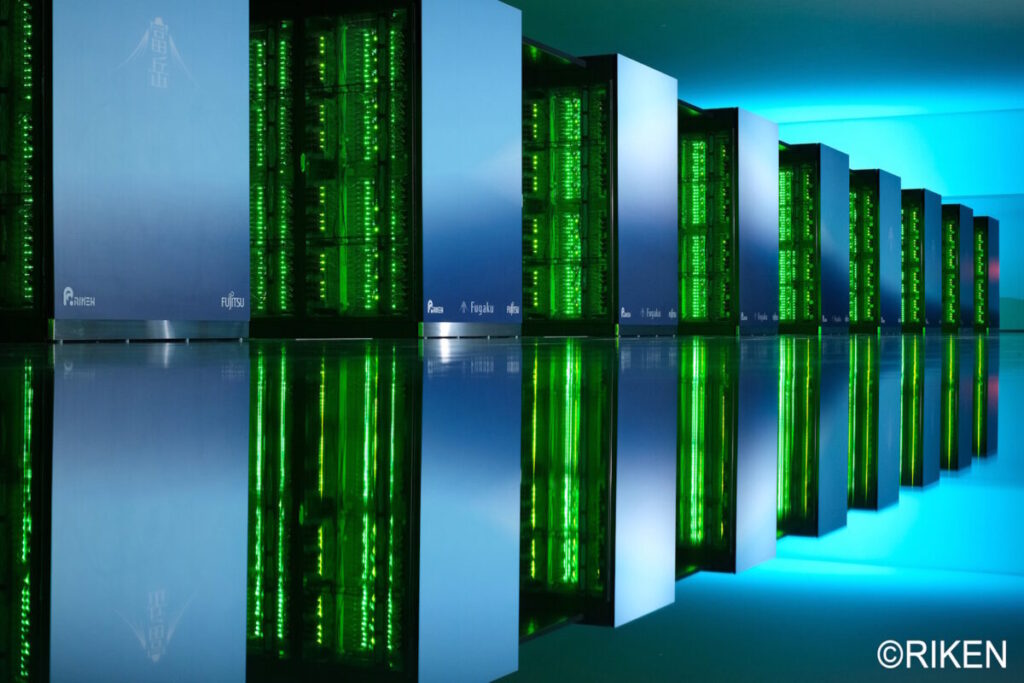
The new system, which features IBM’s 156-qubit IBM Quantum Heron chip, is collocated with Rikenโs Fugaku supercomputer within the Riken Centre for Computational Science, Japanโs high-performance computer centre. According to IBM, the computers are linked through a โhigh-speed network at the fundamental instruction levelโ to be used for โquantum-centricโ supercomputing to speed advanced algorithm research, such as fundamental chemistry problems.
โThis low-level integration allows Riken and IBM engineers to develop parallelised workloads, low-latency classical-quantum communication protocols, and advanced compilation passes and libraries,โ IBM explained.
โBecause quantum and classical systems will ultimately offer different computational strengths, this will allow each paradigm to seamlessly perform the parts of an algorithm for which it is best suited.โ
IBM’s quantum computer is connected to the supercomputer Fugaku (image: Riken)
“The future of computing is quantum-centric and with our partners at Riken, we are taking a big step forward to make this vision a reality,” said IBM Quantum VP Jay Gambetta.
“The new IBM Quantum System Two powered by our latest Heron processor and connected to Fugaku, will allow scientists and engineers to push the limits of what is possible.”
IBM and Riken expect the installation to expand previous achievements by Riken and IBM researchers.
“By combining Fugaku and the IBM Quantum System Two, Riken aims to lead Japan into a new era of high-performance computing,” said Mitsuhisa Sato, division director of the quantum-HPC hybrid platform division at Riken Centre for Computational Science.
“Our mission is to develop and demonstrate practical quantum-HPC hybrid workflows that can be explored by both the scientific community and industry. The connection of these two systems enables us to take critical steps toward realizing this vision.”
The deployment of the new computer is supported by the New Energy and Industrial Technology Development Organisation (NEDO), an organisation that sits under the jurisdiction ofย Japan’sย Ministry of Economy, Trade and Industry (METI).
Its hope? To enhance Japan’s infrastructure in a post-5G world and put it at the leading edge of information and communication systems.
Aimee Chanthadavong has been a journalist, editor and content producer for more than a decade. During that time she's covered enterprise technology for premium websites such as ZDNet and InnovationAus as well as food and travel for Broadsheet and SBS.
To provide the best experiences, we and our partners use technologies like cookies to store and/or access device information. Consenting to these technologies will allow us and our partners to process personal data such as browsing behavior or unique IDs on this site and show (non-) personalized ads. Not consenting or withdrawing consent, may adversely affect certain features and functions.
Click below to consent to the above or make granular choices. Your choices will be applied to this site only. You can change your settings at any time, including withdrawing your consent, by using the toggles on the Cookie Policy, or by clicking on the manage consent button at the bottom of the screen.
Functional
Always active
The technical storage or access is strictly necessary for the legitimate purpose of enabling the use of a specific service explicitly requested by the subscriber or user, or for the sole purpose of carrying out the transmission of a communication over an electronic communications network.
Preferences
The technical storage or access is necessary for the legitimate purpose of storing preferences that are not requested by the subscriber or user.
Statistics
The technical storage or access that is used exclusively for statistical purposes.The technical storage or access that is used exclusively for anonymous statistical purposes. Without a subpoena, voluntary compliance on the part of your Internet Service Provider, or additional records from a third party, information stored or retrieved for this purpose alone cannot usually be used to identify you.
Marketing
The technical storage or access is required to create user profiles to send advertising, or to track the user on a website or across several websites for similar marketing purposes.
To provide the best experiences, we use technologies like cookies to store and/or access device information. Consenting to these technologies will allow us to process data such as browsing behaviour or unique IDs on this site. Not consenting or withdrawing consent, may adversely affect certain features and functions.
Functional
Always active
The technical storage or access is strictly necessary for the legitimate purpose of enabling the use of a specific service explicitly requested by the subscriber or user, or for the sole purpose of carrying out the transmission of a communication over an electronic communications network.
Preferences
The technical storage or access is necessary for the legitimate purpose of storing preferences that are not requested by the subscriber or user.
Statistics
The technical storage or access that is used exclusively for statistical purposes.The technical storage or access that is used exclusively for anonymous statistical purposes. Without a subpoena, voluntary compliance on the part of your Internet Service Provider, or additional records from a third party, information stored or retrieved for this purpose alone cannot usually be used to identify you.
Marketing
The technical storage or access is required to create user profiles to send advertising, or to track the user on a website or across several websites for similar marketing purposes.