Trending Topics

 Trending
How Epicor’s European Prism rollout reframes AI in ERP as embedded, auditable agents

AI is changing what manufacturers and distributors expect from enterprise software. For a growing cohort of mid-market operators in the UK and Europe, the question is no longer whether ERP should have intelligence built in, but whether that intelligence can be trusted to act without human oversight, and how far the answer to that question actually matters in production environments.
Epicor has stepped directly into that debate with the general availability of Prism across the UK and select European markets, announced on 23 June 2026. Prism is not a standalone AI product bolted onto an ERP system. It is a portfolio of vertical AI agents embedded directly in Epicor Kinetic and Prophet 21, designed to give users conversational access to live ERP data, documents, workflows, and performance metrics without switching tools or needing specialist data skills.
That distinction carries more weight than it might appear. As our own ERP leaders roundup for 2026 made clear, the consensus among ERP professionals is that AI inside enterprise systems only delivers real value when it sits inside existing operational workflows and draws on trusted, business-specific data, not when it is deployed as a separate capability that users have to go out of their way to use. Epicor’s approach with Prism is built explicitly around that principle.
Governance as the differentiator
Where Prism attempts to separate itself from the broader wave of enterprise AI assistants is in its governance architecture. Epicor says the platform applies the same role-based access controls as the logged-in user, so users can only query and act on data they are already authorised to see. Customer data is kept isolated from other Epicor customers, proprietary data is not used to train base large language models unless fine-tuning is specific to that customer, and no agent action is taken without explicit human approval.
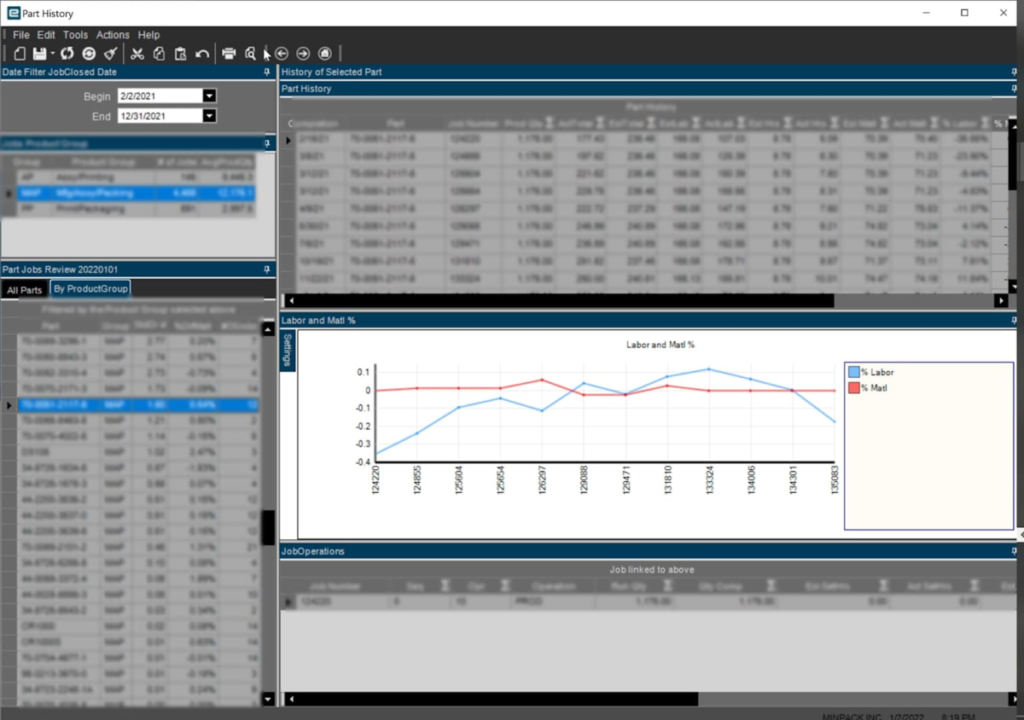
That is critical particularly for manufacturers and distributors operating in regulated environments, where accountability for decisions, over stock, pricing, compliance documentation, or production scheduling, cannot be delegated to an AI system without clear audit trails. Gartner has predicted that by 2030, over 50% of routine ERP tasks will be autonomously executed by AI, but getting there requires proving the governance layer works before organisations are willing to extend agent authority deeper into operations. Prism’s design appears oriented toward building that confidence incrementally.
The European rollout is available in 19 markets including the UK, Ireland, France, Germany, Spain, Italy, and the Netherlands, with further regional expansion planned later in 2026.
About The Author

Kihara Kimachia
NEXT UP


