Trending Topics

 Trending
Why BT believes “conversational commerce” will revive its fortunes

How does the founding father of telecoms survive in the cut-throat world of mobile communications?
At 150 years old, BT is the world’s oldest telecoms company. It has weathered every new innovation and every new market entrant that has disrupted its industry – and there have been many of both.
BT now bears the scars of these battles: despite the fact that the group still owns the lion’s share of telecoms infrastructure in the UK, its revenues peaked a decade ago at £24.1bn. Last year, turnover stood at £20.4bn while its pretax profits halved to £1.33bn.
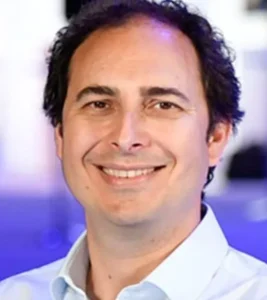
Speaking at Mobile World Congress, Jose Gastey, Managing Director of Partnerships at BT, revealed that BT is now going for growth with a new strategy: a focus on conversational commerce. It is betting that technology, which allows consumers to interact with the brands they love across any channel, any time, will give it the edge in a crowded market.
“We have made a multi-billion-pound investment in the UK’s fibre and 5G infrastructure over the past few years,” he said. “These are the assets we can now use to add value. By finding partnerships with companies that deliver significant improvements to customer outcomes, we will grow and our partners will grow.”
BT has already found several partners that are helping it build out its capability across three key areas: multichannel communication, agentic AI, and trust/fraud prevention.
Partnerships will be extremely relevant to BT across all of these areas,” Gastey said. “That is why we are at MWC. Trying to find more partners and uncover more ways we can work with those partners.”
Taking back control in 2026
The humble landline is being retired early next year in the UK, and rival media platforms such as WhatsApp and Viber have been eating BT’s lunch for years – 41 million Brits now use WhatsApp for calls and chats. All business not flowing through BT.
Gastey says that 2026 is about taking back control. BT is betting on RCS, the all-singing, all-dancing successor to SMS, to lure business customers back to a BT-controlled channel. RCS isn’t new but adoption has been limited: 2026 is the year RCS comes into its own, says Gastey.
“Companies want to talk to their customers in the most effective way,” he said. “That’s where the magic happens.”
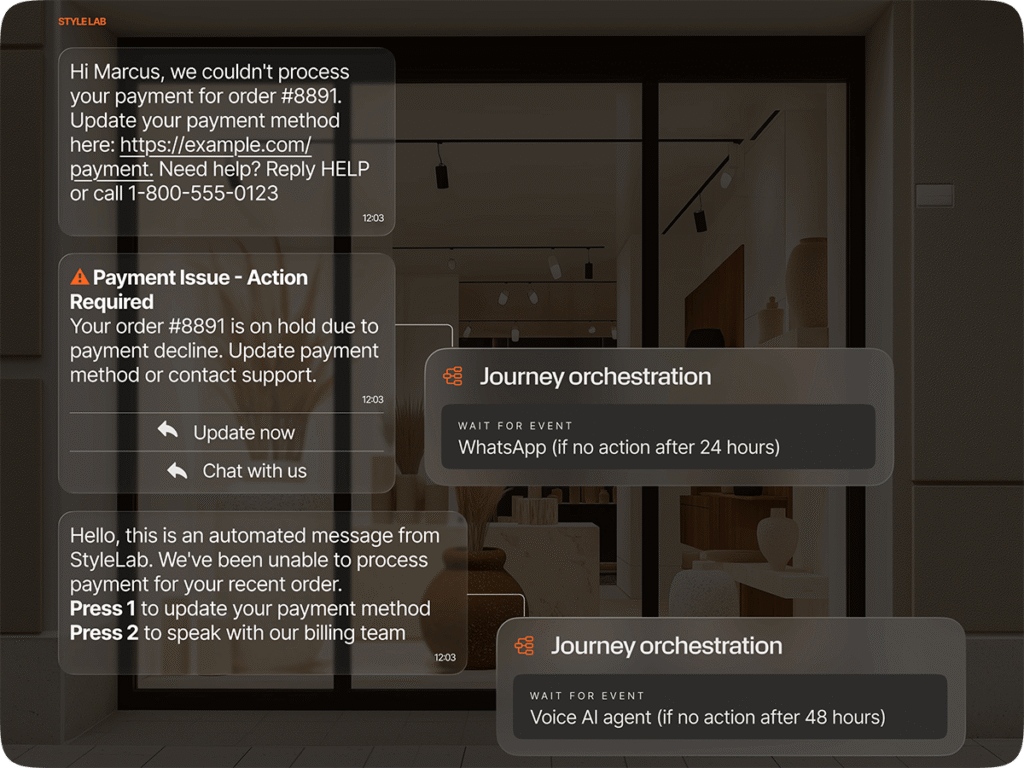
Gastey pointed to its ongoing partnership with communications platform Infobip, a London-based one-stop shop for multichannel conversations.
“Our business customers told us that they wanted to improve their customer experience. They were sending wrong communications at the wrong time, or confusing consumers by not having consistent branding across all their channels. So we went out to find a partner that could solve this problem.”
In turn, Infobip is allowing BT to monetise its customers’ conversations, even when they take place on rival platforms like WhatsApp. Sources say that no money changed hands to establish the partnership, which was struck three years ago, and that BT and Infobip are operating a profit-share model.
Infobip, which announced at MWC 2026 that it has created a new agentic AI layer for its platform, now also ticks the AI box. “We are really excited about this AI development,” said Gastey. “AI is still in its infancy in every application except customer experience. With Infobip’s technology, our business customers will be able to use AI to sense urgency or dissatisfaction before a call has even been answered.”
BT’s international advantage
Gastey, who also heads up BT’s international business, says that many UK-headquartered customers have asked BT to help them reach a global audience. “We help them serve customers across the world in a consistent manner,” he says. “We own one of the largest infrastructure networks for voice in the world.”
Consumers may purchase goods or services from countries other than their own, and – through partnerships as well as proprietary technology – BT helps brands harmonise their customer service operations across multiple territories. This is a growth area for the telecoms giant; BT International now represents 11.3% of BT Group’s total revenue.
Luring B2B customers back to BT
BT’s B2B division represents around 55% of revenue, and will be increasingly valuable to BT going forward. Commenting on BT’s half-year results last September, BT Chief Executive Allison Kirkby said that “stabilising” the business division was an ongoing focus.
“We want companies to thrive because of the platform we have built,” said Gastey. “That’s what we are currently focusing on and encouraging.”
In telecoms, trust is becoming the most valuable commodity – especially at a time when bad actors can use AI tools to create elaborate scams. “Trust is fundamental,” said Gastey. “Trust and technological innovation go hand in hand. It’s very important to earn that trust and then to keep it.”
He says that partners are queuing up to be associated with BT because of its longstanding credibility in telecoms. “We help our partners because we are already a trusted brand and can guide the public in who they should trust.”
More articles from MWC Barcelona 2026
- Future of chip design: Four things we learned from the Synopsys CTO Prith Banerjee at MWC 2026
- BlackBerry Chief Security Officer: Lack of effective regulation makes Global South hugely attractive to attackers (and here’s how to fix it)
- First-look review of Asus Zenbook A16 with Qualcomm X2 Elite inside
About The Author

Bex Burn-Callander
NEXT UP


