Trending Topics

 Trending
Predictive maintenance at scale: How Schneider’s TeSys Tera cuts industrial motor downtime

On the face of it, Schneider Electric’s TeSys Tera may appear to be just another connected device added to the factory floor. But, it’s actually more about solving one of industry’s oldest problems: what happens when a critical motor fails without warning.
The company recently introduced TeSys Tera as a next-generation intelligent motor management system for demanding industrial environments. Its headline promise is bold: predictive diagnostics, energy monitoring and connectivity designed to reduce motor downtime by up to 80%.
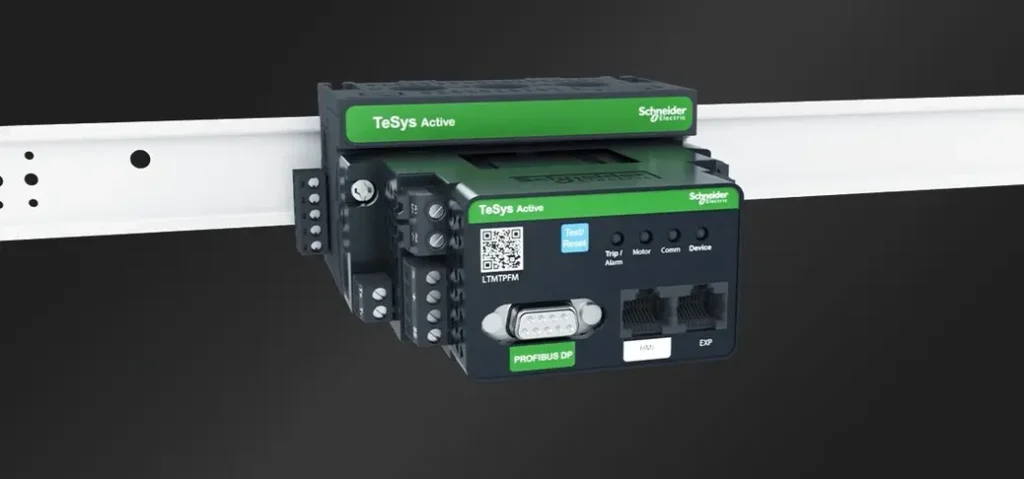
That matters because motors sit at the heart of industrial operations. They drive pumps, conveyors, compressors and processing systems. When they stop, production stops with them. The U.S. Department of Energy has previously estimated that motor systems consume nearly 70% of industrial electricity, underlining why better visibility into their performance is both an uptime and energy-efficiency issue.
TeSys Tera brings protection, control and monitoring into a single system.
Schneider says it is aimed at sectors such as water and wastewater, mining, metals, chemicals, pharmaceuticals, oil and gas. The choice of launch venue, Texas Water 2026, was telling. Water utilities face ageing infrastructure, staffing pressure and operational risk at scale; Schneider points to estimates that the U.S. loses 7 billion gallons of treated water daily and suffers around 260,000 water main breaks per year.
The wide significance
Predictive maintenance is moving from a nice-to-have analytics project to a core industrial control function. Operators do not just need dashboards. They need systems that can detect abnormal current, load or thermal patterns early enough to prevent a failure, and then integrate that signal into maintenance workflows.
There is also a workforce angle.
As experienced technicians retire, industrial firms need tools that capture operational knowledge and make it easier for smaller teams to manage larger estates.
The real test for TeSys Tera will be whether it can deliver useful insight without adding complexity. Industrial teams are already overloaded with alerts. Predictive maintenance only works when it helps them prioritise action.
If Schneider can make that practical, TeSys Tera could become part of a wider shift: from reactive maintenance to operational resilience by design.
Related articles
About The Author

Kihara Kimachia
NEXT UP


