Trending Topics

 Trending
Minding the LinkedIn gender gap: does it hate women or just want them to behave more like the men that wrote the algorithms?

Artificial intelligence is biased. This isn’t news; it’s an established fact.
Back in 2018, Amazon discontinued the use of an AI recruitment tool after it found that the algorithm favoured men’s CVs. Research published last year in Nature Human Behaviour, which surveyed 1,200 people, found that white men were vastly over-represented by AI when asked to generate images of senior managers.
The problem is that despite all the damning evidence, nothing is being done to correct this bias. Case in point: the current furore over algorithmic bias on the professional networking site, LinkedIn.
It all began earlier this year when company founders Jane Evans and Cindy Gallop decided to test what would happen if men and women posted identical content at the same time. The results were stark. Two male participants in the study – with a combined following of just 9,400 – saw their posts achieve significantly more reach than two female participants with a combined following of over 154,000.
Gallop presented her findings to LinkedIn, which launched an investigation that came to nothing. She has been tracking the phenomenon ever since, finding the women who made the change and tracking the impact over time and plans to publish her findings.
Related reading: Bias in AI: what 200 images of people at work reveal.
The LinkedIn gender gap in effect
“Algorithmic suppression of women’s voices = economic oppression of women,” she says. “Algorithmic prioritization and elevation of men’s voices = economic advantage to men.”
Unsurprisingly, women are changing their gender to male en masse, after realising that flicking this simple switch has a massive impact on reach, engagement and success on the platform.
“I was doing all the things they tell you to do for months,” said Rachel Fairley, a brand, marketing and experience fixer and author of Rebrand Right, how to refresh your brand and marketing to grow your business. “I optimised my profile, I was writing posts about topics people care about, not being overly emotive, posting regularly – everything you are told to do to get reach up,” she told TechFinitive.
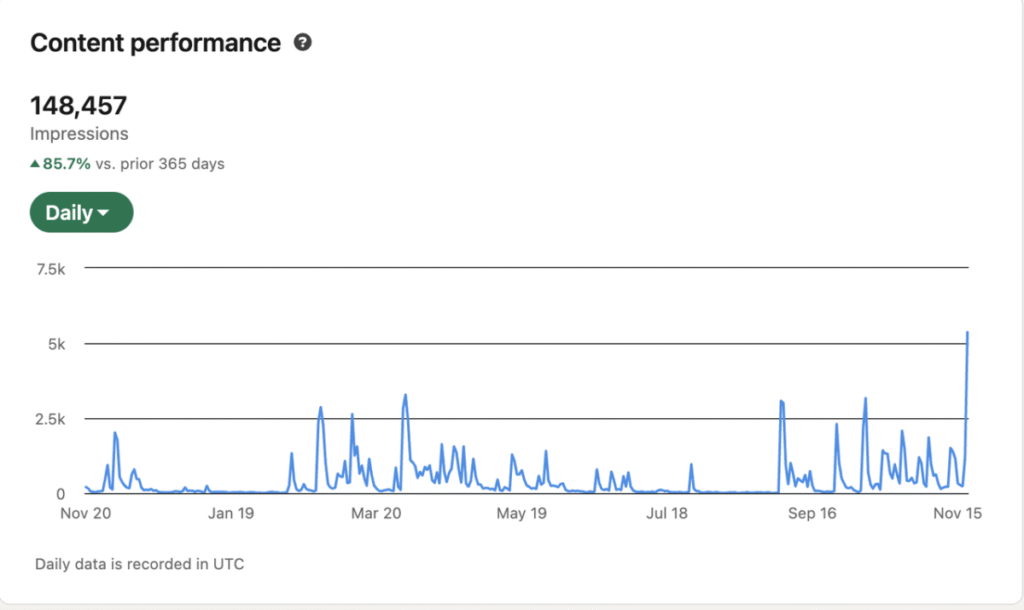
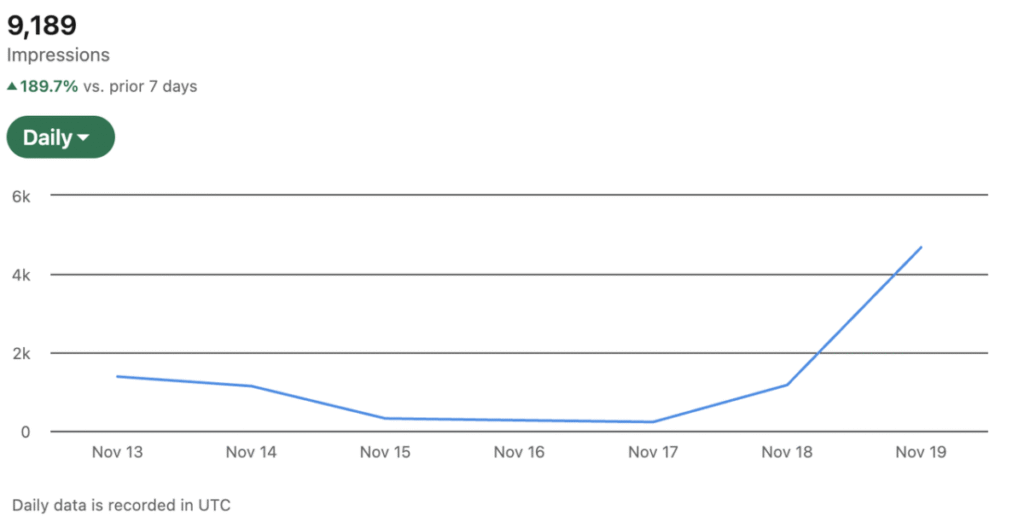
Yet Fairley, who has more than 4,000 followers on LinkedIn, grew increasingly frustrated when these posts only garnered between 30 and 300 views. “300 is nothing,” she said. “I was fed up with it.” So on International Men’s Day, she changed her gender to male. “Within two hours, my traffic was up, I had 55 reposts, and my reach snowballed.”
The posts were about changing her pronoun, gender and name – she is now R Fairley on LinkedIn – and her detractors claim this contentious and ‘of the moment’ topic is why her stats are skyrocketing. “Yes, it’s clickbait and people want to share. But people have to see the post in the first place,” she said. “It ramped up immediately; usually when I post in the morning, it’s tumbleweed till lunchtime. No one sees it. Even my older posts are performing better now that I’m male.”
Simone says no one listens, Simon says and…
Fairley is one of dozens of women who have seen positive increases to engagement when they toggled their gender to male. “My profile views are up over 2,000% and my impressions up by 300% – all because I changed gender, pronouns and posted a pic of myself as a hypothetical guy,” Simone Bonnett told TechFinitive. Although she’s now “Simon E Bonnett”, complete with a classy moustache, on LinkedIn.

Beyond the engagement debate, the experiment has uncovered a worrying trend: men don’t always see posts by women.
Spinning Red’s Strategic Communications Lead Natasha Plowman helps run the Break The Silence collective, which promotes equity in the comms sector. She was shocked at how many men remained unaware of the gender debate on LinkedIn, despite it raging on for months. “They only started seeing posts on the topic once they were being posted by other ‘men’,” she told TechFinitive.
“The danger is that algorithms are keeping people within walled gardens in these networks. If men can’t see women, how can they amplify their voices? That needs to change and we – men and women both – need to be united in shaping the future we want to live in.”
Fairley claims that women are losing out financially because of broken algorithms. “LinkedIn is a great source of leads but if you are invisible to people, you are effectively being financially penalised. If that’s happening to half the workforce, that’s extraordinary. Highlighting all this on International Men’s Day was significant. Yes we want to celebrate men, but we still have a lot of work to do on equality.”
Raising awareness of LinkedIn’s bias
The majority of women who have switched to ‘male’ on LinkedIn aren’t blaming the platform for the bias – they are simply seeking to raise awareness of the misogyny inherent to AI models. “The point about AI is that it’s a black box,” explained Fairley. “The data itself is inherently biased – 60% of LinkedIn’s users are male, so there’s an issue with the data because of that already.”
Frank Dias, an AI expert, changed his gender to female – and watched his engagement rates slide immediately. “AI’s training data is skewed towards the fact that we have more male-opinionated data than female, and hence there’s bias built into the outputs unless you have guardrails to counter it,” he said.
But LinkedIn users have found that its AI bias goes beyond gender. “What happens when a black woman switches her gender on LinkedIn to male?” asked Sales Specialist Cass Cooper. “My visibility dropped. Black + male is not treated the same as white + male. Not culturally. Not algorithmically.”
LinkedIn’s response to bias claims: is it all down to language?
LinkedIn has denied the existence of any bias. LinkedIn’s Sakshi Jain said: “Our algorithm and AI systems do not use demographic information (such as age, race, or gender) as a signal to determine the visibility of content, profile, or posts in the Feed.”
She added: “Our product and engineering teams have tested a number of these posts and comparisons, and while different posts did get different levels of engagement, we found that their distribution was not influenced by gender, pronouns, or any other demographic information.”
Insiders highlight the existence of so-called proxy bias: whereby the algorithm doesn’t penalise on the grounds of gender or ethnicity, but instead penalises many of characteristics that the AI correlates with gender or certain ethnicities.
“We keep being told to sound more like men if we want engagement on our posts,” said Fairley. “Men tend to be more assertive and their posts are more sparse. Women use flowing sentences. But why does the AI punish those qualities anyway?”
Bias of any kind could have legal implications. The UK Equality Act, for example, doesn’t care whether it’s a human or a computer that expresses prejudice. While the suppression of certain voices within a news feed would contravene the EU’s Digital Services Act.
For now, LinkedIn’s newly minted male users are basking in the glow of their record engagement. “I’m so impressed by how much my stats have improved that I plan to stay being male,” said Fairley. “I’m R Fairley now, and if my impressions stay high, R Fairley I’ll stay.”
More articles by Bex Burn-Callander
- How to supercharge your business cashflow
- How to keep shadow IT and its costs under control
- Is that receipt real or fake? Protecting against AI-generated fraud
This article has been tagged as a “Great Read”, which we reserve for truly outstanding pieces.
About The Author

Bex Burn-Callander
NEXT UP


