Trending Topics

 Trending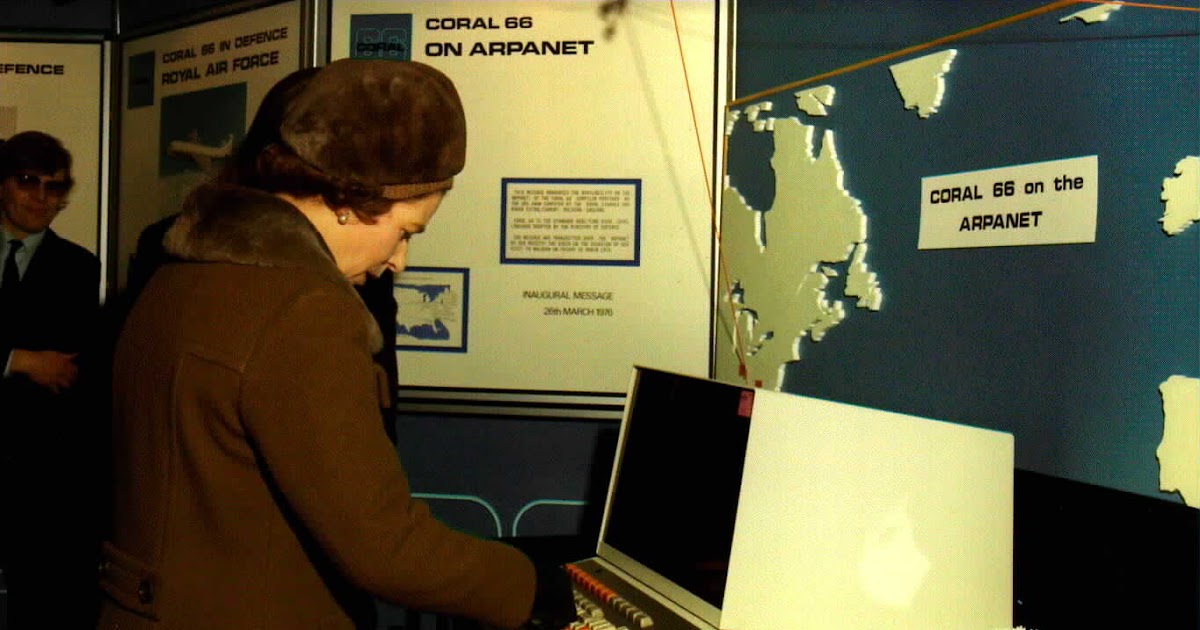
50 years after the Queen’s first email: will the inbox survive another 50?

On 26 March 1976, Queen Elizabeth II sent an email. It was, by most accounts, unremarkable – a short message dispatched over ARPANET during a visit to a Royal Signals establishment. But like many quiet firsts in technology, it marked the beginning of something that would become impossible to ignore.
Fifty years on, email is both indispensable and unloved. It is where contracts are signed, deals are confirmed and decisions are recorded – and also where newsletters go to die and phishing attempts breed like bacteria in a warm petri dish. It has survived the rise of instant messaging, collaboration platforms and more acronyms than any sane person can remember. It has, in short, refused to go away.
So we posed a simple question to eight business leaders: will email still exist in 50 years’ time?
The answers are less about whether email survives – most believe it will – and more about what it becomes. A system of record rather than a place for conversation. A universal protocol in a world of fragmented platforms. Increasingly written not by humans, but by AI trained to mimic them. And, perhaps most critically, a battleground for trust as deception becomes industrialised.
Email, it seems, is not heading for extinction. But it is heading for reinvention.
Julaine Speight, Co-Owner and Marketing Director of First Internet
I don’t think email is going anywhere in the next 50 years. While it’s impossible to predict which new technologies might emerge, email has qualities that make it incredibly resilient in a business context.
We’re already seeing the rise of faster, more conversational tools like Slack, Teams and other messaging platforms. These are excellent for quick questions, collaboration, and day-to-day communication. But they don’t replace email; they complement it.
Email still plays a critical role when communication needs to be more formal, structured, and accountable. It provides a clear audit trail, which is essential for contracts, decision-making, client communications, and anything that needs to be referenced later. That requirement for traceability and permanence isn’t going away.
There’s also the universality of email. It’s an open, globally accepted standard that isn’t tied to a single platform or vendor. Unlike messaging apps, which can be fragmented across organisations, email works everywhere and between everyone, clients, suppliers, partners, regardless of the tools they use internally.
Another key advantage is ownership and control. Businesses can archive, secure, and govern email in ways that align with compliance and data protection requirements. As regulation increases, that level of control becomes even more important.
In reality, the future of business communication will be multi-channel. Instant messaging will continue to grow in popularity for its speed and convenience, while email remains the backbone of more considered, formal, and externally facing communication.
So, while the way we use email may evolve, perhaps becoming more integrated with AI, automation, and smarter workflows, its core role in business communication is likely to endure.
Pete Hannah, VP of Sales, Western Europe, at Object First
Yes, email will still be used in 50 years’ time. Messaging and collaboration tools now handle quick conversations, while email has settled into its role as the channel for formal, external, and auditable communication. What will change is how much we trust it. As AI accelerates both productivity AND deception, the inbox becomes harder to rely on as a source of truth. Email will remain universal and open – but not authoritative.
This matters, because while systems of record will shift toward more secure, verifiable platforms, communication itself still needs a human layer. And email continues to offer something chat threads and notifications often don’t: direct, considered communication between individuals.
In sales – and in business more broadly – trust is built through clear, deliberate communication, not constant noise.
Tashia Nguyen, Global Marketing Manager of MONITORAPP
Email won’t disappear as there will always be a need for formal communication and record-keeping. It will evolve into a more AI-driven, integrated channel, closely connected with systems like CRMs and SFAs. Tasks such as categorising, drafting, summarising threads, and handling low-priority messages will be automated. Humans remain as final decision-makers. As email evolves, so do the threats. This will drive greater demand for advanced security solutions to prevent data leakage and phishing in an automated email environment.
Milan Novotný, Senior Director of SEO and Content at CloudTalk
Instead of asking if email will be around in thirty years, I think we should be asking if we will even recognize it in three. I believe it will remain our ultimate B2B system of record with nearly five billion users expected by 2028, but with almost 40 per cent of traffic already AI-generated today, I think businesses (or the general public) will stop writing emails themselves. I expect that we will soon rely on dedicated AI agents to manage our inboxes, learning from our past threads to draft responses that perfectly match our unique professional personas, or schedule appointments on our behalf.
Pavel Pola, email marketing expert
Yes, I’m pretty sure that in 50 years, email will still be used for business. Not because it is trendy, sexy, or anyone wakes up thinking, “I hope I get more email today”. Quite the opposite. Email survives because it does something few channels do as well: it is open, asynchronous, universal, searchable, relatively durable, and not owned by a single platform.
What will change is its role. In 2076, email will probably not be the main place for fast back-and-forth collaboration. AI assistants, chat, voice interfaces, and workflow tools will take even more of that. But for formal business communication, such as contracts, approvals, invoices, important updates, audit trails, external communication, and anything that needs a stable address and a clear record, email will still be very hard to replace.
Lubo Smid, Co-Founder and CEO at STRV
Just like we still use cash even though we have more modern options available, email will remain an integral part of business even 50 years from now. It won’t be the primary tool, but it will remain a formal, reliable channel for legal communication, contracts, and cross-platform collaboration. Its advantage isn’t in simplicity, but in the fact that it’s not owned by any specific entity.
David Koke, Head of Marketing at Intruder
Internally, tools like Slack and Microsoft Teams have already replaced email for day-to-day collaboration in many organisations. Externally, AI-enabled phishing has made the inbox a more dangerous place than ever – attacks are more convincing, harder to spot, and putting enormous strain on what’s always been cybersecurity’s weakest link: people.
So will email survive another 50 years? For external business communications, almost certainly – there’s no obvious replacement for it as an open, universal protocol. But the way we use it will have to change. Expect a shift toward a “trust-first” model, where verifying a sender’s identity and organisational affiliation becomes baked into the experience, not bolted on as an afterthought.
The inbox isn’t going anywhere. But if it’s going to survive, innovation is needed to stop it from being the front door for social engineering.
Jon Abbott, CEO at ThreatAware
Instinctively, it feels very unlikely that we will be using email in 50 years. However, the obvious alternative is dictating everything, which clearly wouldn’t work in an open office. That leads to a more disturbing conclusion, that we are all connected via some kind of brain transponder, perhaps two-way, where instead of a screen, data simply turns up as ideas directly in your imagination. The security implications of which are nearly as petrifying as the thought of being directly connected to the internet.
I am therefore hoping we are still using email, perhaps a pre-authorised version underpinned by blockchain or similar, to ensure it remains a secure communication method. In 50 years, the level of deepfakes will be literally impossible to detect, so proving the legitimacy of an email will matter more than ever.
You might also be interested
- Intel announces 125+ commercial laptop designs based on AI-enhanced Core Ultra Series 3 with Intel vPro
- Arm is an AI chipmaker now
- When seeing is no longer believing
- Intel announces 32GB Arc Pro B70 graphics card to rival Nvidia RTX Pro 4000 Blackwell
- Is your organisation ready for AI-driven identity threats? The data says no
About The Author