Trending Topics

 Trending
The business Buyer’s Guide to office headsets: what really matters

For procurement managers, IT admins, and business owners, the right question is not “which headset is cheapest?” It is “which office headsets remove the most friction from work?”
That friction matters.
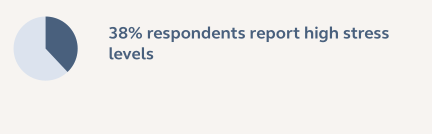
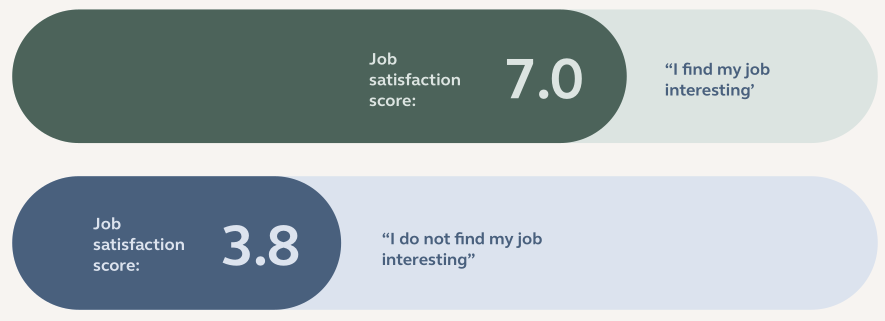
Jabra’s Work and Wellbeing in the Age of AI research found that 38% of respondents reported high stress levels, while workers who found their jobs interesting reported average job satisfaction of 7.0 out of 10, compared with 3.8 for those who did not. Workers who felt able to achieve goals scored 6.2, compared with 3.7 for those who did not.
Start office headsets procurement with workflow
The first buying decision is workflow.
Dense call floors, shared desks, private offices, hybrid workers, and roaming managers do not need the same office headsets.
For workers who need to move around, DECT wireless models can make more sense than standard Bluetooth. Jabra’s Engage 75 datasheet lists wireless connectivity of up to 150m/490ft, which is useful for users who need to leave the desk without leaving the call. For fixed agents in high-volume environments, wired USB office headsets often remain the practical choice: fewer charging issues, fewer pairing problems, and simpler support.
Noise cancellation is a business feature, not a luxury
Open-plan offices and call centres are acoustically hostile.
The issue is not only whether the wearer can hear. It is whether the person on the other end can understand them without repetition.
That is why microphone performance matters as much as speaker quality. Jabra says the Engage 50 II uses a three-microphone system designed to deliver clearer speech and stronger background noise cancellation. The newer Evolve3 range also leans heavily into voice clarity, with Jabra ClearVoice trained on more than 60 million real-life sentences to distinguish a speaker’s voice from surrounding sound.
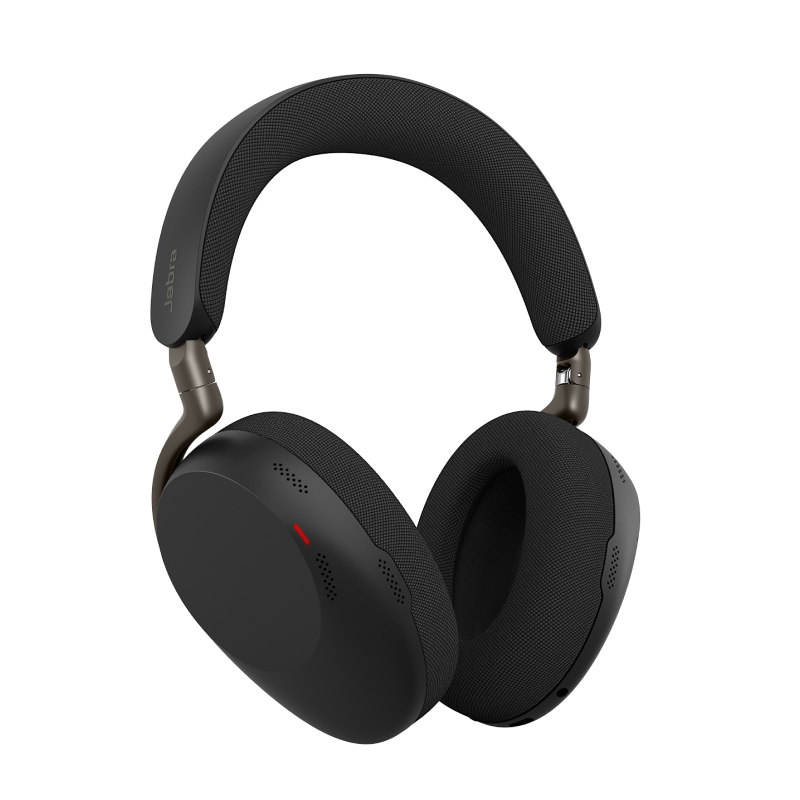
For buyers, the business case is straightforward: clearer calls mean fewer repeated questions, less listener fatigue, and fewer customer interactions derailed by background noise.
Compatibility and management reduce IT drag
Good office headsets should fit into the collaboration stack already in use.
Microsoft Teams, Zoom, Google Meet, Chromebook support, Amazon Connect, Genesys, and NICE CXone compatibility can reduce deployment friction and limit the number of “my headset does not work” tickets. Jabra says Engage 40 variants support Microsoft Teams, Zoom, Google Meet, Chromebook, and contact centre platform integrations depending on configuration.
Device management is another procurement issue hiding in plain sight. Jabra Direct keeps headsets updated with firmware and compatibility updates, while Jabra Xpress supports remote deployment of firmware and settings across large fleets. Jabra’s Evolve3 materials also position Jabra Plus as a management layer for customisable audio and fewer IT tickets.
Comfort determines adoption
Even technically excellent office headsets fail if people dislike wearing them.
For long shifts, buyers should assess weight, clamp force, ear cushion material, monaural versus binaural preference, and whether users need over-ear, on-ear, or alternative wearing styles.
Jabra’s Evolve3 comparison highlights all-day comfort, soft memory foam, a lighter design, and enhanced spatial sound intended to reduce fatigue during long sessions and back-to-back calls. This is where trial programmes pay off. A headset that looks good in a spreadsheet can still fail on the floor if users remove it after two hours.
Work and wellbeing in the age of AI
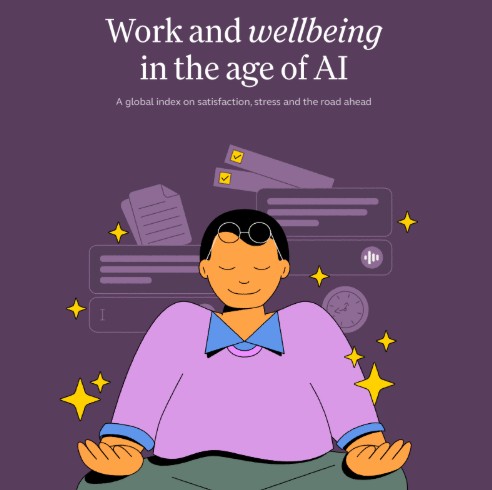
AI is transforming the way we work, collaborate, and make decisions but its impact goes beyond productivity. In partnership with the Happiness Research Institute, Jabra surveyed more than 3,700 knowledge workers across 11 countries to explore how AI is influencing workplace wellbeing, stress, job satisfaction and purpose.
Download now to explore the key findings and practical strategies.
You might also be interested: New Office IT Setup Checklist
Think total cost of ownership
The cheapest office headsets are rarely the cheapest over three years. Procurement teams should factor in warranty, replacement parts, failure rates, support time, charging infrastructure, and whether devices can be managed remotely.
Jabra says Engage 50 II includes a three-year warranty, while its business warranty terms cover product categories with warranty periods of up to three years. The Evolve3 materials also point to replaceable parts, Bluetooth Low Energy, rapid charging, and TCO 10 certification as part of the long-term value equation.
The best office headsets do not merely connect calls. They protect focus, reduce IT complexity, improve customer interactions, and make daily work feel less frustrating. That is the procurement standard worth buying against.
About The Author

Kihara Kimachia
NEXT UP


