Trending Topics

 Trending
Text to video AI: how AI is transforming digital video creation

This is a sponsored article brought to you by Vimi.
Video has become the dominant format across digital platforms, from social media feeds to marketing campaigns and online education. As demand for video content continues to grow, traditional production methods are increasingly seen as too slow, too expensive, and too skill-dependent. This shift has led to the rapid rise of text to video ai, a technology that converts written ideas or scripts into fully generated videos using artificial intelligence.
Instead of relying on editing software, production teams, or complex workflows, users can now generate videos in minutes by simply inputting text. Platforms like Vimi represent this new generation of AI tools, enabling creators to transform ideas into visual content with minimal effort while maintaining strong creative flexibility.
How text to video AI works and what it offers
At its core, text to video ai is designed to interpret written input and convert it into structured visual output. The system analyzes text, identifies key scenes or concepts, and then generates corresponding visuals, motion elements, and in some cases audio narration.
Most modern tools follow a similar automated pipeline:
- Input a script, prompt, or idea
- Select a visual style or template
- AI generates scenes, animations, and transitions
- Export the final video
This simplified workflow eliminates the need for traditional editing skills while enabling rapid content production.
Key capabilities typically include:
- Template-based video generation
- AI-generated scenes and animations
- Automated story structuring from text
- Social-media-ready output formats
These features make text to video ai especially valuable for creators who need fast, consistent, and scalable video output.
Real-world applications and creative use cases
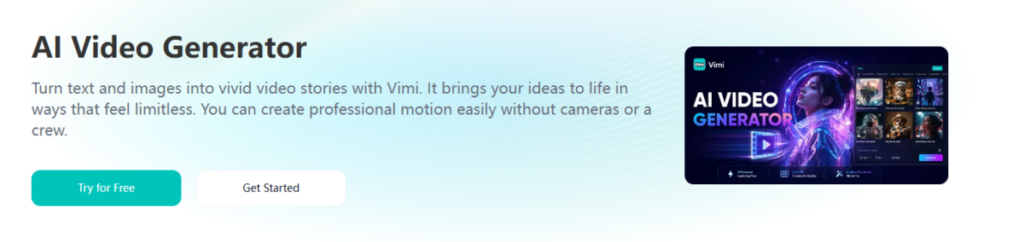
The real value of text to video ai becomes clear when applied across different industries and content needs.
On social media platforms like TikTok, Instagram, and YouTube Shorts, it enables creators to produce short-form videos quickly and consistently. This is crucial in fast-paced content environments where publishing frequency directly impacts reach and engagement.
In marketing, businesses use AI-generated videos for product explainers, promotional campaigns, and brand storytelling. This reduces production costs while maintaining a professional visual presence.
In education, it helps transform lessons and written materials into engaging visual content that improves learner retention and accessibility.
Independent creators also use it for storytelling, personal branding, and experimental content formats, turning written ideas into videos in minutes.
Across all these use cases, text to video ai acts as a content scaling engine, enabling faster production without sacrificing creative output.
Step-by-step guide to using text to video AI tools
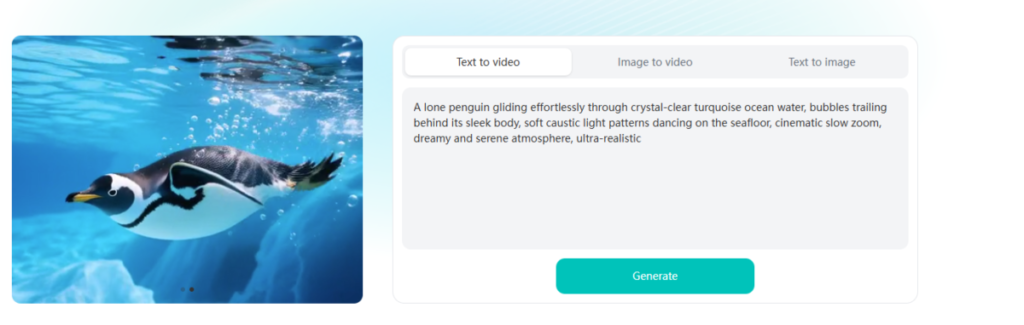
Using Vimi.art’s text to video ai feature is designed to be straightforward and template-driven, making it accessible even for beginners.
The typical workflow is:
- Enter your idea or text prompt
Start by typing a script, concept, or description into the input field. - Choose a style or visual template
Select from available templates or styles that define the video’s visual direction and animation tone. - Generate the video automatically
The AI processes your input, builds scenes, and creates a complete video with motion and visual effects. - Preview and download the result
Once generated, you can preview the video and download it for use across social media, marketing, or creative projects.
This structured workflow removes the need for manual editing entirely, allowing users to focus on ideas and storytelling rather than production complexity.
Creative transformation and future direction
Text to video ai is evolving beyond simple automation into a creative storytelling system.
Instead of only converting text into generic video clips, modern tools now allow users to influence visual style, tone, and narrative direction. Templates and AI-driven style systems help shape how ideas are visually expressed.
This shift is also changing how digital identity is built. Video content is increasingly used not just for communication, but for expressing personality, aesthetic style, and brand identity.
Platforms like Vimi demonstrate this evolution by combining automated generation with creative styling options, allowing users to experiment with visual storytelling in a highly accessible way.
As the technology continues to evolve, text to video ai will become more personalized, more adaptive, and more deeply integrated into everyday content workflows.
Conclusion
Text to video ai represents a major shift in digital content creation. By transforming written input into fully generated video output, it significantly reduces production time while expanding creative accessibility.
Its impact is already visible across social media, marketing, education, and personal content creation, where demand for fast and engaging video continues to grow. More importantly, it is redefining video creation as a creative, idea-driven process rather than a technical one.
As platforms like Vimi continue to evolve, the ability to turn text into high-quality video will become a foundational tool in modern digital communication.
About The Author

Gabriel Jones
NEXT UP


