Trending Topics

 Trending
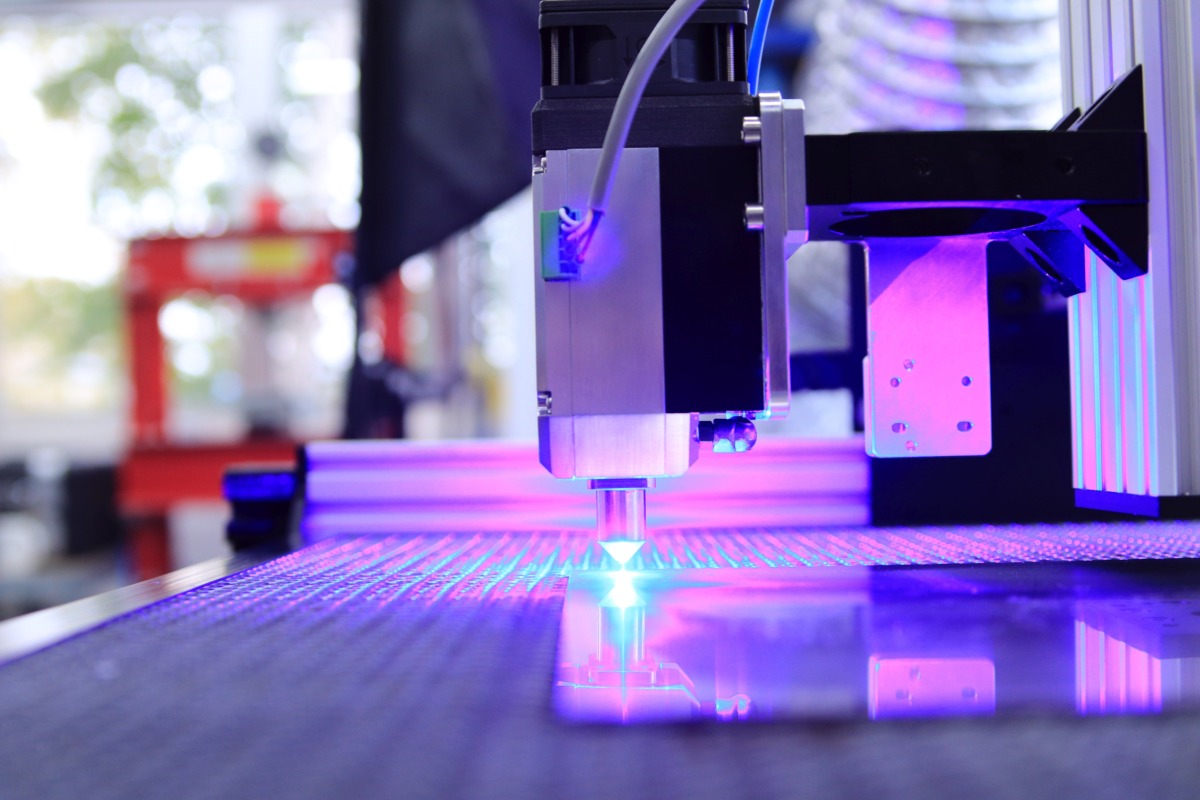
How to choose O2 gas detectors for laser cutting and welding facilities

This is a sponsored article brought to you by GasDog.
Modern metal fabrication relies heavily on assist and shielding gases — oxygen, nitrogen, argon, and CO2 — to cut faster, weld cleaner, and improve part quality. Laser cutting and welding automation has expanded rapidly. With that expansion comes a growing volume of pressurized gas in enclosed production environments.
The problem is straightforward: the same gases that improve manufacturing also displace breathable air. Nitrogen and argon are colorless and odorless. Workers cannot sense a hazardous drop in oxygen until it is too late. Conversely, a leak from an oxygen supply line raises ignition risk dramatically.
Understanding oxygen-related hazards in fabrication facilities
Oxygen deficiency
OSHA defines an oxygen-deficient atmosphere as any environment where O2 concentration falls below 19.5% by volume (29 CFR 1910.146). Normal ambient air contains approximately 20.9% oxygen. The gap between normal and hazardous is narrow — and the consequences escalate quickly.
Table 1. O2 Concentration and physiological effects
| O2 Level | OSHA Classification | Physiological Effect |
| 19.5% | OSHA minimum safe level | Alarm threshold – action required |
| 16–19% | Oxygen deficient | Increased breathing rate, impaired coordination |
| 10–16% | Severely deficient | Headache, dizziness, severely impaired judgment |
| <10% | Immediately dangerous | Loss of consciousness, cardiac arrest, death |
The primary causes of oxygen deficiency in fabrication facilities are nitrogen or argon leaks from supply lines and fittings, rapid evaporation of liquid nitrogen in cryogenic storage areas, and gas accumulation inside enclosed machine enclosures or maintenance tunnels.
Oxygen enrichment
Oxygen enrichment occurs when O2 concentration exceeds 23.5%. This is the threshold used by OSHA and the Compressed Gas Association. In an enriched atmosphere, materials that normally resist ignition — clothing, rubber seals, hydraulic fluid — can ignite at much lower temperatures. Flame spread accelerates dramatically.
Enrichment hazards are most common in oxygen cylinder storage rooms, manifold areas, and near the assist gas delivery systems of laser cutting machines. A cracked regulator or loose fitting can silently raise oxygen levels to dangerous concentrations.
Hazards specific to laser cutting and welding environments
Automated laser cutting cells present compounded risks. Enclosures are sealed for fume control, which means any gas leak concentrates rapidly. High-pressure nitrogen supply lines run through machine enclosures and service trenches. Nitrogen purging is used to prepare the cutting environment before each cycle.
Welding booths create micro-environments where argon and CO2 accumulate at low levels. Workers in these spaces often work in positions — crouching, kneeling, or leaning in — that place them at the highest concentration zones.
To manage these risks, your facility must deploy dedicated oxygen gas detectors. By installing fixed oxygen gas monitors in high-risk zones and requiring portable O2 gas detectors for maintenance, you replace guesswork with real-time, actionable data. Integrating these sensors with your ventilation and machine interlocks is the only way to proactively protect your team and transform high-risk areas into compliant, managed safety zones.
Critical areas requiring O2 monitoring
Not every square foot of a fabrication floor requires the same level of attention. The following areas consistently present the highest oxygen hazard risk based on industry incident data and OSHA guidance.
- Gas cylinder storage rooms and bulk manifold areas.
- Automated laser cutting cells.
- Enclosed welding booths.
- Maintenance access areas and confined spaces.
- Cryogenic storage and nitrogen generator rooms.
Fixed vs. portable O2 gas detectors: which do you need?
The choice between fixed and portable O2 detectors is not either/or. Most fabrication facilities benefit from both. Understanding the role of each helps define the right deployment strategy.
Fixed detectors provide continuous monitoring in defined zones. They connect to control systems, trigger local alarms, and can be integrated with ventilation interlocks or machine shutdowns. They are the right choice for laser cutting cells, gas storage rooms, and welding booth areas with consistent occupancy or risk.
Portable detectors travel with the worker. They are essential for maintenance technicians who enter confined spaces, contractors unfamiliar with the facility’s gas layout, and inspection activities in areas without fixed coverage.
Table 2. Fixed vs. portable O2 detector comparison
| Feature | Fixed Detector | Portable Detector |
| Monitoring mode | Continuous, 24/7 | Spot check / patrol |
| Installation | Permanent, wall or ceiling mount | Clip-on or handheld, no install |
| Alarm system | Local + remote DCS/SCADA relay | Personal audible/vibration alert |
| Best environment | Laser cutting cells, gas rooms | Confined spaces, maintenance entry |
Best practice recommendation: deploy fixed detectors in all production zones with continuous gas use, and require portable multi-gas detectors for any confined space entry or maintenance activity. The two systems complement rather than substitute for each other.
Key factors when selecting an O2 gas detector
The right detector depends on the environment, the process, and the integration requirements of the facility. Three areas should drive the decision: sensor performance, physical suitability, and system compatibility.
Sensor performance
- Sensor technology. Electrochemical sensors are the industry standard for O2 detection. They offer good sensitivity, low power draw, and broad compatibility with fixed and portable instruments. Paramagnetic sensors deliver higher accuracy and longer operational life, but at greater cost — best suited for laboratory-grade monitoring or environments with sensor-contaminating gases.
- Detection range and accuracy. A range of 0–25% v/v covers deficiency monitoring. Facilities with enrichment risk should consider 0–30% v/v. Look for ±0.5% accuracy or better at the alarm thresholds.
- Response time. For enclosed spaces and automated cells, a T90 response time of 30 seconds or less is essential. Slow-responding sensors can delay alarms long enough for a worker to become impaired.
Physical suitability
- Environmental ratings. Fabrication shops expose sensors to metal dust, cutting fluids, and humidity. Specify IP65 as a minimum. Washdown zones or outdoor cylinder storage require IP66 or NEMA 4X.
- Hazardous area certification. Cylinder storage rooms and fuel gas supply areas qualify as classified locations. Select detectors with ATEX/IECEx or UL/FM intrinsic safety certification for these zones.
System compatibility and maintenance
- Alarm functions. Verify configurable low alarms (19.5% O2) and high alarms (23.5%). Relay outputs for PLC or SCADA integration enable automated machine interlocks and ventilation response.
- Integration capability. Detectors with 4–20 mA analog output, Modbus RTU, or HART communication connect directly to existing PLC-controlled laser systems and SCADA dashboards.
- Calibration and maintenance. Define the calibration cycle (typically 6–12 months), bump test requirements, and sensor replacement interval before purchasing. Total cost of ownership includes consumables, not just the instrument.
Table 3. O2 Detector selection checklist
| Selection Factor | What to Verify |
| Sensor technology | Electrochemical for standard O2; paramagnetic for high-accuracy or corrosive environments |
| Detection range | 0–25% v/v minimum; 0–30% for enrichment-prone areas |
| Response time (T90) | ≤30 seconds for enclosed spaces or automated cells |
| Alarm thresholds | Low alarm at 19.5%, high alarm at 23.5%; configurable relay outputs |
| Enclosure rating | IP65 or higher for fabrication shop conditions; NEMA 4X for washdown zones |
| Explosion protection | ATEX/IECEx or UL/FM certified for gas storage and cylinder rooms |
| Integration output | 4–20 mA, Modbus RTU, or relay for PLC/SCADA/laser cell interlock |
Compliance considerations for U.S. manufacturers
O2 monitoring is not just a safety best practice — it is increasingly a regulatory requirement and an insurance expectation. U.S. manufacturers should be aware of the following standards.
- OSHA 29 CFR 1910.146 requires atmospheric testing before any confined space entry — a category that includes laser cutting enclosures, service trenches, and gas storage rooms.
- OSHA 1910.134 mandates respiratory protection programs wherever O2 may fall below 19.5%. NFPA 55 and NFPA 51B govern gas storage and cutting operations at the industry level.
Non-compliance with OSHA confined space and atmospheric monitoring requirements carries fines. A properly deployed O2 monitoring program is one of the more cost-effective risk management investments a facility can make.
Conclusion
Effective O2 monitoring does not require complex infrastructure. It requires the right sensors in the right locations, properly calibrated and connected to systems that can act on the data. Fixed detectors protect production zones continuously. Portable instruments protect workers when they move into less-monitored areas.
Selecting a detector based on the environment — sensor technology, response time, enclosure rating, integration capability — ensures that the system performs when it matters. Aligning that selection with OSHA, NFPA, and insurance requirements turns a safety investment into a compliance and liability management tool as well.
About The Author

Gabriel Jones
NEXT UP