Trending Topics

 Trending
What’s next for quantum computing

Table Of Contents−
Quantum computing is going to become a big deal in certain areas of technology. By 2050, we expect it to have revolutionised certain areas of computing, from cryptography to materials science to medical research.
In this brief introduction to quantum computing, we give a simplified explanation of how it works – trust us, you don’t want the complicated version. In particular, how it compares to classical computing. And we also cover its real-world applications right now and in the future.
Understanding quantum computing
Classical computers process information in binary bits (0s and 1s). In stark contrast, quantum computers use quantum bits, or qubits, which can exist in multiple states at the same time. Researchers refer to this as superposition.
Further, qubits can exhibit entanglement, meaning the state of one qubit is directly influenced by the state of another, even if they are physically separated. This unique feature enables quantum computers to perform calculations in a wholly different way to classical computers. And at unprecedented speeds.
Real-world applications
The potential applications of quantum computing are vast and varied:
- Cryptography: Quantum computing poses both challenges and opportunities for cryptography. While it threatens current encryption methods (it may render them useless within a decade), it also offers the development of quantum-resistant algorithms and quantum key distribution methods, enhancing data security.
- Artificial Intelligence: Quantum computing can significantly accelerate machine learning processes, enabling the analysis of large datasets more efficiently. This could lead to more sophisticated AI models and faster training times.
- Drug discovery: By simulating molecular structures at the quantum level, quantum computers can expedite the discovery of new pharmaceuticals, potentially reducing the time and cost associated with bringing new drugs to market.
Some interesting statistics
The growth and investment in quantum computing are indicative of its anticipated impact:
- Market growth: The global quantum computing market was estimated at $1.21 billion in 2023 and projected to grow at a compound annual growth rate (CAGR) of 20.1% between 2024 and 2030.
- Investment surge: According to the Boston Consulting Group, quantum computing is on track to create $850 billion of economic value by 2040.
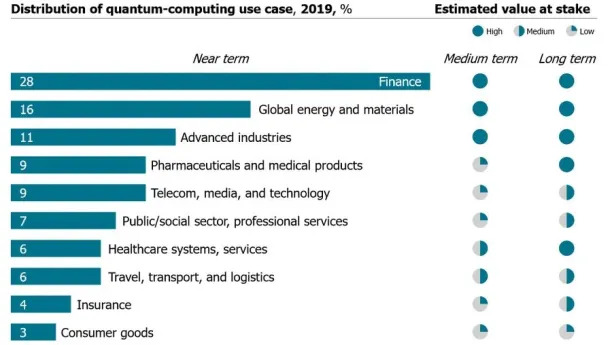
- Industry adoption: Approximately 28% of quantum computing use cases are anticipated to benefit the finance sector, highlighting the technology’s potential to revolutionise financial services.
The road ahead
While quantum computing holds immense promise, it is still in its nascent stages. Challenges include qubit stability, error correction and the development of scalable quantum systems. Today’s quantum computers, from initiatives by IBM, Google, Quantinuum and other innovators, demonstrate early successes but are limited in scope.
However, ongoing research and substantial investments are steadily addressing these hurdles. As advancements continue, quantum computing is expected to transition from theoretical exploration to practical application, ushering in a new era of computational capabilities.
Related reading
About The Author

Kihara Kimachia
NEXT UP


