Trending Topics

 Trending
What you need to know about the Qualcomm Snapdragon X2 Elite and X2 Elite Extreme in four minutes

Qualcomm was Microsoft’s launch partner for its Copilot+ PCs scheme, with the first tranche of laptops based upon the company’s Snapdragon X1 Elite platform. We’ve since seen more affordable variants of Qualcomm’s chips, but they’ve been shaved down versions rather than improvements. Now, finally, it has announced the X1 Elite’s successor: the Snapdragon X2 Elite.
Having invited me to the launch of the new chips in Hawaii, including flights and accommodation and one incredibly strong gin and tonic, it’s only fair that I share what’s new about the X2 Elite. So, in what should you take you less than four minutes to read, here’s what you need to know about the Qualcomm Snapdragon X2 Elite – and the all-new X2 Elite Extreme.
First, what’s the difference between the X2 Elite and the X2 Elite Extreme?
Is it too simplistic to say that the X2 Elite Extreme is simply faster than the X2 Elite? Certainly if you look at the details in the table below, there is no other visible difference other than clocks.
In particular, the X2 Elite X2E-88-100 and X2 Elite Extreme X2E-96-100 have the same number of cores. These are split between 12 Prime cores and six Performance cores – confusing terminology as the Performance cores are clocked lower.
Anyway, the key thing is that two of the Extreme’s cores can boost all the way up to 5GHz, compared to 4.7GHz for the plain Elite. The Adreno graphics also run faster, while the memory bandwidth is boosted from 152GB/sec to 228GB/sec.
The one thing that doesn’t change is the much-improved NPU, which now hits 80 TOPS compared to 45 TOPS for the version in the first-generation Snapdragon X1 chips.

What about gaming performance?
Qualcomm points to a 2.2x improvement – compared to the X1 Elite – in its gaming performance based on synthetic benchmarks, and reckons that will translate into a similar result in real games. I remain doubtful about this, but will have to see how it performs when I put it to the test.
The big challenge is for Qualcomm to work with games developers so that titles run natively on the Arm architecture. During the summit, it claimed that the number of games optimised for Snapdragon has grown from around 700 to over 1,500, but that doesn’t matter a jot if your favourite game isn’t one of them.
What difference does the new 80 TOPS NPU make?
Initially, I don’t expect any apps to run exclusively on Qualcomm’s new Hexagon NPU. They will simply run more quickly. However, over time this extra power may unleash new apps or plugins that will only run on the more powerful NPU as it can achieve tasks in real-time that slower NPUs can’t. We shall see.
The good news is that Qualcomm has improved power efficiency by 15%, it claims, and that means better battery life.
How does the X2 Elite Extreme perform in benchmarks?
We were able to benchmark prototype laptops based on the X2 Elite Extreme at the summit, but the results are under embargo until the end of this month. For now, all I can say is that the results are in line with Qualcomm’s headline claims.
Is there anything here of interest to businesses?
Yes: the Snapdragon Guardian is a new service that will be exclusive to the X2 generation of chips. I will cover exactly what Snapdragon Guardian does in a separate article, but it will give IT teams a way to remotely manage laptops over Wi-Fi and 4G/5G. Much like AMD’s Ryzen Pro and Intel’s vPro.
Is there anything for creators?
Qualcomm dedicated a lot of stage time to showcase the X2 Elite’s creative skills, ranging from 3D modelling to music production to professional colour grading in videos. It’s hard not to be impressed by what it has achieved here.
I’ve already covered Qualcomm’s partnership with Adobe, with professional tools such as Photoshop, Premiere Pro and After Effects already taking advantage of the NPU built into the X1 chips. The faster NPU in the X2 chips should make this even sleeker.
But it doesn’t stop there. Qualcomm reckons that the X2 Elite will deliver up to 2x better performance in Cinema 4D and up to 3.5 faster animations and rendering. I also saw highly impressive demos involving Ableton Live for musicians.
Will there be new form factors?
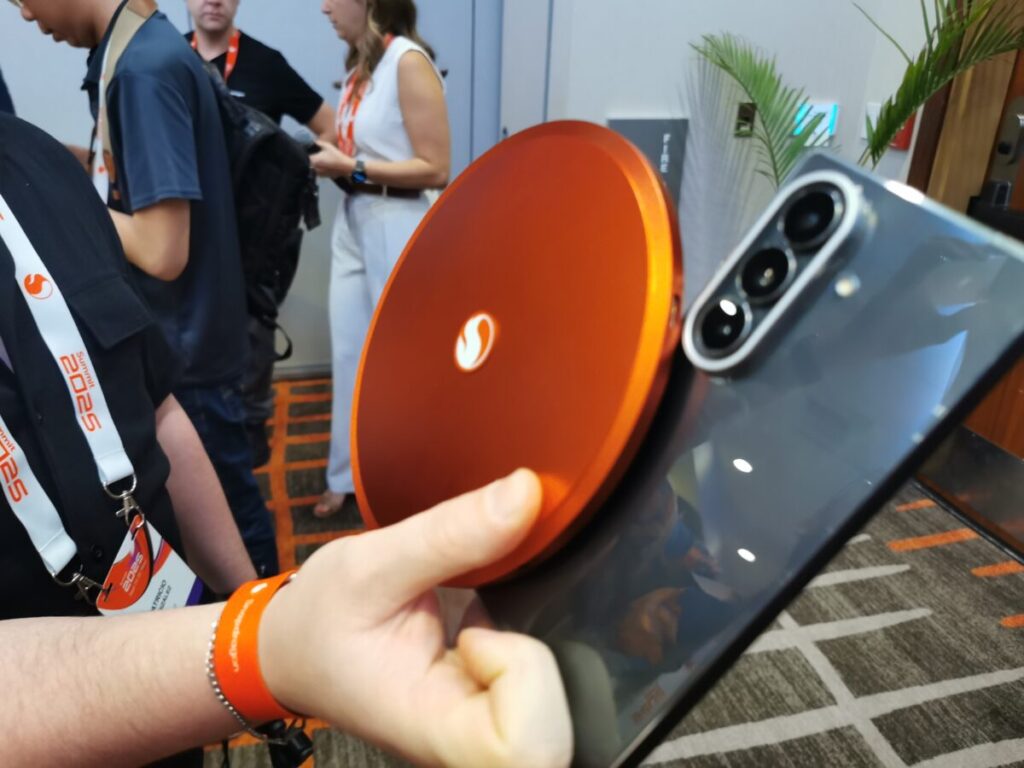
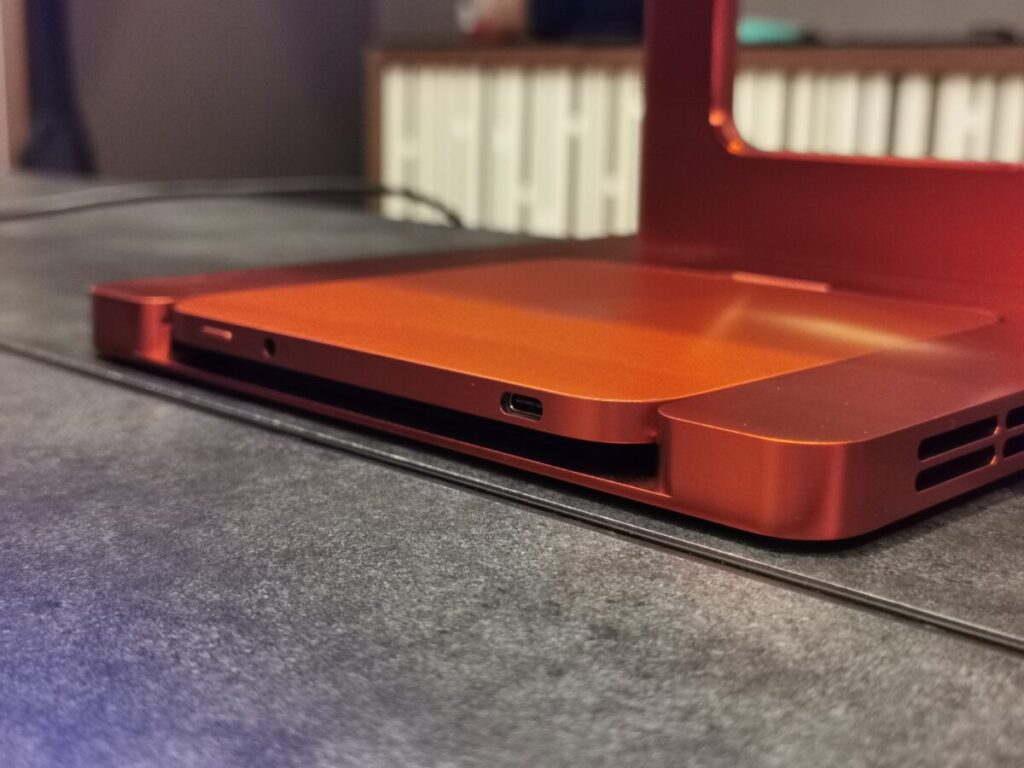
Perhaps. Qualcomm showed two particularly interesting designs: one mini-frisbee-sized PC, and another square-ish mini computer that slotted into a screen to turn it into an all-in-one system. Very clever.
When will we see laptops based on the Snapdragon X2 Elite and how much will they cost?
Qualcomm says that new laptops will appear in the first quarter of 2026, and I expect to get my hands on a slew of them at CES in Las Vegas. How much they cost will of course depend on the vendors, but based on comments made in a Q&A session I’d say the £1,000/$1,000 mark for the X2 Elite and roughly £250/$250 more for the X2 Elite Extreme.
Related chip news
About The Author

Tim Danton
NEXT UP


