Trending Topics

 Trending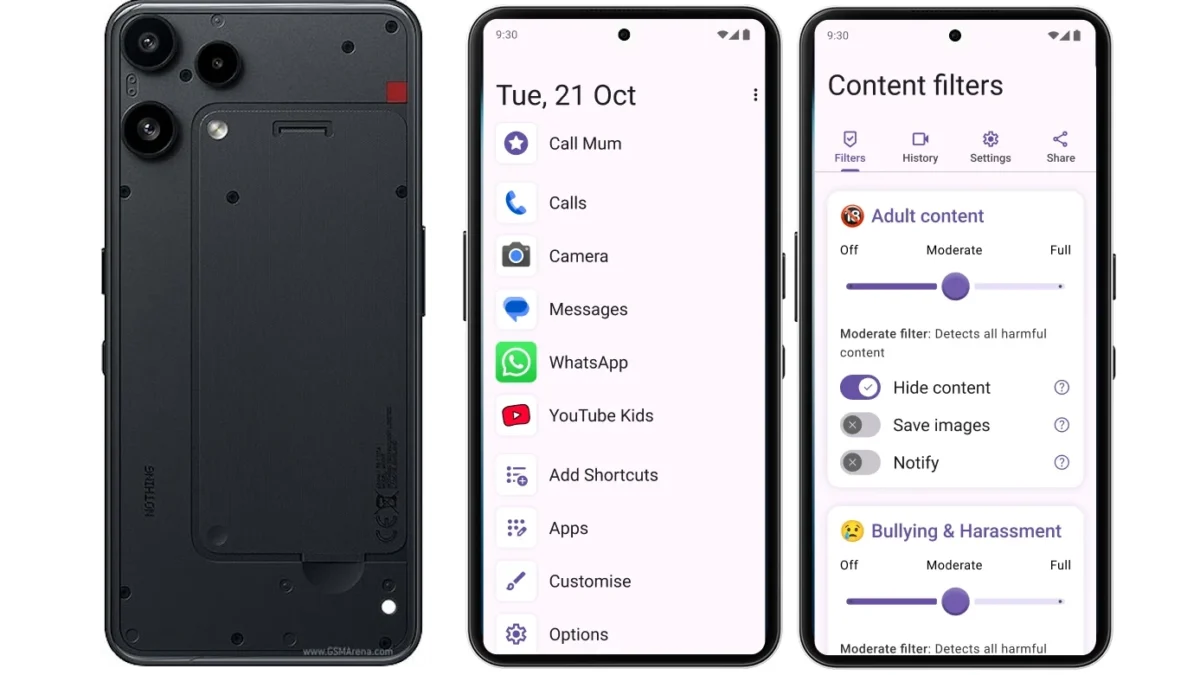
Mumsnet Other Phone: has the time come for this phone designed by British mums to protect their children?

What would a phone look like if it was built by parents? British parenting website Mumsnet decided to find out and teamed up with the makers of a child safety app to create Other Phone, a lockeddown version of Android.
Five months on from its launch, the phone has never been more timely. The conversation about letting children use social media and smartphones hasn’t just continued unabated, it’s exploded.
Australia has banned social media for under 16s, while the UK government is currently running a consultation as well as pilot projects on potential restriction systems. Alongside that, the government has issued guidance calling for schools to ban phones throughout the school day. It also said it was time to limit the screentime of children under five.
That comes in the same month Meta was fined $375 million in a jury trial accusing it of failing to keep children safe, followed a day later by Meta and YouTube being found liable for designing deliberately addictive products.
Justine Roberts, Mumsnet Founder and CEO, said in an interview that six in ten parents on Mumsnet report their kids are addicted to social media, with 82% calling for a delay in its use until children are older. Why haven’t tech firms done better?
“Their entire model is built on engagement and attachment, and they don’t want anyone to control that,” she said in an interview published on Ricky Sutton’s Substack. “It’s built into the device. The phones are set up to encourage engagement to support the business model. That’s the bit people have not really gotten to grips with yet.”
What can be done?
Phone makers would be the first to point to their own built-in controls. Apple’s iOS allows screen time, content and apps to be restricted and managed via the Screen Time tool, while Family Sharing allows further controls of a child’s own device. Google’s Android has parental controls built into the Family Link app, with content filtering available in Chrome, Search and YouTube Kids, as well as app and screen time restrictions.
But that’s clearly not enough, with only a third of Mumsnet’s users saying those tools went far enough. So last year, Mumsnet teamed up with British phone maker Nothing, adding an extra layer of software protection to its Nothing 3a Lite handset by partnering with SafetyMode. It released the Other Phone in November 2025.
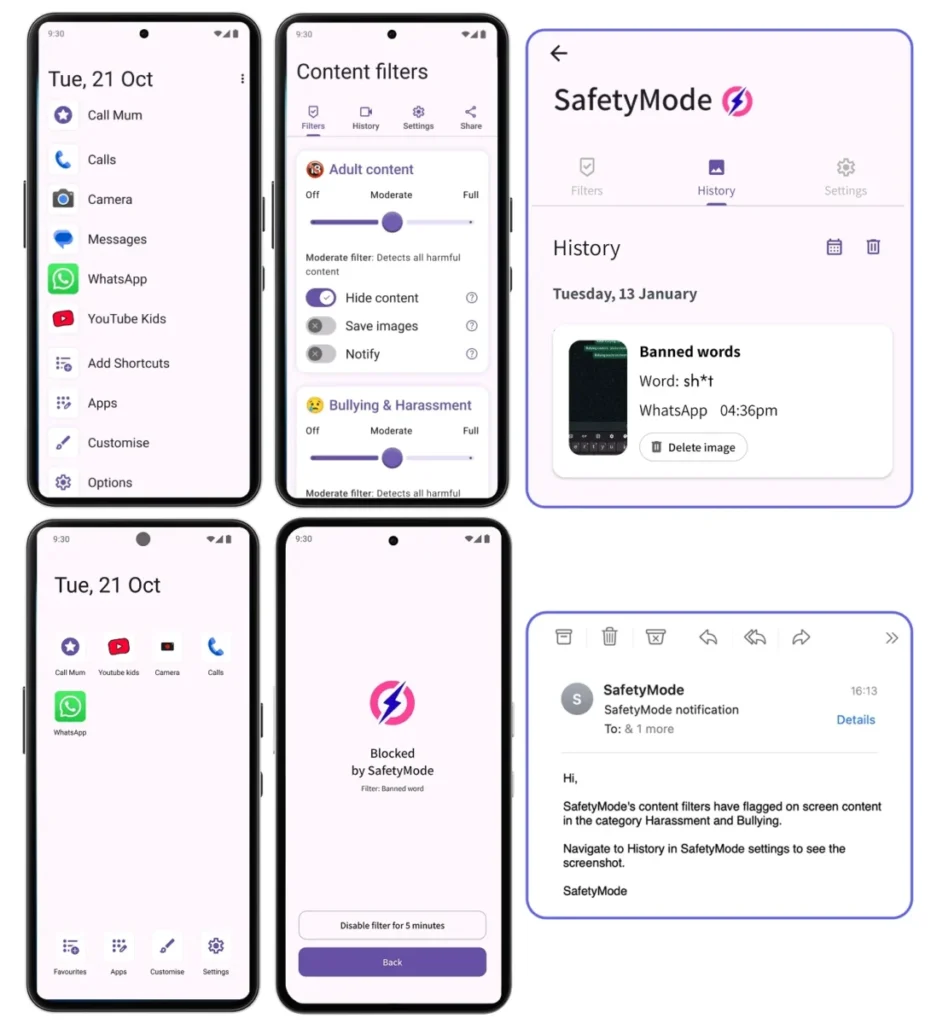
That handset is centred on the idea of “radical white listing”, said Roberts, meaning parents effectively need to approve every app on the phone, and includes an AI-powered content monitoring tool that flags dangerous or problematic content – even in WhatsApp. The aim is that controls can be loosened as the child grows up. Based on a stripped-down version of Android, it costs £279 but also requires a £5.99 monthly subscription for SafetyMode Plus.
“It’s amazing that Big Tech didn’t produce this because parents have been crying out for it for years,” Roberts added in that interview.
Demand for child safety
Is the Other Phone working? On a technical level, Roberts said that her team told teenagers to try and get around the controls – and they failed. Likewise the review found on Mumsnet.com (labelled as an advertising feature) was overwhelmingly positive, with praise for its parental controls in particular.
But whether the device is getting into the hands of children is another issue. Bertie Aspinall, the Co-Founder of SafetyMode, said that company’s app is active on “thousands” of phones globally, with 20% of its market share in the US and 70% in the UK. But those “thousands” includes the free and paid versions of the SafetyMode app that can be installed on other handsets as well as the Other Phone.
That’s a small drop in the ocean compared to the frankly “staggering” 97 million iPhones that analysts believe Apple sold in the last quarter.
Still, it proves there could be a third path beyond the government allowing or banning smartphones for children in schools, says Aspinall.
“There is a middle ground, and that technology already exists – even if Big Tech gaslights us into believing it isn’t,” Aspinall told TechFinitive. “Their business model depends on engagement, and engagement depends on keeping guardrails low. That’s the conflict of interest nobody in this debate is naming clearly enough.”
He added: “Smartphones have real positives. It’s the content that is the issue – and giving parents the toolbox to customise and protect their children from what they’re worried about isn’t just a step in the right direction. The technology is already here, and we’d like the government to pay a bit more attention to that.”
In the meantime, Mumsnet’s Other Phone is one option for parents who want to be able to check in on their children, as is the free or paid versions of the SafetyMode app, though it’s only available on Android.
The government and Big Tech have finally been forced to pay attention, but it looks like keeping children safe on mobile devices is going to remain entirely in the hands of parents for the foreseeable future.
About The Author

Nicole Kobie
NEXT UP


