Trending Topics

 Trending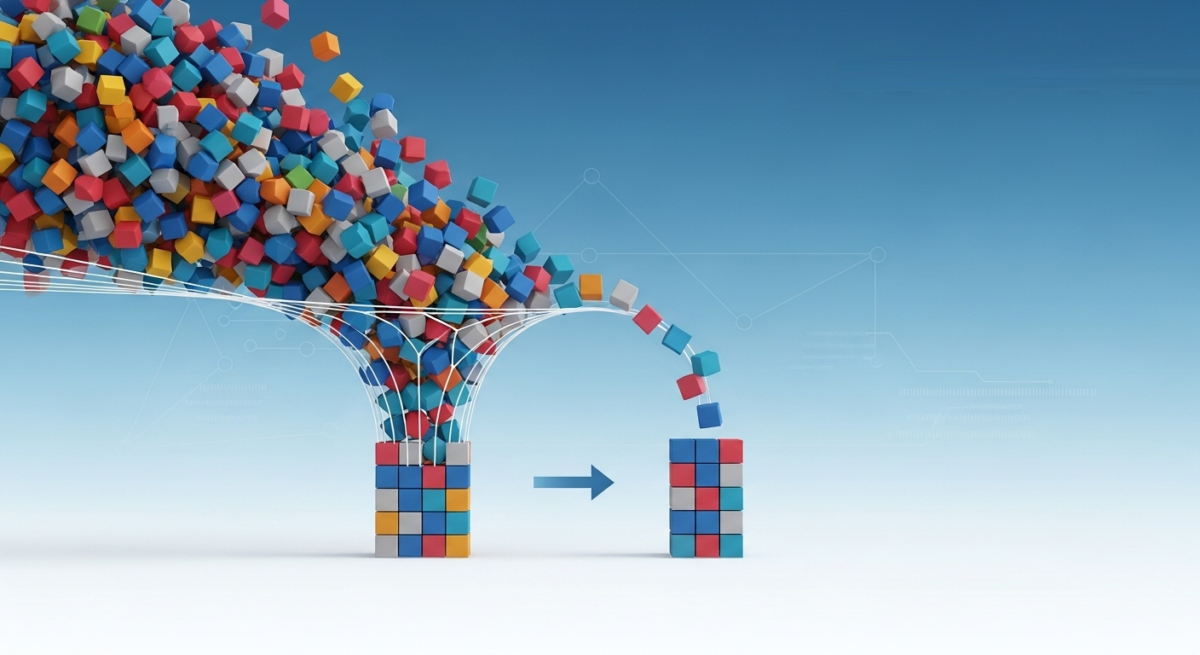
5x your storage with 0x the pain

As data volumes surge past the petabyte mark for many organizations, squeezing more from existing infrastructure is becoming essential. Luckily, there is an answer that won’t slow you down
There was a time when storage growth felt manageable with forward planning, but these days it’s an unpredictable moving target. Data keeps piling up, sometimes exponentially, and many teams are finding that what looked like plenty of headroom a couple of years ago suddenly doesn’t stretch very far at all.
Research cited in a recent technical review of Dell’s PowerStore suggests that nearly two-thirds of organizations already manage at least a petabyte of data, with the average environment approaching three. With growth hovering around 40% a year, doubling every couple of years is no longer unusual – it’s becoming the norm.
Put simply, storage estates no longer stand still.
Buying more hardware used to be the default response, but that approach is getting harder to justify as power consumption, cooling limits, space constraints, and sustainability targets all complicate the equation. The conversation has shifted from expansion to efficiency – how to stretch existing infrastructure further without turning performance into a trade-off.
Moving beyond software-only deduplication
Most of the data that organizations store contains repetition. Duplicate blocks, predictable patterns, and information that doesn’t need to be written out again and again. Deduplication and compression address that problem by reducing what needs to be stored, but historically, the catch has been the overhead involved.
If reduction slows applications down, the benefits quickly look less compelling.
That’s why hardware-assisted approaches are becoming more popular. Instead of pushing all work onto general-purpose processors, systems increasingly handle compression and optimisation directly in the data path, reducing data volume as it flows through the platform.
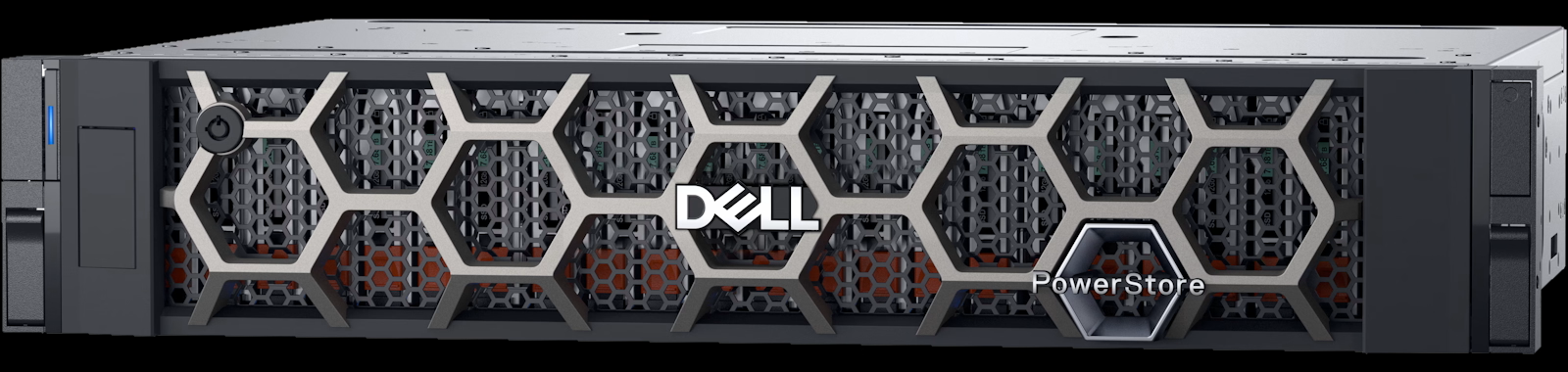
Dell PowerStore does this by running compression and deduplication at the same time, so data is trimmed down as it lands rather than cleaned up later. The goal is to “reduce the amount of data that is physically stored within the system,” which in practical terms just means less hardware needed to hold the same information, without slowing things down.
As data moves through the platform, it’s cached, processed and then written out in larger chunks, while deduplication looks across the system to spot repeats. There’s also a resiliency layer quietly spreading data across drives so protection stays intact without adding extra moving parts.
Put together, it’s built around “hardware and software algorithms that work together to accept and store data as efficiently as possible,” part of a broader move to make efficiency something that’s baked into the platform rather than switched on afterwards.
A 5:1 guarantee – and real-world results
Big headline ratios are pretty standard fare in the storage world, but Dell has put a clear marker down with a 5:1 data reduction guarantee across reducible workloads. There aren’t any pre-checks to get through, and if the numbers don’t land where promised, the remedy is extra capacity rather than credits.
That confidence seems to come from what customers are already seeing in the field. Over several months, anonymised telemetry showed average reduction sitting a little above 5.2:1 – roughly an 81% drop in physical footprint.
Customer experiences add context to those numbers. Andrew Schellhase, Senior Systems Administrator for IT Operations describes the approach as “game-changing”, noting that: “We can actually have development, test, and production running on the same storage area network. There’s no increase in space requirements, thanks to PowerStore’s deduplication capabilities.”

Guard your data like a pro with PowerStore
In today’s digital-first world, downtime isn’t just inconvenient; it’s costly.
Dell PowerStore is engineered with advanced data protection, high availability, and intelligent recovery capabilities to safeguard your critical workloads.
Scott See, Director of Infrastructure at Phoenix Children’s Hospital, highlights the simplicity of always-on reduction, noting that it removes the need to constantly manage capacity. “Always-on capabilities simplify data reduction so we can focus on what matters most,” the review quotes.
It’s a familiar theme. Efficiency is most valuable when it disappears into the background.
Efficiency as a sustainability story
Cost is often the headline, but energy is becoming just as important. Reducing the amount of physical storage required has a direct impact on organizations’ power consumption, cooling demand, and overall hardware footprint.
The review repeatedly links data reduction with lower energy use and reduced infrastructure requirements, framing efficiency as both a financial and environmental consideration.
For organizations under pressure to meet emissions targets — or simply dealing with rising electricity costs — that connection is becoming harder to ignore. Storage may not always be the most visible part of an IT estate, but at scale, it can represent a meaningful slice of power draw.
Making the most of what you already have
The broader argument for platforms like PowerStore is straightforward enough. Data growth isn’t slowing down, but infrastructure sprawl doesn’t have to follow suit. Combining hardware-assisted compression, global deduplication, and automated optimisation is designed to enable organizations to store more data within the same footprint without increasing complexity.
Such platforms enable organizations to scale capacity and performance while simplifying operations, and its efficiency features operate transparently enough to ease both planning and day-to-day management.
As data volumes continue to climb, striking the right balance between growth and control will only become more important. Infrastructure teams are under pressure to deliver more capacity without increasing power consumption, physical space or operational overhead.
If there’s a clear lesson from the petabyte era, it’s that storage strategy isn’t just about adding capacity anymore. It’s about using existing resources more intelligently, ensuring tomorrow’s growth doesn’t crowd out today’s performance.
About The Author

Carly Page
NEXT UP


