Trending Topics

 Trending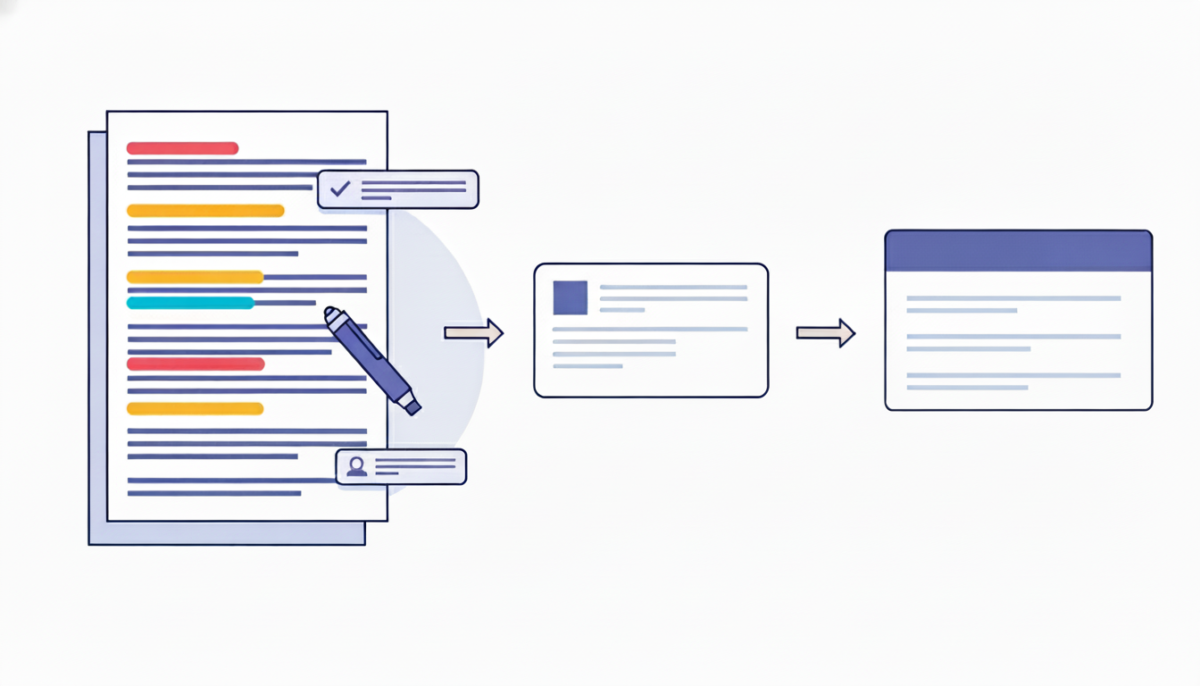
How to summarize an article and extract its core message

This is a sponsored article brought to you by AI.Summarizer.
Let’s admit it: we have to read way more than we can fully process. Articles, reports, and studies all compete for our attention, and two facts are important here. First, we can’t afford to pay that much attention. Second, most of those don’t need to be read word for word. This is where summaries help. A good summary removes the burden of reading a lot, plus, it lets you understand the core message quicker. You can decide whether deeper reading is even worth your time.
So, let’s learn how to summarize an article correctly and reach that clarity and accuracy we all strive for.
What Is a Summary?
Many people use modern tools, like the AI.Summarizer, to summarize articles, but knowing how the process works is still useful.
So, what’s a summary at all? It’s a shortened version of a text that captures its main idea and demonstrates its supporting points. Summary keeps the meaning of the original. What it leaves behind are the details that don’t add anything meaningful to the overall message.
A summary is not a rewrite of every paragraph. It’s also not your opinion or critique. The goal is to show what the author says, not what you think about it. This principle becomes especially critical when you work in academic or professional setups.
Summarizing vs. Paraphrasing
Summarizing and paraphrasing are often confused. However, they serve different purposes. If you’re asking yourself how to write a summary of an article that’s of high quality, think about reducing anything odd, not substituting what’s there.
With paraphrasing, you restate a specific passage in your own words. Usually, the outcome is of a similar length but may be different in style. Summarizing, on the other hand, condenses the text to its essential ideas.
Why You Might Need to Summarize an Article
We need summaries more often than we think. Students may rely on them when writing coursework or summarizing a research article for a presentation. Many experts in various domains use them for business reports, marketing overviews, case studies, meeting minutes, etc. For researchers, summaries are a usual thing too. They need them for reviews and further research. Even casual readers summarize news, books, and stories.
No matter the case, the aim is basically the same: staying informed without overload.
A Simple 5-Step Method That Works
We’ve collected these steps that make up a structure of how to summarize an article. Follow them, and you’ll see it’s quite manageable.
Step 1: Read Closely
You may start by scanning the main parts: title, introduction, and conclusion. This helps you gain an overall understanding of what to expect. Then read the full article carefully. Find the main claim and how the author supports it.
Step 2: Identify Key Points
How to define them? The central concept is usually stated early. Then identify at least two to four main arguments. They are most likely accompanied by the key evidence that supports them. Skip anecdotes, examples, or side details. Their goal is to be persuasive; yours is not.
Step 3: Outline the Structure
Organize your notes in a logical order. A simple outline might look like this: central concept, main arguments, conclusion. This is effective because it builds your writing around a concrete, non-abstract structure.
Step 4: Write in Your Own Words
Many people get stuck at this point of how to write a summary of an article. Our advice is: keep it concise and neutral. Aim for about 10–30% of the original length. Quoting is better not to be included (unless absolutely needed).
Step 5: Revise and Check
Compare your summary with the original. Is everything important there? Isn’t there a key argument missing? Isn’t it too personal? Now, tighten the language and improve the flow.
What Makes a Strong Summary
A good summary focuses on essential things. It’s objective, uses neutral language, and reflects the author’s opinion (not yours). It follows a clear structure, is scannable, and reads smoothly from start to finish.
That is, the best way to summarize an article is to stay consistent and accurate. The reader should be able to grasp the full message from this new short text without distortions.
Practical Techniques to Improve Your Summaries
Several techniques can make summarizing easier. The SQ3R method, Survey, Question, Read, Recite, Review, helps you pass the process persistently and without any confusion. This is great when you’re learning how to write a research summary, read transcripts, or a survey agenda.
Then, there’s another approach – progressive layering. It’s about highlighting key sentences first, then summarizing only those that matter the most. It shines in content repurposing or building searchable ‘digital maps’ of knowledge. Reading your draft aloud can also reveal gaps.
Common Mistakes to Avoid
- One common mistake is including too much detail. If you are tempted to repeat examples or insert quotes, don’t do that. Such summaries lose their purpose.
- Another issue is copying phrases directly from the text. Remember, you’re not shortening, you’re summarizing! This includes paraphrasing, too.
- Adding personal opinions? Missing the main thesis? This weakens your summary.
- Poor structure, with ideas jumping around. This makes even accurate summaries hard to follow.
Final Thoughts
Knowing how to summarize an article is a skill, and as with all skills, it improves with practice. You may be working through anything: academic papers, professional documents, or long-form journalism. A clear summary is something that helps you move from reading to knowing. When done well, it saves time, sharpens your focus, and makes complex ideas easier.
About The Author

Gabriel Jones
NEXT UP


