Trending Topics

 Trending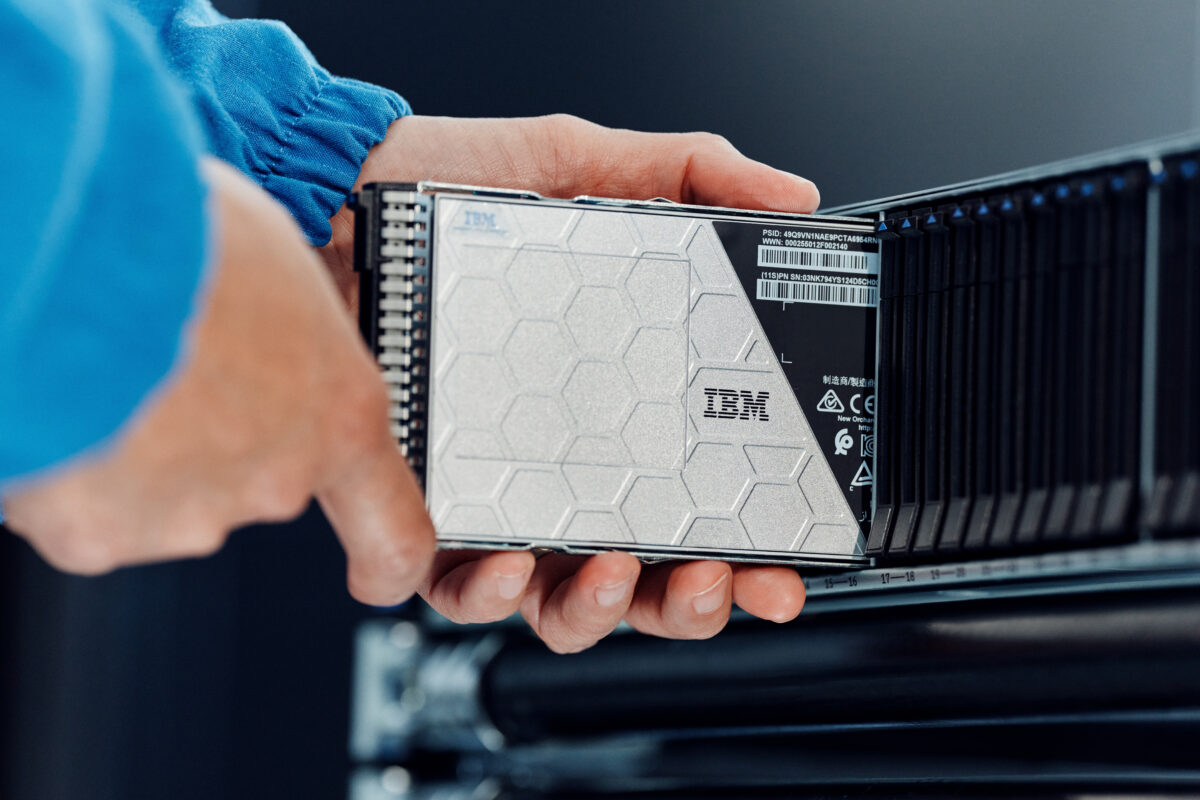
Autonomous IBM FlashSystem storage can “detect a ransomware attack in under a minute”

IBM claims that its latest generation of IBM FlashSystem drives can detect a ransomware attack in under a minute. Together with AI agents and data services embedded into the storage systems, the promise is that they will spot and fix such problems before they have any effect.
“These are the storage products where our clients run their most mission-critical workloads,” said Sam Werner, General Manager of IBM Storage. “This is where databases run, where the core business applications like ERP run. These are the systems that have to always be online. If there’s ever a problem with your primary flash storage, business operations cannot continue.”
This is why IBM places resilience at the top of any priority list, and why it sees the built-in AI services – collectively called FlashSystem.ai – as being so key. In particular, it will bring “context-aware security” that identifies changes in user behaviour and the data itself.
The system alerts IT administrators to these anomalies and can then “recommend corrective actions so that we can get ahead of problems like a ransomware attack,” said Werner. “In fact, we’re able to detect a ransomware attack on our storage in under a minute.”
This is thanks to “additional processor cores” built into the solution, he added. “We look at literally every single IO coming into the drive, and because of that, we’re able to detect attacks in under a minute. Other solutions, using software, have to scan changes to data after the fact – since we’re looking at it in real-time, nobody can react to an attack faster than we can.”
IBM also promises the ability to optimise workloads, help organisations keep up with the latest compliance regulations and ensure that you stay true to any service level agreements you have.
Meet the new generation of IBM FlashSystem storage systems

IBM announced three new family members, starting with the more affordable FlashSystem 5600 and ending with the power-focused FlashSystem 9600. All three product lines will become generally available on 6 March 2026.
- IBM FlashSystem 5600 packs up to 2.5PBe of effective capacity into a single 1U system and up to 2.6M IOPs. Designed for:
- Edge locations
- Remote offices
- Smaller data centres
- IBM FlashSystem 7600 for high performance and scalability, with up to 7.2PBe of effective capacity in a 2U system and up to 4.3M IOPs. Designed for:
- Large virtualized environments
- Large analytics platforms
- Consolidated applications that require greater capacity and faster response times
- IBM FlashSystem 9600 for extreme performance and massive scalability, provides up to 11.8PBe of effective capacity in one 2U system with up to 6.3M IOPs. Designed for:
- Core banking systems
- ERP platforms
- AI-driven applications that require speed and advanced security
Reducing costs and the management burden
Along with the promise of faster performance and AI-enhanced security, IBM claims that there will be a 57% OPEX reduction in managing the new FlashSystem products.
Much of this stems from a promise that the AI agents can take away 90% of the manual workload required to run them. For example, by producing all the documentation required for compliance.
“We can generate, using our AI, explainable and operational reasoning behind all the decisions and optimizations made, so that if there’s ever an audit or someone needs to go back and understand why decisions were made, that is all now documented and available,” said Werner.
IBM also benefits from building its own flash drives, with this trio of FlashSystems all featuring its fifth generation of FlashCore Module.
“In fact, this is the densest drive in the industry for enterprise-class workloads, at 105 terabytes [in one module]”, said Werner. Which is how the FlashSystem 9600 can cram 3.4PB of raw capacity into a 2U form factor (translating to 11.8PB of effective capacity).
Plus, IBM claims the new FlashSystem “reduces the required storage footprint by 30%-75%, depending on the model, through optimised placement and consolidation, compared to its previous generation”.
The fact IBM makes its own modules also builds in protection against the price inflation we’ve seen for memory and SSD drives. “I believe we will remain a price leader in the industry throughout the year,” said Werner, “and with the other capabilities we’re delivering in this flash system, I believe the cost to our end users will actually decline.”
Related articles
About The Author

Tim Danton
NEXT UP