Trending Topics

 Trending
Technology, AI and the Rise of the Financial Concierge – Interview with Craig Cmiel, Co-Founder of BX Partners

Artificial intelligence, real-time data, and increasingly sophisticated investment products are changing what clients expect from their financial advisors. As technology reshapes portfolio construction, financial planning, and client engagement, advisors are being challenged to deliver more personalized advice while navigating a rapidly evolving investment landscape.
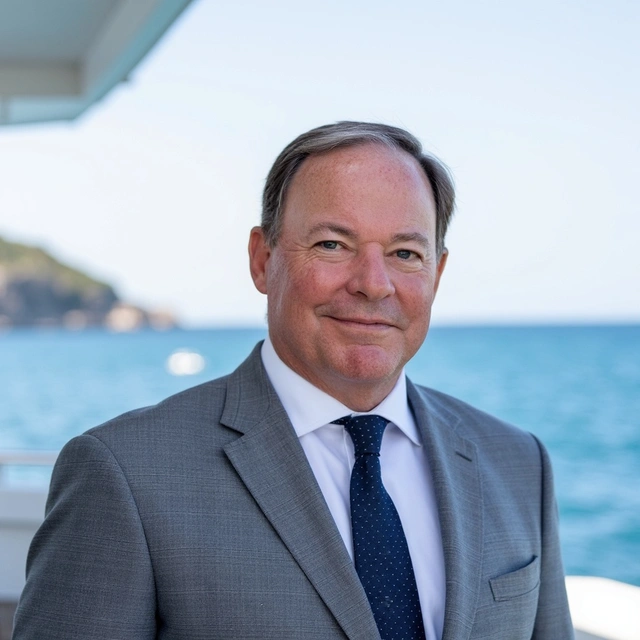
Craig Cmiel, Co-Founder of BX Partners, has spent more than three decades building investment platforms and helping advisors adapt to changing markets. In this exclusive interview, he shares his perspective on how AI, technology, and regulatory change will reshape wealth management and why tomorrow’s advisors will become comprehensive financial concierges for their clients.
With new AI tools, what are the biggest changes coming down the road for financial advice?
For financial advisors, it will be even more “holistic,” meaning that clients will want to see all assets in real time: how they are performing, how their assets correlate, what the current risk possible downside is, tax liability and possible cap gains offsets, and interactive financial planning dialogue about retirement, gifting, income and more.
With the wealth that has been created in the US over the past 5-10 years, the average account size will keep rising. Clients of the future will be asking, “What is my net worth today?” and “What changes should I be making?”
This next generation of clients will be more focused on wealth creation, rather than the current Baby Boomers who are coasting moderately through retirement.
How is technology changing the investment landscape for financial advisors and their clients?
Technology has brought about and will continue to drive the investment landscape going forward. If you roll back the clock five years, the average client did not own crypto, AI-related investments, or private investments. Over the next five years, more and more clients will have a greater percentage of their assets in non-traditional categories. This will also include nuanced and personalized hedging, specialized income strategies, and more complex tax strategies. In this cashless, tokenized world, financial advisors will need to see the whole picture in order to deliver their maximized “concierge” value.
How will technology impact compliance, regulations, and The Fiduciary Standard
Looking backwards, it’s been a little tricky for firms and regulators to enforce a fiduciary standard beyond one product at a time. Meaning, “is this the right mutual fund, or the best annuity, or am I paying too much in fees?” Today we have a fairly benign regulatory environment. In the future this could change. With technology, Registered Investment Advisers (RIAs), Broker/Dealers (BDs), and the associated regulators, will be able to monitor what is in the client’s best interest in real time across risk, return, fees, conflicts, and more. Today, a client may be taking too much or too little risk, or have an underperforming portfolio, and so on. This will all change in the next few years, and clients will demand/get more information on their portfolio and performance. New technology and new standards will drive towards more open architecture and less proprietary.
Recent commentary from the SEC and industry analysis point toward a regulatory environment focused on reducing unnecessary disclosure requirements, making it easier to raise capital, and expanding retail access to private markets. If that direction continues, it creates a more pro-business environment that will encourage innovation while also requiring broker-dealers, RIAs, custodians, and technology providers to invest in the systems and compliance capabilities needed for the next generation of financial advice. Financial advisors of the future will increasingly migrate to firms and technology platforms that help them compete, serve clients more effectively, and adapt to a rapidly changing investment landscape. In my opinion, the combination of regulatory modernization and technology has never created a better opportunity for our industry to move forward.
What do you think about customization and scalability in the future?
The future will be all about customization for the client. Think of everything that is customized now and multiply that by five. All accounts, plans, portfolios, hedges, cashflow planning, risk profiles, net worth statements, loans and liabilities, multi-currency, will all be more customized to each client. Data management and AI will move this forward in a way that integrators will get bigger and more advanced, and models and investments will respond to the client versus a more manual or insertion system that is used today.
The clients who will demand this technology and service in five years will be what we would call Ultra High Net Worth (UHNW) today, $5-$25 million net worth. In five to ten years that net worth will place a client in the simple High Net Worth (HNW) category, and UHNW will begin at $50 million plus.
Clients with below $5 million net worth in the future will receive a much more basic set of financial plans, investments, and service. Therefore, advisors need to think about how they will grow into the HNW and UHNW markets of the future. Those conversations, technology, and relationships will be different.
How will technology impact financial planning?
Over time, the financial services industry has more-or-less settled in on a 1% advisory fee for clients who want to work with a professional financial advisory team. I always think about splitting this fee down the middle, with the average client paying half the fee for financial planning, and the other half for investment advice and portfolio management. Five years from now, that will be weighted as 75% planning and 25% investment advice. The financial advisor of the future will truly need to be a quarterback or concierge for clients. Clients of the future will see the world in real time, so the financial advisor of the future will need to do the same.
As wealth transfers, clients will be much more spread out geographically. In person face-to-face meetings will virtually become non-existent and will be replaced by much longer and complex planning discussions (annually), along with weekly or monthly check-ins. Technology will make it easier for clients and financial advisors to see in real time if any changes need to be made with assets, liabilities, or the plan. The financial concierge will touch base with other professionals in the family loop, like Certified Public Accountants (CPAs) and attorneys, and other family members, who will all be looking at the same picture, and collectively changes to the investments or the plan will happen much more quickly.
Financial advisors of the future will spend more time on communication, cash flow management, taxes and capital gain management, and risk management in a more volatile world. Some clients may even want a daily or weekly blurb on “how they are doing” versus how the market is doing, so this will become commonplace.
How will technology drive operational and process enhancements?
Let’s face it, it’s hard being a client. Life is busy; they have many accounts, logins, apps, monthly subscriptions, fees, and vendors, not to mention running their own jobs or businesses, planning and cash flow needs. The good news is the future looks good for these clients. With tokenization and integrations, the financial concierge will be able to remove a lot of this friction. The financial advisor of the future will need to be an expert in this world of simplification. It wasn’t that long ago that most people didn’t even have Apps or systematic payments. The future will be much more complex, but technology will make it manageable and even better.
Exclusive content from our Opinions section
About The Author

Ricardo Oliveira
NEXT UP


