Trending Topics

 Trending
How do you measure an item in a photo?

Table Of Contents−
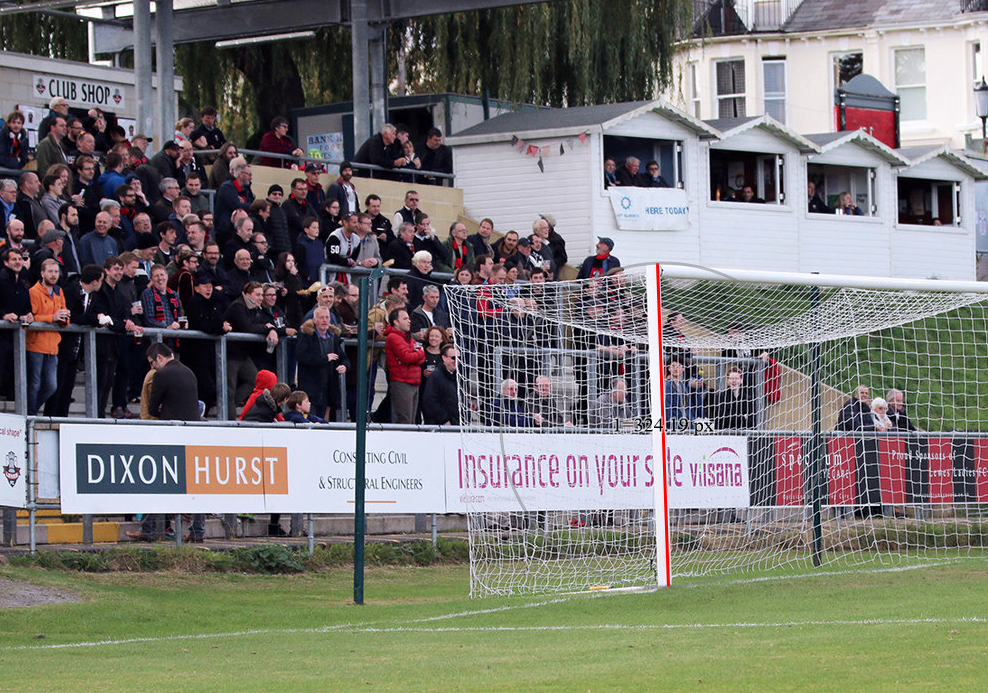
Here’s a problem I faced yesterday. I was ordering new goal nets for Lewes FC (of which I’m a director) and hit a stumbling block: I didn’t know the depth of the nets we needed. I live half an hour from the ground and our maintenance chap is on holiday. I’ve got a photo of the goals, but how do you measure an item in a photo?
I could, of course, have printed the image and made a rough calculation, but the internet can do better than that. Here’s how.
How to measure an item in a photo
The site we’re going to use – Photo Measure – is about as basic as it could possibly be, but that’s not a bad thing. It’s bald text, it loads instantly and it’s not smashed with ads, despite being a free service. It’s our kind of website.
Go to Photo Measure and then upload the photo containing the item you wish to measure.
As the site explains, this method is really only good for getting rough estimates. Your photo will need to contain a reference item (such as the goal posts, in my example) that you know the rough length of, and this site works best when the reference item and the item you want to measure are the same distance from the camera.
When you’ve uploaded your photo, click and drag to draw a line that spans the full length of your reference item. This line will be shown in red, as you can see below:
Now you need to draw a second line along the item you wish to measure, in my case the depth of the goal net, which will be shown in green:
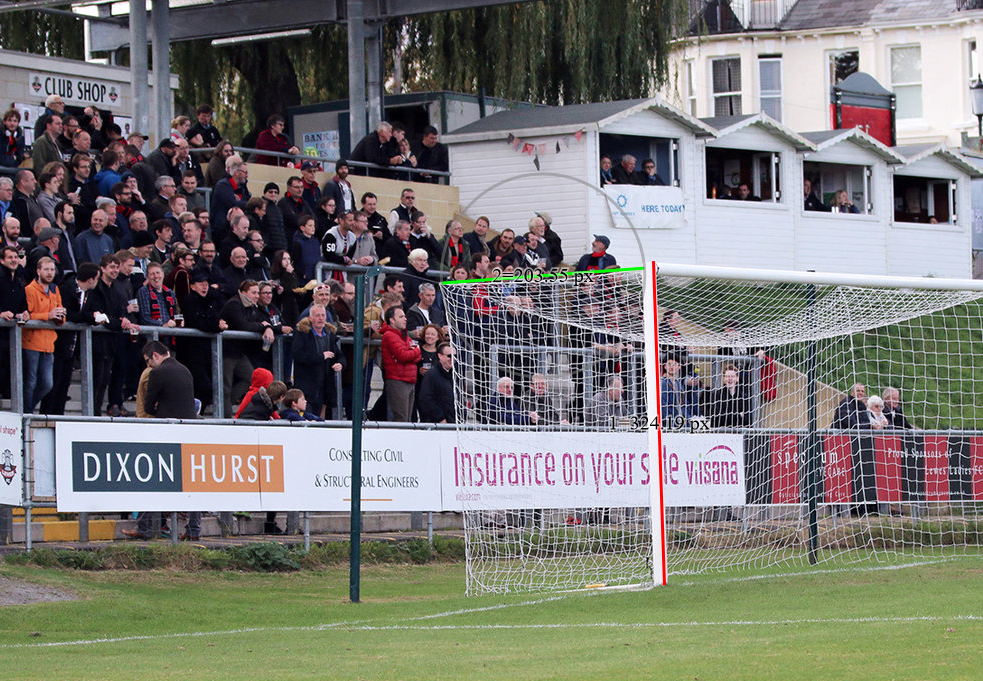
I know the height of football goalposts is 8 feet, so I punched that number into the Known Dimension box on the Photo Measure site and it provided the measurements in the box at the bottom of the site. It estimated the goal depth to be 5.2 feet, so I ordered 6ft nets just to be sure.
Later that evening I got a call from the groundsman, whom I’d be discussing the net order with the previous evening. He’d got out the old nets, measured them up with a tape measure and told me to order 6ft deep. The site was pretty much spot on.
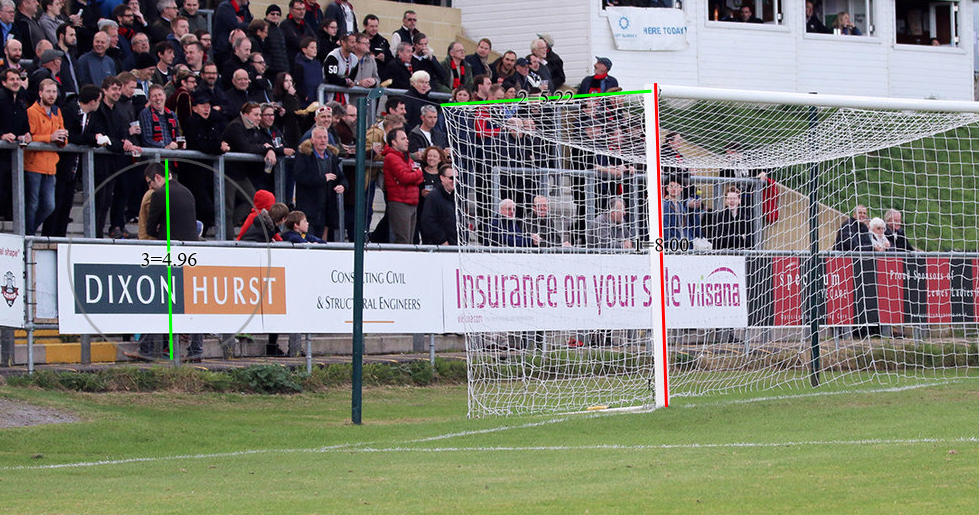
However, here’s a stark illustration of why perspective matters and why the site advises you to have the items being measured next to one another.
I’m also in this photo, standing at the front of the crowd with my back to the goal (must have been a dull game!). I’m 6ft 2in, but when I measure myself using the tool it estimates I’m a slice under 5ft.
When to use photo measurement tools
Photo measurement tools are perfect when you need a rough estimate and don’t have access to the item in question. They’re especially handy for:
- Measuring dimensions of objects in old photos
- Estimating distances or sizes in property images
- Sizing up furniture in a room when planning a layout
- Getting approximate dimensions for outdoor projects, like fences, pitches, or sheds
Just remember: they’re only as reliable as the reference item you include in your photo, and perspective can easily throw off your numbers if you’re not careful.
Alternatives to Photo Measure
While Photo Measure is simple and effective for quick, free measurements, there are a few other tools you might want to check out:
- ImageMeter (Android and iOS): A mobile app that lets you annotate photos with dimensions and add reference measurements. It’s great for site visits or property inspections.
- Measure by Google (Android only): Uses augmented reality to measure objects through your phone’s camera in real time.
- Apple Measure app (built into iOS): Similar to Google’s version, letting iPhone users measure objects by pointing their phone camera.
Each has its pros and cons — augmented reality (AR) apps are great for real-time measurements but need good lighting and flat surfaces, while web tools like Photo Measure are better for still images.
Tips for getting more accurate results
If you’re using photo measuring tools, a few small adjustments can make a big difference in accuracy:
- Keep the camera level: Try to avoid angling the camera up or down too much as it distorts perspective.
- Use a clear, known reference object: A standard-sized item (like an A4 sheet of paper, a football post, or a known-height person) in the same plane as your measurement target will improve accuracy.
- Avoid wide-angle distortion: Smartphone cameras, especially in landscape or close-up shots, can distort edges. Step back and zoom slightly if you can.
- Measure on high-resolution images: The more pixels you have to work with, the more precise your line placement will be.
Related reading: How to get the best AI art from Adobe Firefly in Photoshop
About The Author

TechFinitive staff
NEXT UP


