Trending Topics

 Trending
Make WhatsApp messages disappear to keep your business secrets safe

Table Of Contents−
British government ministers have spent the past few weeks at the Covid Inquiry, trying to delicately explain why their colleagues believe them to be blithering idiots (believe me, this is putting it politely). This is all down to unguarded WhatsApp conversations, which have now become key pieces of evidence at the public inquiry.
It’s obvious that none of the participants ever thought their messages would leak in this manner, perhaps because of a misplaced belief that WhatsApp’s end-to-end encryption means the messages can’t be shared.
There are, however, ways to WhatsApp more securely, lessening the chances your business secrets or gossip about colleagues’ incompetence will leak beyond the intended recipients. Here’s a quick guide on how to use WhatsApp more securely, including new features that have been released in the past week.
Please note that all of the features mentioned below only work in the various apps, and not the web version of WhatsApp.
Related reading: The business case for WhatsApp: benefits vs risks
How to make all WhatsApp messages disappear
Boris Johnson struggled to explain to the Inquiry how he managed to lose six months’ worth of WhatsApp messages. However, there’s a very simple way to make messages vanish, which means you might not need to resort to factory resetting devices at a later date.
Open any chat and then press the three dots at the top of the screen to open its settings. Now select the “Disappearing messages” option.
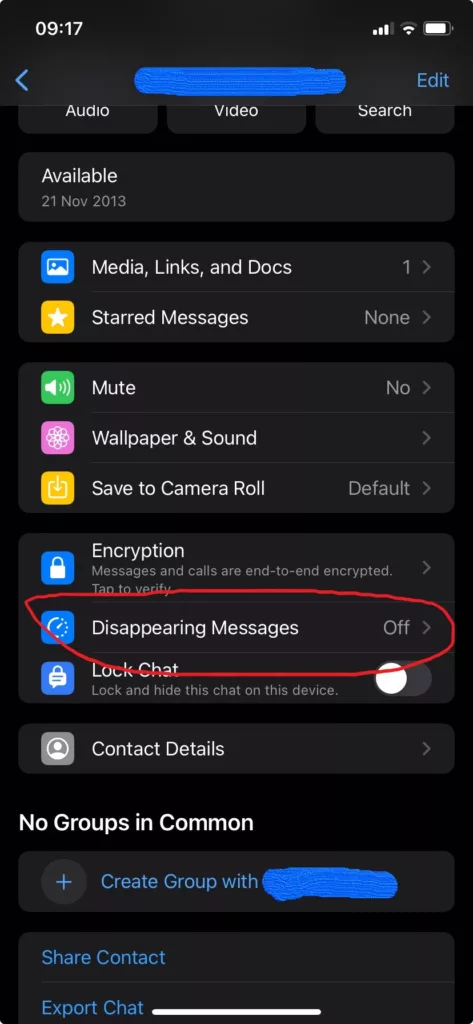
You’ll be presented with a list of durations, after which messages will be automatically deleted for all the participants in a chat. There are three options to choose from:
- 24 hours
- 7 days
- 90 days
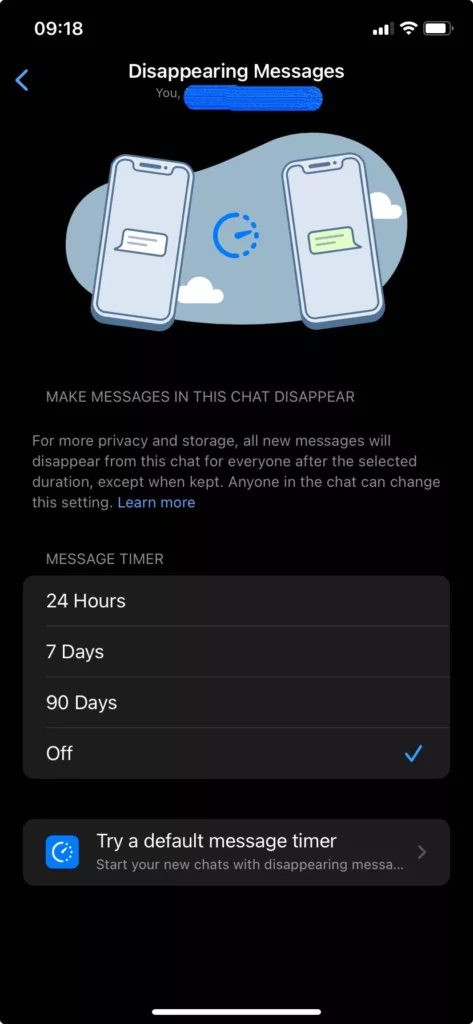
Note that this new timeout period will only apply to messages sent after the setting has been tweaked; older messages will still be retained. If you want to start afresh, delete the chat and start again with the same group.
In chats of more than two people, only the group admin can make these changes.
Also be aware that, even if messages are auto-deleted, there’s nothing to stop any of the group’s recipients from taking screenshots or copying and pasting chats before they’re scrubbed from the system.
How to make WhatsApp voice messages disappear
This a new feature that’s only been rolled out in the past week, but WhatsApp now allows you to make voice messages disappear immediately after they’ve been played for the first time.
To record such a message, click the little mic icon next to the text message field, to record a voice memo as you would normally. With your finger pressed on the mic icon, drag upwards, and you should see an icon with the number “1” in a circle. Click this when you’ve finished recording to ensure the voice memo is deleted after it’s been listened to.
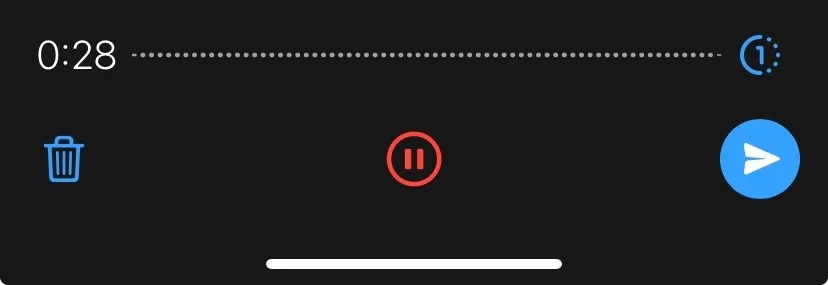
In a business, this could be a good way to share information such as door security codes or even passwords.
When the voice message has been heard, you’ll get the double-blue ticks as normal and an “Opened” message, letting you know it’s been seen and deleted.
Related reading: Is there a safe way to send passwords via email?
How to make WhatsApp photo and video messages disappear
The process for photos and videos is exactly the same as it is for voice messages. Select the media you want to send, but before you hit the Send button, hit the icon with the number 1 in a circle.
This feature has the added protection of not allowing the recipient to take screenshots of the image. However, that doesn’t make it entirely safe. They could take a photograph of their screen with a different device, for instance.
If you’re sending these photos/videos to a group that already has automatic deletion switched on, they will disappear as per the specified timespan. So you don’t have to manually mark every photo to disappear unless you only want it to be viewed once.
About The Author

Barry Collins
NEXT UP