Trending Topics

 Trending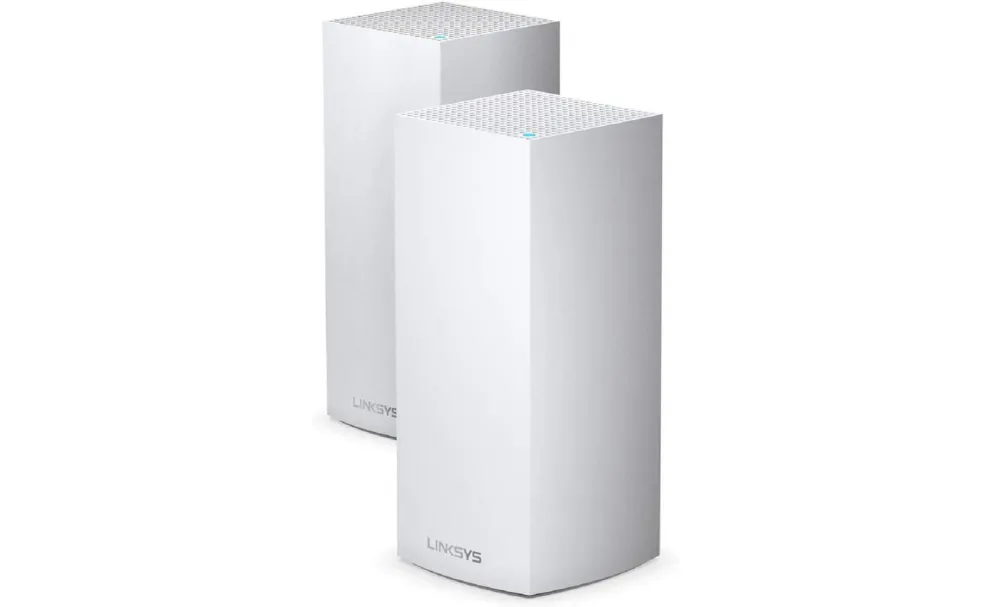
What do the lights on the Linksys Velop router mean?

Linksys provide a range of mesh routers in its Velop range, all providing excellent coverage for a reasonable price. For example, the two-pack of AX5300 routers are currently a penny under £250. Each device has a single light on top, which changes colour and flashes in different ways to represent the current status. But what do the lights on a Linksys Velop router mean? Here’s what they’re trying to tell you:
Blinking blue
The device is just starting up.
Solid blue
The router is connected to the internet and everything is working just fine.
Blinking purple
The device has been paired with the mobile app, ready for setup.
Solid purple
The device is ready for set-up.
Blinking red
The device isn’t in range of another – either the parent router or another satellite. If this is a child device then it’s too far away from the main router. If this is the parent device then it’s likely to have been unplugged from the modem.
Solid red
The parent device has no internet connection.
Solid yellow or orange
The satellite router is too far from another device and so the signal is weak – you’ll need to move it closer to another Velop device.
Related reading: How do I access Virgin Media router settings?
Detailed troubleshooting guide for light issues
When an LED shows a warning colour or unexpected pattern, don’t just decode it — act on it. For example, if your Velop node blinks red after setup:
- Confirm the Ethernet cable from the parent node to your modem is fully seated and that the modem itself shows normal online status via its LEDs or app.
- Open the Linksys app, check the affected node’s status message — is it ‘no internet’ or ‘out of range’?
- Move a device (laptop or phone) next to the node, run a speed test or ping the parent node’s IP from the Linksys diagnostics menu.
- If connectivity seems intermittent, power-cycle both the modem and parent node. Wait a full 2–3 minute startup cycle before reconnecting the child node.
- Common issues like loose cables, ISP dropouts, or old firmware can cause blinking or solid red LEDs. If issues persist, consult the Linksys support portal or escalate to a technician.
Pro tip: If you notice your LEDs behaving erratically during specific times (like after a thunderstorm or during ISP maintenance windows), this can narrow down root causes quickly.
Firmware updates and LED behaviour
Velop nodes blink differently during firmware upgrades. Expect a blinking white or blue LED while downloading and applying updates — hardware versions differ slightly. Never power off a node during this process. Interrupting firmware updates can land your node in a recovery state, often indicated by a rapid blinking pattern.
If a node blinks endlessly after 10 minutes:
- Open the Linksys app’s firmware status screen or web UI under Administration > Firmware Upgrade.
- If stuck, backup settings if possible, perform a soft reboot via the app or power button, and retry the update.
- Linksys publishes firmware release notes by model. Keeping tabs on those helps anticipate new LED patterns or security patches.
Placement and mesh optimization tips
A weak signal LED (yellow) isn’t random — it reflects real-world physics. Thick walls, metal fridges, mirrors, or concrete floors can disrupt the mesh backhaul. To optimise:
- Position your parent node centrally on the main floor.
- Use the Linksys app to test signal strength while temporarily moving child nodes. Avoid placing nodes behind TVs, inside cupboards, or directly beside cordless phones.
- Test throughput by connecting a laptop via Ethernet to a child node while measuring Wi-Fi speeds at another node’s location.
- Move child nodes incrementally by 1–2 meters and watch for LED color changes. Velop systems gradually self-tune, but good placement sets the baseline.
App-based diagnostics and monitoring
The Linksys app dashboard shows each node’s health. When an LED flashes a warning:
- Tap the node icon to view signal strength, firmware version, and alerts.
- Use the built-in ‘Internet Slow?’ test for ISP checks and channel interference.
- Trigger manual pings and traceroutes to spot packet losses or routing failures.
- Enable push notifications for offline events, firmware updates, or speed drops so you’re aware even if LEDs aren’t visible.
Night mode and LED disable options
If LED brightness bothers you at night, Velop offers a Night Mode or LED schedule (firmware-dependent). Find it under Settings > Node > LED options in the app. This lets you dim or disable LEDs during chosen hours.
If your firmware lacks this, consider adhesive light diffusers or placing nodes in discreet but ventilated spots. Never cover ventilation ports.
Advanced troubleshooting with network tools
When an LED hints at deeper problems:
- If the parent node shows solid red, connect a laptop to it via Ethernet.
- Run ping tests to 8.8.8.8 and your ISP’s gateway.
- Use traceroute tools in the Linksys app or command line to track where traffic drops.
- For yellow LEDs, use Wi-Fi analyser apps to detect nearby interference and consider switching channels or adjusting backhaul band preferences.
Security considerations tied to LED behaviour
Unexpected LED cycling (startup colors looping repeatedly) may hint at firmware crashes or intrusion attempts. To mitigate:
- Enable automatic firmware updates.
- Change default admin credentials.
- Enable WPA3 encryption if available.
- Review router logs periodically for rogue device attempts.
Environmental factors affecting LED status
Heat and humidity matter too. High temperatures may cause erratic LED flickers as hardware throttles. Place nodes in cool, ventilated areas away from direct sun or heat sources. Use surge protectors to guard against power spikes.
LED behavior FAQs
Why do my nodes cycle through colours after a power outage?
They’re rebooting. Wait 2–3 minutes before troubleshooting.
Why does my node blink yellow for a second occasionally?
Temporary interference or self-optimisation. If it persists for hours, check placement and interference sources.
Can LED patterns differ by hardware or firmware?
Yes — always check the firmware release notes for your model.
Maintenance and update checklist
Every quarter:
- Check all LEDs for solid blue status.
- Apply firmware updates.
- Confirm placements if the home layout changed.
- Inspect cables and power boards.
- Keep a simple log of changes and issues.
Sustainability and power-saving tips
Each Velop node uses 5–10W continuously (around 45 kWh per year). For context, that’s about the same as a fridge’s standby mode. Night Mode LEDs off reduces minimal power, but it’s best to leave nodes powered for stability. Use smart plugs or surge boards with power monitoring for awareness.
Smart home interference notes
Mesh systems sharing space with IoT hubs (Zigbee, Bluetooth, security cameras) can suffer congestion, triggering yellow LEDs. Keep IoT devices on guest Wi-Fi networks or separate bands where possible. Firmware updates occasionally add QoS prioritization for IoT traffic.
This article was updated on the 11th June 2025 with additional instructions, suggestions and best practices.
About The Author

David Artiss
NEXT UP


