Trending Topics

 Trending
How do I update Plex on a Synology NAS?

Table Of Contents−
Installing a Plex media server on to your Synology NAS is a piece of cake: open the Package Centre, find the Plex app and click Install. However, updating to a newer version of Plex requires more effort. So let’s look at how to update Plex on your Synology NAS.
Related reading: What are servers?
How do I know Plex needs an update?
To check if your Plex media server requires an update, connect to your Synology NAS and open the Plex app.
If a current update is available, there will be a notification at the top right of the app.

Now click on Server Update Available, and when the update window appears, click the Download Now button.

The update file will now transfer into the appropriate download folder of your computer.

The next step is to open the Package Center app on your Synology NAS, and once opened, click on the Manual Install button in the top right of the window.

Using the Browse button, find the file you downloaded earlier and then click Next.
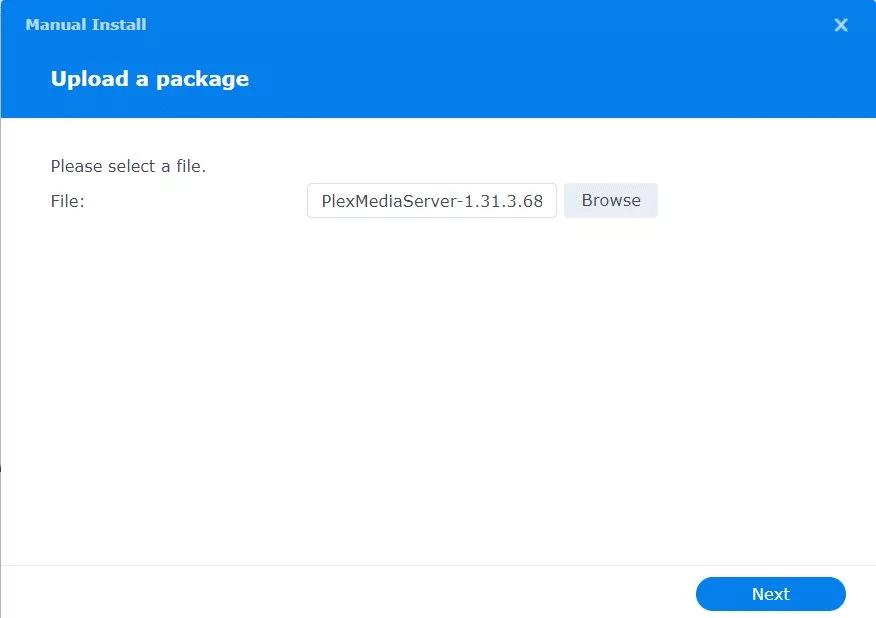
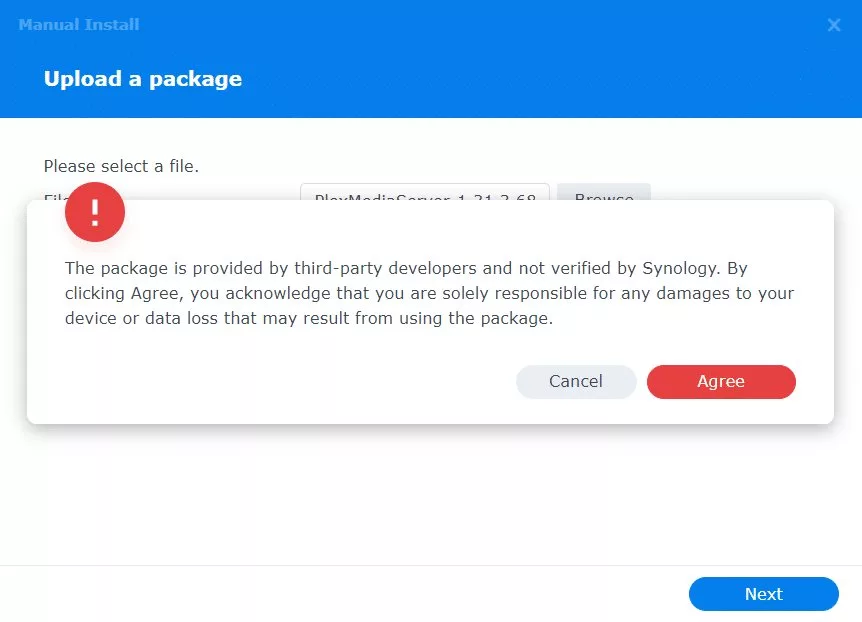
A window will appear to warn you Synology does not verify the package. To continue, click Agree.
Now confirm the update by clicking the Done button.

The app will now update, and once complete, inform you it was successful. When it does, click OK, and you’ll have the latest version of Plex on your Synology NAS.
How do I check my Plex media server is up-to-date?
You can ensure you’ve installed the latest version or manually check for any updates by first opening the Plex media server. Once you’ve done that, select the Wrench icon in the top right of the window. Now scroll down the left-hand column to the Settings heading, and click on General.

On the right-hand pane, you’ll see the version number and a green tick if you’re up to date. You can also manually check for any new version by selecting the Check for Updates button.

Automating Plex updates with scripts
Manually updating Plex can be repetitive. To streamline this process, you can use automation scripts, such as those available on GitHub, designed specifically for Synology NAS devices. These scripts usually check for the latest Plex version and update it automatically.
Ensuring proper permissions for Plex
After updating Plex, it’s crucial to verify that the Plex Media Server has the necessary permissions to access your media files:
- Check folder permissions:
- Open File Station on your Synology NAS.
- Right-click on your media folders and select Properties.
- Go to the Permissions tab.
- Ensure the
PlexMediaServeruser has at least Read/Write access.
- Apply permissions to subfolders:
- In the Permissions tab, click Apply to this folder, sub-folders and files to propagate the permissions.
Proper permissions prevent issues with media not appearing or being inaccessible in Plex.
Verifying Plex Update success
To confirm that Plex has been updated successfully:
- Check the version in Plex:
- Open the Plex Web App.
- Navigate to Settings > Server > General.
- The current version is displayed at the top.
- Compare with the latest version:
- Visit the Plex Downloads page.
- Select Synology (DSM 7) and check the latest available version.
If the versions match, your update was successful.
This article was updated on the 5th of June 2025 with additional info.
About The Author

Mark Parvin
NEXT UP


